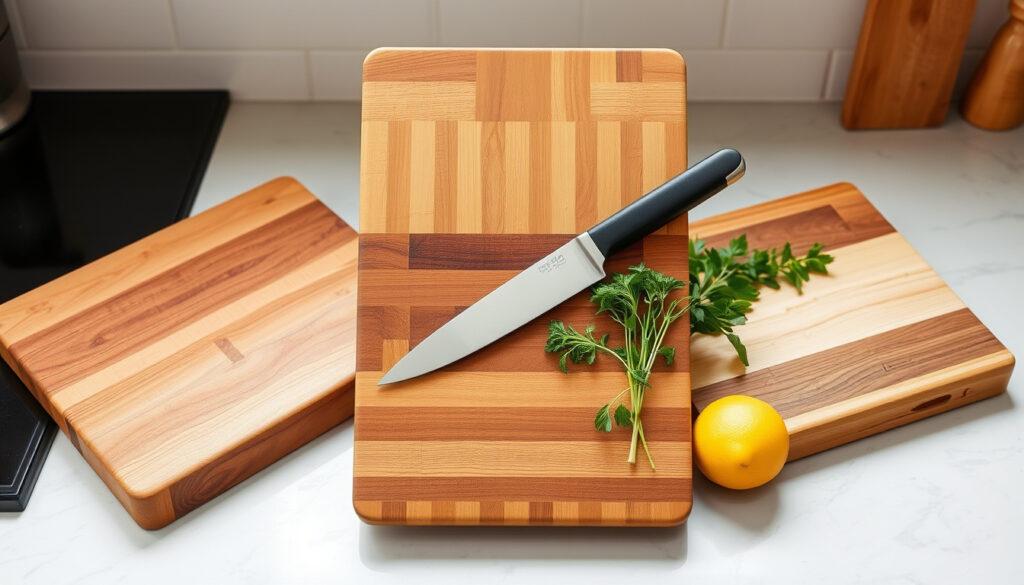
Wooden Chopping Boards: Wood Types, Hygiene & Care
There’s something satisfying about the weight of a good wooden chopping board under a knife, but behind that simple workhorse lies a surprising amount of debate about which wood is safest, most hygienic, and kindest to your blades. A woodcraft expert argues that wooden boards are generally more hygienic than plastic, challenging common assumptions—this guide pulls together the evidence to help you choose the board that really works for you.
Most recommended wood species: Maple, Walnut, Cherry, Teak ·
Average lifespan with proper care: 5–10 years ·
Typical price range (Ireland): €15–€150 ·
Common board sizes: 30×40 cm to 45×60 cm ·
Hygiene verdict: No strong evidence one material is safer if cleaned and replaced when damaged (Robin Wood)
Quick snapshot
- Hardwoods like maple and walnut are denser and more durable than softwoods (Healthier Homes)
- Maple is considered one of the best all-around options due to its hardness (Betterwood) (Healthier Homes)
- Walnut is knife-friendly and develops a rich patina over time (Betterwood) (Healthier Homes)
- Wooden boards may be more hygienic than plastic in real-world use (Robin Wood)
- Wash with hot soapy water after each use and dry upright (Healthier Homes) (Robin Wood)
- Periodically condition with food-safe oil (Healthier Homes) (Robin Wood)
- Using softwoods like pine – too soft and absorbent (Healthier Homes)
- Putting wood in dishwasher – causes warping and cracking (Healthier Homes) (Healthier Homes)
- Using vegetable oils that go rancid – use mineral oil or beeswax (Healthier Homes) (Healthier Homes)
- End-grain construction is preferred for knife longevity (Ryba Wooden)
- Rubber boards are also common in professional kitchens for raw meat (Ryba Wooden) (Ryba Wooden)
- Large surface area (45×60 cm) is typical (Ryba Wooden) (Ryba Wooden)
Which wood is best for a chopping board?
Top hardwoods for chopping boards
- Maple, beech, and oak are widely recommended as strong choices (Ryba Wooden).
- Walnut is softer but less prone to showing knife marks (Betterwood).
- Teak and rosewood are used but less common in Europe (Betterwood).
Why maple is a popular choice
Hard maple (Acer saccharum) is the default recommendation because its tight grain resists moisture absorption and its hardness stands up to daily chopping without dulling blades too quickly (Betterwood).
Comparison of oak, walnut, cherry
Three common hardwoods differ in hardness, grain openness, and cost – a trade-off that depends on your priorities.
| Wood | Hardness (Janka) | Grain | Knife wear | Moisture resistance |
|---|---|---|---|---|
| Maple | 1,450 lbf | Tight, closed | Low | High |
| Walnut | 1,010 lbf | Open, porous | Very low | Moderate |
| Cherry | 950 lbf | Closed, fine | Low | Moderate |
The pattern: maple offers the best balance of hardness and moisture resistance, while walnut is kinder on knives but requires more careful oiling. Cherry sits in the middle with a warm colour that darkens over time (Betterwood).
Why this matters: choosing a wood that matches your cutting habits – heavy chopping vs delicate slicing – extends both the board’s life and your knife’s edge.
Which is the healthiest chopping board to use?
Wood vs plastic vs bamboo
- Plastic boards can harbour bacteria in deep knife cuts and should be replaced when scored (Healthier Homes).
- Bamboo is harder than most woods but can split and may contain adhesives (Healthier Homes).
- Wooden boards, if kept smooth and oiled, can be as hygienic as any other material (Robin Wood).
Bactericidal properties of wood
Some studies have found that bacteria survive longer on wooden surfaces than expected, while others show wood reduces bacterial populations faster than plastic. The real variable is cleaning: a properly cleaned board, regardless of material, poses minimal risk (SciShow).
How to maintain hygiene
- Use separate boards for raw meat, vegetables, and cooked foods (Healthier Homes).
- Hand wash with hot soapy water after each use – never submerge (Healthier Homes).
- Sanitise with diluted vinegar or hydrogen peroxide monthly (Healthier Homes).
The trade-off: wood requires more care than plastic, but that care pays off in longevity and a naturally renewing surface.
What are the downsides of wooden cutting boards?
Susceptibility to water damage
- Wood can warp or crack if left wet or soaked (Healthier Homes).
- Always dry upright after washing (Healthier Homes).
Require regular oiling
- Mineral oil or beeswax should be applied every few months to prevent drying and cracking (Healthier Homes).
- Vegetable oils can go rancid – use food-grade mineral oil instead (Healthier Homes).
Heavier than plastic
- A large end-grain board can weigh 5–8 kg, making it less portable (Ryba Wooden).
- This weight provides stability during use – a trade-off many chefs accept (Ryba Wooden).
The catch: the very features that make wood durable (density, oil absorption) also make it heavy and high-maintenance. For a household that values convenience over tradition, a synthetic board may be a better fit.
What wood to avoid for a chopping board?
Softwoods like pine
- Pine, cedar, and redwood are too soft and absorbent – they scar easily and can harbour moisture (Healthier Homes).
Exotic woods with toxins
- Ipe, cocobolo, and other tropical hardwoods can cause skin irritation and should be avoided for food contact (Betterwood).
Reclaimed wood risks
- Reclaimed timber may contain metal fragments, chemicals, or old finishes that are unsafe for food (Betterwood).
What this means: stick with food-safe hardwoods from reputable suppliers – reclaimed or salvaged wood may look rustic but carries hidden hazards.
What do professional chefs use for cutting boards?
End-grain wood boards
- Many chefs choose end-grain wood because the fibres self-heal after cutting, reducing knife marks and bacterial traps (Ryba Wooden).
- Thick end-grain boards (at least 1.5 inches) provide weight and stability (Ryba Wooden).
Synthetic rubber boards
- Polyethylene and rubber boards are commonly used in high-volume kitchens because they can be dishwasher-sanitised (Ryba Wooden).
- They are often colour-coded to prevent cross-contamination (Ryba Wooden).
Size preferences
- Typical chef board size is 18×24 inches (45×60 cm) to allow ample workspace (Ryba Wooden).
- Smaller boards (30×40 cm) suffice for home use (Ryba Wooden).
The implication: professional preference is split between end-grain wood (for knife care) and synthetic (for easy sanitation). The best choice depends on your kitchen’s volume and cleaning routine.
Comparison of common wooden chopping board types
Five wood species, one pattern: hardness and grain openness drive the biggest differences in durability and knife friendliness.
| Wood | Hardness (Janka) | Grain type | Knife wear | Moisture resistance | Price range (€) |
|---|---|---|---|---|---|
| Hard Maple | 1,450 lbf | Closed, tight | Low | High | 50–150 |
| Walnut | 1,010 lbf | Open, porous | Very low | Moderate | 60–180 |
| Cherry | 950 lbf | Closed, fine | Low | Moderate | 40–120 |
| Teak | 1,155 lbf | Open, oily | Low | Very high | 80–200 |
| Beech | 1,300 lbf | Closed, uniform | Low | High | 30–100 |
The pattern: harder woods (maple, teak) resist moisture but feel rougher on knives; softer woods (walnut, cherry) are easier on blades but need more frequent oiling. Teak’s natural oils make it highly water-resistant, but its high cost and lower availability in Ireland limit its appeal (Betterwood). For those interested in his racing exploits, you can explore Shane van Gisbergen’s NASCAR career at Shane van Gisbergen’s NASCAR career.
Key specifications at a glance
Six specs that define a chopping board’s performance – from grain orientation to care requirements.
| Spec | Typical values | Notes |
|---|---|---|
| Grain orientation | End-grain, edge-grain, face-grain | End-grain is most durable and self-healing (Ryba Wooden) |
| Thickness | 1.5–2 inches (38–50 mm) | Thicker boards are heavier and more stable (Ryba Wooden) |
| Wood species | Maple, Walnut, Cherry, Teak, Beech | Maple is the most recommended (Betterwood) |
| Dimensions | 30×40 cm (home) – 45×60 cm (professional) | Larger boards provide workspace but take up storage (Ryba Wooden) |
| Care routine | Hand wash, dry upright, oil every 2–3 months | Never dishwasher; use food-grade mineral oil (Healthier Homes) |
| Lifespan | 5–10 years with proper care | Replaning can extend life; replace when deep scores appear (Robin Wood) |
Why this matters: the combination of grain orientation and wood species determines how often you need to oil and sand – two tasks that many home cooks underestimate.
Upsides
- Naturally antimicrobial – wood can reduce bacterial survival (Robin Wood)
- Self-healing end grain extends board life (Ryba Wooden)
- Easier on knife edges than glass or stone (Ryba Wooden)
- Adds warmth and character to a kitchen
Downsides
- Requires regular oiling and hand washing (Healthier Homes)
- Heavier and more expensive than plastic (Ryba Wooden)
- Can warp if exposed to standing water (Healthier Homes)
- Not dishwasher-safe (Healthier Homes)
Clarity: what we know and what’s still open
Confirmed facts
- Hard maple is universally recommended for chopping boards (Betterwood)
- Wood displays natural antimicrobial activity compared to plastic (Robin Wood)
- Softwoods like pine are unsuitable for chopping boards (Healthier Homes)
- End-grain construction reduces knife wear (Ryba Wooden)
What’s unclear
- Whether wood is definitively safer than plastic in residential kitchens – the evidence depends on cleaning habits and board condition (Robin Wood)
- The exact mechanism of wood’s antimicrobial effect – it may be due to porosity, chemical extractives, or both (SciShow)
Perspectives from experts and makers
Wooden chopping boards are generally more hygienic than commonly used plastic boards in real-world use.
Robin Wood woodcraft article (Robin Wood)
It is recommended to use separate wooden boards for different food groups to reduce cross-contamination.
Healthier Homes guide (Healthier Homes)
End-grain wood boards are preferred because the fibres close up after cutting, which keeps the board looking new and reduces bacterial harbourage.
Ryba Wooden blog (Ryba Wooden)
The evidence from food scientists and woodworkers aligns on one point: a well-maintained wooden board is a safe, durable tool. But the science is nuanced – no single material wins outright. For Irish buyers, the choice is clear: invest in a hard maple end-grain board, oil it every few months, and replace it when deep scores appear, or face the risk of bacterial buildup despite your best cleaning efforts.
Related reading: Spud Lite Potatoes: Low-Carb Nutrition, Differences & Recipes · Under Bed Storage: IKEA, Wheels & Ireland Options
Readers in New Zealand may also find a buying guide for wooden boards helpful for selecting the right wood type.
Frequently asked questions
How often should I oil my wooden chopping board?
Every 2–3 months, or when the surface looks dry. Use food-grade mineral oil or beeswax. Do not use vegetable oils – they can go rancid (Healthier Homes).
Can I put a wooden chopping board in the dishwasher?
Never. The heat and moisture will warp the wood and damage the glue seams. Always hand wash with hot soapy water and dry upright (Healthier Homes).
What is the best oil for wooden chopping boards?
Food-grade mineral oil, fractionated coconut oil, or beeswax-based conditioners. Avoid drying oils like linseed and nut oils that can turn rancid (Healthier Homes).
Are bamboo chopping boards wood?
Botanically, bamboo is a grass, not a wood. It is harder than most hardwoods but can split more easily and may contain formaldehyde-based adhesives in cheaper models (Healthier Homes).
How to remove stains from a wooden chopping board?
Rub with coarse salt and half a lemon, let sit for 10 minutes, then rinse. For deep stains, sand the surface lightly with fine-grit paper and re-oil (Healthier Homes).
What is the difference between end grain and edge grain?
End-grain boards are made by gluing pieces of wood so the end of the wood fibres face up – they self-heal and are gentler on knives. Edge-grain boards are more common and cheaper but show knife marks sooner (Ryba Wooden).
Are wooden chopping boards allowed on commercial flights?
Yes, within reasonable size limits. Airlines generally allow small wooden boards as carry-on, but large thick boards may need to be checked. Check with your carrier.
How do I know if my chopping board needs replacing?
If deep knife grooves cannot be sanded out, if the board is warped, or if it has developed cracks – all of these can harbour bacteria (Robin Wood).
More related posts
 Elaine Hendrix: Personal Life, DWTS, & Career Facts
 Simpsons Characters: Main Cast, Fan Favorites & More
 Sydney Shark Attack Wave: Boy Dies in Harbour 2026
 Jang Ki-Yong: Biography, Military Service, Career Facts
 Car Accident Lawyers Perth: Claims & Compensation Guide
 Jimmy Carr: Tax, Politics, Weight Loss, Family, Net Worth
 Pete Murray: Australian Singer vs British DJ – 2025 Update
 Cyber Security Courses – Best Online Options for Beginners