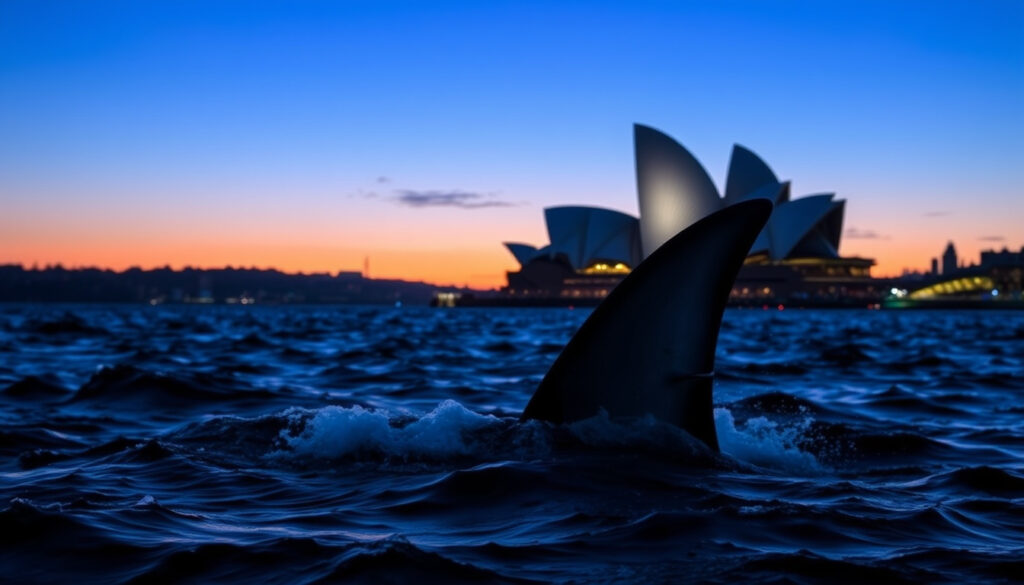
Sydney Shark Attack Wave: Boy Dies in Harbour 2026
A routine Sunday swim turned fatal for 12-year-old Nico Antic when a bull shark attacked him at Sydney Harbour on January 18, 2026. The tragedy unfolded at Jump Rock near Shark Beach in Vaucluse — a popular cliff-jumping spot — during a period that would see four separate shark attacks in just 48 hours across New South Wales. The cluster, rare in its concentration and location, has prompted beach closures and fresh debate about what draws sharks closer to populated shorelines.
Fatal shark attacks in Sydney: Rare; none for nearly 60 years until recent surge · Recent incidents: Four attacks in 48 hours (Jan 2026) · Latest victim: Nico Antic, 12-year-old boy · Attacks trend: Gradual increase over 30 years in Australia
Quick snapshot
- 12-year-old Nico Antic died after Sydney Harbour attack on Jan 18, 2026 (Fox News report on boy’s death)
- Four shark attacks occurred in 48 hours across Sydney and NSW coast (The Brief shark attack overview)
- No fatal attacks in Sydney for nearly 60 years until 2026 (Wikipedia Australian shark attack records)
- Exact shark species confirmation from wildlife experts in some incidents
- Victim details for three other attacks in the cluster
- Long-term policy or technology deployments following attacks
- Jan 18, 2026 16:20 — Nico Antic attacked at Shark Beach, Vaucluse
- Jan 18 afternoon — Beaches closed, evacuations ordered
- Jan 24, 2026 — Family confirms Nico Antic’s death
- Community fundraising surpasses $266,000 via GoFundMe
- Debate intensifies over beach safety and shark detection technology
- Long-term monitoring of bull shark activity in Sydney Harbour
| Detail | Value |
|---|---|
| Latest fatal incident | Nico Antic, 12, Sydney Harbour (Jan 18 2026) |
| Cluster timeframe | Four attacks in 48 hours (Jan 16-18 2026) |
| Historical gap | Nearly 60 years without fatal in Sydney |
| National trend | 59 fatal attacks since 2000; 24 since 2020 |
What happened to the boy attacked by a shark in Sydney?
Nico Antic, a 12-year-old boy, was jumping off rocks at Sydney Harbour’s Shark Beach in Vaucluse when a bull shark attacked him on January 18, 2026. The attack occurred at 16:20 local time at Jump Rock, a popular cliff-jumping spot where teenagers regularly leap from a 20-foot ledge into the water. Nico sustained major lacerations to his legs from the encounter.
Three friends who were with Nico jumped into the water immediately, pulled him to shore, and called for help. Police arrived by boat within minutes and applied two tourniquets to control the bleeding before transporting him to Sydney Children’s Hospital in critical condition.
Nico Antic incident details
The incident drew swift official response. NSW Agriculture Minister Tara Moriarty described it as “a tragic shark attack on a young boy having a swim on a Sunday afternoon near a harbor beach in Sydney’s east.” Shark Beach was closed and nearby beaches evacuated following the attack, with swimmers advised to avoid entering the water.
A GoFundMe campaign for Nico Antic raised more than $266,000 by late January 2026, supporting his family through the medical crisis. Local media reported that Nico Antic had lost both legs as a result of the attack.
Timeline of the attack and death
Police reported the attack around 4:20 p.m. on January 18, 2026. Nico Antic was pulled from the water within minutes and given first aid before being airlifted to hospital. He succumbed to his injuries, with his family confirming the death on or around January 24, 2026. The attack was subsequently listed as fatal in official records maintained by the Australian Shark-Incident Database.
Where was the shark attack in Sydney?
The fatal attack occurred at Shark Beach in Vaucluse, an eastern Sydney suburb overlooking Sydney Harbour. The specific location was Jump Rock — a well-known cliff-jumping area where teenagers gather to leap from man-made ledges into the water below. Shark Beach sits within Nielsen Park, a protected harbour beach that has long been a family swimming destination.
Key locations including beaches and harbour
The Nico Antic attack was not an isolated incident. In the same 48-hour period from January 16-18, 2026, three other shark attacks occurred along the NSW coast: a surfer’s board was bitten in the Eastern suburbs, a bull shark bit the leg of a 27-year-old board rider on the northern beaches, and a fourth attack at Point Plomer north of Port Macquarie resulted in scratches to a surfer’s body and board.
Sydney Harbour — long considered a relatively safe swimming zone compared to ocean beaches — saw its first fatal shark attack in memory with Nico Antic’s death. The concentration of attacks in estuarine and harbour waters rather than open ocean beaches represents a notable shift in incident geography.
Sydney shark attacks map overview
The cluster spans from Vaucluse in Sydney’s east across to the northern beaches and up to Point Plomer on the mid-north coast. This geographic spread, combined with the harbour location of the fatal incident, prompted authorities to close dozens of beaches across Australia following the attacks.
Sydney Harbour has historically been considered safer for swimming than ocean beaches. The fatal attack at Shark Beach challenges that assumption and raises questions about bull shark presence in estuarine environments.
How many fatal shark attacks have there been in Sydney?
Fatal shark attacks in Sydney are exceptionally rare. For nearly 60 years, Sydney experienced no fatal shark attacks — a streak that ended with Nico Antic’s death on January 24, 2026. The last fatal attack in the Sydney region occurred decades earlier, making the 2026 cluster unprecedented in recent memory.
Historical count
The Australian Shark-Incident Database records 312 fatal shark attacks in Australia from 1791 to November 2025. Since 2000, there have been 59 fatal attacks nationwide, including 24 since 2020 — indicating a gradual increase in fatal incidents over the past three decades.
Most serious bites in Australia involve white sharks, bull sharks, and tiger sharks. Over 90% of shark bite incidents are attributed to these three species plus wobbegongs and other whaler sharks. Bull sharks, which tolerate freshwater and estuarine environments, are considered the primary suspects in the Sydney Harbour attack.
Recent surge context
Australia averages roughly 20 shark attacks per year, with fewer than three typically proving fatal. The four attacks in 48 hours from January 16-18, 2026, represent an unusually concentrated spike compared to the typical yearly total. The Sydney Harbor Splash open water swimming event was cancelled following the attacks, and dozens of beaches were closed as a precautionary measure ahead of Australia Day.
The implication: this cluster signals that even traditionally safe harbour zones require the same vigilance now applied to ocean beaches.
While Sydney had gone nearly 60 years without a fatal attack, Australia’s overall trend shows a gradual increase in fatal shark attacks since 2000 — a pattern that researchers attribute to a combination of increased ocean recreation and changing marine ecosystems.
Why have there been so many shark bites in Sydney?
The cluster of four attacks in 48 hours has prompted experts to examine environmental factors that may have drawn sharks closer to populated shorelines. Several conditions converged in early January 2026 to create what researchers describe as a “perfect storm” for shark encounters.
Expert explanations
Scientists attribute the surge in attacks to warmer water temperatures and intense storms driving bull sharks closer to shore. Bull sharks are known to thrive in murky, estuarine environments and can tolerate both salt and fresh water — making Sydney Harbour an unexpected hunting ground. Heavy rainfall and storm runoff from preceding weeks may have created ideal conditions by churning sediment and displacing prey species.
The confluence of summer heat, storm activity, and increased recreational use of Sydney’s waterways created circumstances where shark and human encounters became more likely. Experts note that bull sharks are particularly dangerous in turbid water because they rely on ambush tactics rather than visual hunting.
Perfect storm factors
The January 2026 cluster reflects multiple overlapping factors: elevated water temperatures along the NSW coast, significant storm activity that stirred coastal waters, and a high volume of swimmers, surfers, and cliff-jumpers entering the water during the summer holiday period. Jump Rock at Shark Beach — where Nico Antic was attacked — draws teenagers throughout the summer, increasing the pool of potential victims in an area frequented by sharks.
The attack on Nico Antic occurred during peak afternoon activity at a location that had not previously been flagged for shark risk, illustrating how quickly conditions can shift in estuarine environments.
Sydney Harbour has no permanent shark detection or drum-line infrastructure, unlike some ocean beaches. The fatal incident has exposed a gap in monitoring for estuarine environments where bull sharks are known to patrol.
How likely are shark attacks in Sydney?
Shark attacks in Sydney remain statistically rare despite the recent surge. Australia records roughly 20 attacks per year across the entire continent, with fewer than three typically fatal. The January 2026 cluster was an anomaly — four attacks in 48 hours represents roughly 20% of Australia’s typical annual total compressed into a single weekend.
Safety in harbour and beaches
Following the attacks, authorities closed Shark Beach in Vaucluse and evacuated nearby beaches. Swimmers were advised to avoid entering Sydney Harbour waters in the affected areas. The NSW government deployed additional monitoring resources and considered enhanced detection technology for high-traffic swimming spots.
Harbour water quality is monitored by local authorities, but shark presence is not systematically tracked in estuarine zones. The fatal attack on Nico Antic has prompted calls for expanded monitoring in Sydney Harbour, where bull sharks have always been present but rarely encountered.
Swim safety factors
For swimmers and water users, experts recommend avoiding turbid water, not swimming near dawn or dusk, staying away from schooling fish, and never swimming alone. Jump Rock and similar cliff-jumping spots carry additional risk because swimmers are entering water that may be murky and are often clustered in groups that could attract predatory sharks.
The Sydney Harbor Splash event cancellation illustrates the immediate reputational impact on water sports: even without additional incidents, the perception of risk affects participation. For regular harbour swimmers, the death of Nico Antic represents a tragic reminder that the harbour is a working marine environment, not a controlled pool.
Timeline: Sydney shark attack cluster, January 2026
These events span a concentrated 48-hour window across Sydney and the wider NSW coast, with the fatal harbour attack prompting immediate beach closures.
| Date | Event |
|---|---|
| Jan 16–18, 2026 | Four separate shark attacks occur in 48 hours across Sydney and NSW coast |
| Jan 18, 2026, 16:20 | 12-year-old Nico Antic attacked by bull shark while jumping off rocks at Shark Beach, Vaucluse |
| Jan 18, afternoon | Shark Beach closed; nearby beaches evacuated; swimmers advised to stay out of water |
| Jan 18–24, 2026 | Nico Antic remains in critical condition at Sydney Children’s Hospital |
| Jan 24, 2026 | Family confirms Nico Antic has died from his injuries |
What we know and what remains unclear
Confirmed facts
- Nico Antic, 12, died following a bull shark attack at Shark Beach, Sydney Harbour (Jan 24, 2026)
- Four shark attacks occurred in 48 hours across Sydney and NSW coast (Jan 16–18, 2026)
- Sydney had no fatal shark attacks for nearly 60 years before the 2026 cluster
- Australia averages roughly 20 attacks per year, fewer than three fatal
- Bull sharks are confirmed in Sydney Harbour and tolerate estuarine environments
Unclear
- Official confirmation of bull shark species in all four incidents from wildlife authorities
- Names and conditions of victims in the other three attacks from the cluster
- Whether long-term changes to harbour monitoring or beach safety policy will result
Expert perspectives
This is a tragic shark attack on a young boy having a swim on a Sunday afternoon near a harbor beach in Sydney’s east.
Tara Moriarty, NSW Agriculture Minister
Experts attribute attacks to warmer water and intense storms driving bull sharks closer to shore. Stay out of the water. That’s the warning after the four shark attacks in 48 hours.
Marine research community (The Brief)
The takeaway
The death of Nico Antic has shattered a nearly 60-year record of safety in Sydney’s waters and exposed gaps in how authorities monitor estuarine environments for shark activity. For swimmers and water users across Sydney, the choice is stark: treat harbour and beach waters with equal caution, avoid turbid conditions and high-risk times, or accept that summer recreation in Australian waters carries consequences that detection technology alone cannot eliminate. The fundraising response — more than $266,000 raised — reflects community grief, but policymakers now face pressure to deliver enhanced monitoring systems that could prevent a similar tragedy.
Related reading: Where Is Home and Away Filmed – Palm Beach Locations Guide · Tomaree Coastal Walk – Complete Guide to 27km Multi-Day Trail
Frequently asked questions
What smell do sharks hate?
Research from Taronga Conservation Society indicates sharks rely primarily on electroreception rather than smell, but studies suggest they may avoid certain scent compounds. There is no reliable shark repellent approved for use in Australian waters.
How many people have been attacked by sharks in Sydney?
Non-fatal attacks in Sydney are rare. The January 2026 cluster included one fatality and three non-fatal encounters — an unusually high number for the region within a 48-hour window.
Are shark attacks increasing in Sydney?
The Australian Shark-Incident Database shows 59 fatal attacks since 2000 nationally, with 24 since 2020. The 2026 Sydney cluster is statistically anomalous but consistent with an upward trend in serious incidents.
What beaches in Sydney have had shark attacks?
Shark Beach in Vaucluse recorded the January 2026 fatal attack. The 2026 cluster also involved attacks on the northern beaches and Eastern suburbs, plus Point Plomer on the mid-north coast.
Has Sydney Harbour had shark attacks before?
The fatal attack on Nico Antic appears to be Sydney Harbour’s first recorded fatal shark attack in nearly 60 years. Bull sharks are native to the harbour but encounters with swimmers have been exceptionally rare.
What are shark attack statistics for Sydney?
Sydney had no fatal attacks for nearly 60 years until the 2026 cluster. Nationally, Australia averages about 20 attacks per year with fewer than three fatal. Over 90% of serious bites involve white, bull, or tiger sharks.
When was the most recent shark attack in Sydney?
Nico Antic was attacked on January 18, 2026, at Shark Beach in Vaucluse. He died from his injuries on or around January 24, 2026.
More related posts
 Same Same Brisbane – Closed Corinda Café vs sAme sAme Bar
 Michael J. Fox: Parkinson’s Stage and Life Expectancy
 Jack White: Allegations, Net Worth, and Marriages
 Best Clubs Near Me in Dublin & Cork: Nightlife Guide for Over 40s
 Kristi Noem: Biography, Ethnicity, Weight Loss, Family, Net Worth
 Owen Cooper: Biography, Age, Awards, Net Worth (2026)
 Forrest Frank Loses 30K Followers Over Charlie Kirk Comment
 Catherine Bell: Partner, Children, and What She’s Doing Now