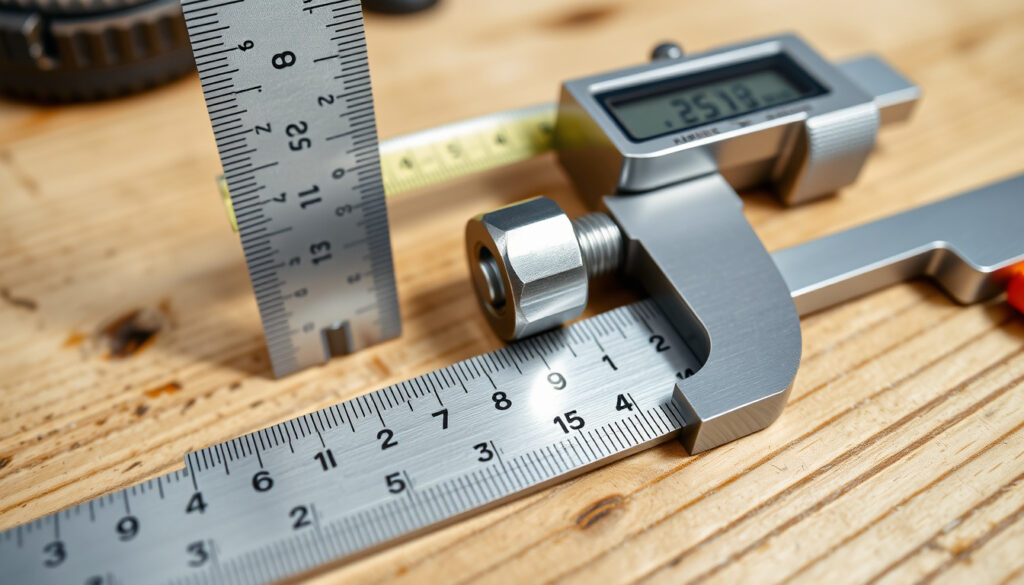
3/8 to mm – Exact 9.525 mm Conversion Guide
Converting fractional inches to millimeters is a common task in engineering, manufacturing, and DIY projects. When working with the 3/8 inch measurement, precision matters—and the exact value differs from the rounded figures often seen in quick reference charts.
This article provides the verified conversion, explains the calculation method, and outlines where the 3/8 inch size appears in practical applications. All values are traceable to internationally recognized standards maintained by NIST and ISO.
What is 3/8 Inch in mm?
3/8 inch equals exactly 9.525 millimeters. This value is derived by multiplying the fractional inch value by 25.4, which is the exact conversion factor established by international agreement in 1959.
The calculation follows a straightforward formula: 3 divided by 8 equals 0.375 in decimal form, then 0.375 multiplied by 25.4 yields 9.525 mm. This result is precise and consistent across all applications that adhere to standardized measurement systems.
3/8 × 25.4 = 9.525 mm. The decimal equivalent of 3/8 is 0.375, which when multiplied by 25.4 produces this exact value without rounding.
Quick Reference Overview
9.525
3/8 × 25.4
0.375
Equivalent form
9.5 mm
Rounded for convenience
25.4 mm/inch
ISO 80000-2 defined
Key Conversion Facts
- 3/8 inch converts to exactly 9.525 mm, obtained by multiplying the fraction by 25.4
- The conversion factor of 25.4 mm per inch is legally exact under ISO 80000-2 and NIST standards
- In practice, many reference charts round this to 9.5 mm for quick estimations
- The decimal equivalent of 3/8 is 0.375, which serves as the intermediate step in conversions
- Prior to 1959, slight variations existed between measurement systems, but the modern standard eliminates ambiguity
- 3/8 inch is the shank diameter of a standard M10 bolt, making this conversion relevant in fastener selection
Fraction to Millimeter Conversion Table
| Fractional Inches | Decimal Inches | Millimeters (Exact) |
|---|---|---|
| 1/8 | 0.125 | 3.175 |
| 1/4 | 0.250 | 6.350 |
| 3/8 | 0.375 | 9.525 |
| 1/2 | 0.500 | 12.700 |
| 5/8 | 0.625 | 15.875 |
| 3/4 | 0.750 | 19.050 |
| 7/8 | 0.875 | 22.225 |
How to Convert 3/8 Inch (or Any Inch Fraction) to mm
The conversion process for any fractional inch to millimeters follows a two-step method. First, convert the fraction to its decimal equivalent. Second, multiply that decimal by 25.4 to obtain the millimeter value.
The Conversion Formula
The general formula is: mm = (numerator ÷ denominator) × 25.4
For 3/8 inch, the calculation proceeds as follows: 3 divided by 8 equals 0.375, then 0.375 multiplied by 25.4 equals 9.525 mm. This method works for any fractional inch measurement, whether working with 1/8, 1/4, 1/2, or more complex fractions like 11/16.
When performing this calculation manually, use the decimal equivalent (0.375 for 3/8) as the intermediate step. Multiplying the fraction directly by 25.4 can introduce rounding errors depending on the method used.
Alternative Quick Estimation Method
A practical shortcut for approximate conversions multiplies the inch value by 25 and adds a correction of 0.4 for each eighth of an inch. For 3/8, this means calculating 0.375 × 25 = 9.375, then adding 0.15 (three eighths of 0.4) to reach approximately 9.5 mm. This method provides a close estimate without requiring precise decimal handling.
For woodworking, metalworking, and precision engineering, however, the exact formula should always be used to avoid cumulative errors in projects requiring tight tolerances.
Is 3/8 Inch Exactly 10 mm? Common Approximations
3/8 inch is not exactly 10 mm, though the values are close enough to cause confusion in some contexts. The exact conversion yields 9.525 mm, which differs from 10 mm by 0.475 mm—roughly half a millimeter.
Why the Confusion Exists
The similarity between 9.525 mm and 10 mm leads many non-precision reference materials to list 10 mm as the equivalent of 3/8 inch. This approximation works adequately for rough measurements in casual DIY contexts but becomes problematic in engineering applications where tolerances are measured in hundredths of a millimeter.
In fastener applications, a 3/8 inch bolt has a shank diameter of 9.525 mm, which corresponds to the M10 designation. The M10 bolt has a nominal diameter of 10 mm, making it slightly larger than the 3/8 inch fastener. This distinction matters when selecting mating parts or threaded holes.
Using 10 mm as an equivalent for 3/8 inch introduces a 4.75% error. In applications requiring interchangeability or tight fits, always use the exact value of 9.525 mm.
When Rounding Is Acceptable
- General-purpose reference materials often round to the nearest 0.5 mm
- Quick estimation for purchasing decisions where exact fit is not critical
- Artistic or decorative projects where visual proportions matter more than dimensional precision
- Initial planning stages before detailed measurements are required
Related Inch to mm Conversions and the Larger Context
Understanding where 3/8 inch fits within the broader range of fractional inch measurements helps contextualize its significance in engineering and manufacturing. Several nearby fractions are frequently encountered alongside 3/8 inch.
Common Fraction Comparisons
The quarter-inch (1/4 = 6.35 mm) sits below 3/8 inch in the fractional scale, while the half-inch (1/2 = 12.7 mm) represents the next commonly used increment. The relationship between these values forms the foundation of inch-based measurement systems that persist in certain regions despite global adoption of metric standards.
For those working across both measurement systems, a comprehensive cm to ft converter can assist with additional unit conversions beyond inches and millimeters.
Applications in Hardware and Fasteners
The 3/8 inch size appears frequently in hardware selection, particularly for bolts, nuts, and tubing. Fastener charts list 3/8 inch bolts alongside M10 specifications, noting that while the shank diameters differ slightly (9.525 mm vs 10 mm), they may function interchangeably in certain low-stress applications.
Plumbing systems commonly use 3/8 inch tubing, where the outer diameter of approximately 9.5 mm connects to corresponding fittings. Wrench sizes in fractional inch sets typically include 3/8 inch as a standard option alongside 1/4 inch, 1/2 inch, and 3/4 inch.
Those selecting wearable technology components may find our Apple Watch bands sizes guide relevant, as band attachment mechanisms often use metric measurements that interface with imperial hardware specifications.
Standards and Reference Bodies
The exact conversion of 25.4 mm per inch traces to internationally recognized standards organizations. Understanding these standards provides confidence in the precision of measurements across different contexts.
International Standards Foundation
The ISO 80000-2 standard defines the meter as the base unit of length in the International System of Units (SI), from which all other length measurements derive. The inch, defined legally as exactly 25.4 mm since 1959, maintains compatibility with SI units through this fixed relationship.
The NIST Handbook 44 provides authoritative specifications for weights and measures in the United States, confirming the 25.4 mm per inch conversion for commercial and engineering applications. This documentation ensures consistency across industries that handle both imperial and metric measurements.
Historical Context
Prior to 1959, different countries maintained slightly different definitions of the inch based on local physical standards. The International Yard and Pound Agreement of 1959 unified these definitions, establishing the inch as precisely 25.4 mm internationally. Since that date, all variations have been eliminated, and the conversion factor has remained constant for engineering and commercial purposes.
Both ISO and NIST maintain publicly accessible documentation of measurement standards. Engineering specifications frequently reference these bodies when establishing tolerance requirements for precision components.
Certainty and Precision: What Is Established vs. Approximated
Distinguishing between exact values and common approximations helps readers apply the correct precision level for their specific needs. The following breakdown clarifies what is definitively established versus what varies by context.
| Established Fact | Context-Dependent Value |
|---|---|
| 3/8 inch = 9.525 mm exactly | Rounded values in quick-reference charts (9.5 mm) |
| Formula: fraction × 25.4 = mm | Quick estimation accuracy (±0.1 mm typical error) |
| 25.4 mm/inch is the ISO-defined standard | Legacy definitions (pre-1959, no longer in use) |
| 0.375 is the decimal equivalent of 3/8 | Measurement tool precision (calipers vary by ±0.01 mm) |
Where 3/8 Inch Appears in Practice
The 3/8 inch measurement serves specific functions across several industries. Understanding these practical applications helps contextualize why this particular fractional inch value appears frequently in reference materials.
Engineering and Manufacturing
Fastener manufacturers produce 3/8 inch bolts with shank diameters of 9.525 mm, designed to mate with M10 nuts in some implementations. However, the slight dimensional difference means these are not universally interchangeable—the M10 thread pitch differs from traditional 3/8 inch specifications. Engineering drawings specify measurements in the native unit system to avoid ambiguity.
Plumbing Applications
Copper and PEX tubing in 3/8 inch sizes have outer diameters matching the metric equivalent of approximately 9.5 mm. Fittings, valves, and connection hardware for these systems typically carry both inch and metric designations to accommodate different regional preferences and manufacturing origins.
Hand Tools and Instrumentation
Wrench sets in fractional inch configurations include 3/8 inch as a standard size. Calipers and micrometers designed for precision measurement feature dual-scale displays allowing readings in either system, with the conversion factor of 25.4 enabling direct numerical comparison between inch and millimeter values.
When working on projects requiring both imperial and metric components, verify tool compatibility before beginning assembly. Mismatched sizes lead to damaged fasteners and potentially unsafe conditions.
Summary and Quick Reference
The conversion of 3/8 inch to millimeters produces an exact value of 9.525 mm, calculated by multiplying the fractional inch by the standardized factor of 25.4. This value is internationally recognized under ISO 80000-2 and NIST specifications, providing a reliable foundation for all applications requiring precision measurement.
While rounded approximations of 9.5 mm appear in many quick-reference materials, the exact conversion should be used in engineering, manufacturing, and any context where dimensional precision matters. For additional conversions, explore our unit conversion tools designed for both professional and general use.
Frequently Asked Questions
Is 3/8 inch the same as 10 mm?
No, 3/8 inch equals 9.525 mm, which differs from 10 mm by 0.475 mm. While the values are similar, they are not interchangeable in precision applications.
What is 3/8 inch in millimeters exactly?
3/8 inch equals exactly 9.525 millimeters, derived from the formula 0.375 × 25.4 = 9.525.
How do you convert fractional inches to millimeters?
Divide the numerator by the denominator to get a decimal, then multiply by 25.4. For example, 3/8 = 0.375, then 0.375 × 25.4 = 9.525 mm.
What is the closest metric bolt size to 3/8 inch?
The M10 bolt (10 mm nominal diameter) is the closest standard metric size, though its 10 mm diameter is slightly larger than the 9.525 mm measurement of a 3/8 inch bolt.
Why is 25.4 the conversion factor for inches to millimeters?
The factor 25.4 mm per inch is defined by international agreement in ISO 80000-2 and NIST Handbook 44, established in 1959 to align imperial and metric measurement systems exactly.
What common tools use 3/8 inch measurements?
Fractional inch wrench sets, certain bolt sizes, copper plumbing tubing, and calipers with dual imperial-metric scales commonly reference the 3/8 inch size.
More related posts
 Toyota Hilux 2025: Price, Problems & Ford Ranger Comparison
 Thomas Weatherall: Ethnicity, Age, Height, Relationship Status
 Anna Murdoch-Mann: Life, Death & Legacy of Media Matriarch
 Sydney Shark Attack Wave: Boy Dies in Harbour 2026
 Under Bed Storage: IKEA, Wheels & Ireland Options
 Tim English: Biography, Salary, Injury, and Personal Life
 2025 Subaru Forester Review: Price, Reliability & Specs
 Nasiah Wanganeen-Milera: Career, Family, Injury & Stats