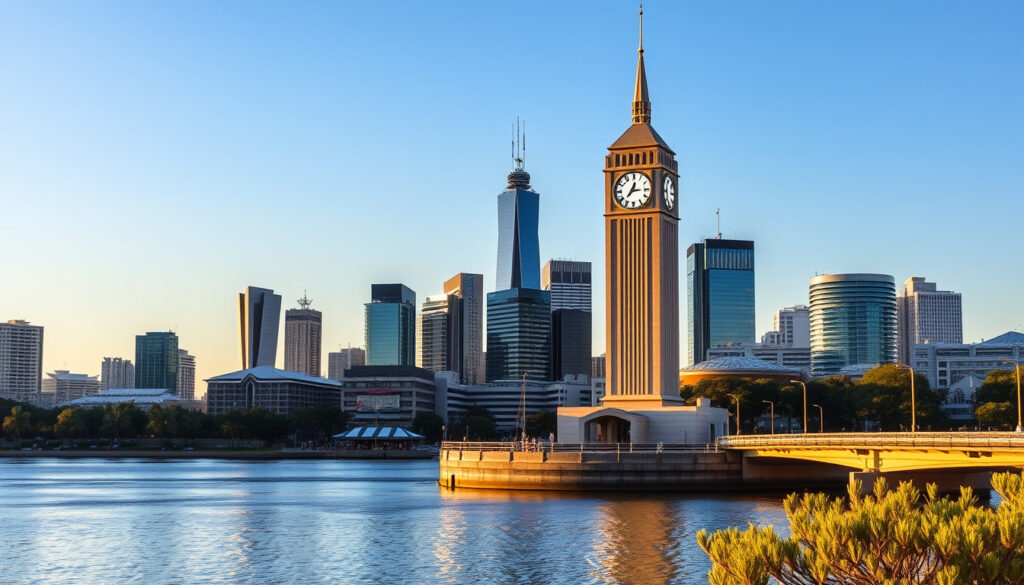
Perth Time Now – Live AWST Clock and Time Zone Guide
Perth Time Now: Current Local Time in Perth, Australia (AWST UTC+8)
Perth, the capital city of Western Australia, operates on Australian Western Standard Time (AWST), maintaining a consistent UTC+8 offset throughout the entire year. Unlike Australia’s eastern states, Perth does not observe daylight saving time, meaning its clocks remain unchanged regardless of seasonal transitions. This stable time arrangement has been official policy since 2009, when Western Australian voters resoundingly rejected a proposal to adopt daylight saving in a state referendum. Understanding Perth’s time configuration is essential for anyone coordinating with businesses, government agencies, or individuals in Western Australia’s largest city.
The city’s time zone places it among a select group of regions sharing the UTC+8 offset, including parts of Southeast Asia and China’s western regions. For international businesses, particularly those in the mining, energy, and trade sectors that dominate Western Australia’s economy, precise knowledge of Perth time ensures effective scheduling across global operations. The consistency of Perth’s timekeeping eliminates the twice-yearly clock adjustments that affect eastern Australian cities, simplifying communication and coordination for both residents and external parties.
What Time Is It in Perth Right Now?
Perth’s local time reflects its fixed position within the UTC+8 time zone, providing residents and visitors with year-round stability. The city aligns with what the Bureau of Meteorology officially designates as Australian Western Standard Time, with no scheduled adjustments or variations throughout the calendar year.
Perth time services synchronize with atomic clock references maintained by national measurement institutes, ensuring precision for commercial, governmental, and personal applications requiring exact timing.
Key Facts About Perth Time
- Perth maintains Australian Western Standard Time (AWST) permanently, without seasonal adjustments
- The city sits at UTC+8, placing it three hours behind Sydney during standard time periods
- Western Australia rejected daylight saving in a 2009 referendum with 54.56% voting against the proposal
- Perth shares its time zone offset with approximately 200 million people across multiple countries
- The stable time arrangement benefits industries requiring consistent scheduling, particularly mining operations with 24-hour shifts
- Over two million residents in the Perth metropolitan area rely on this fixed time arrangement
Snapshot: Perth Time Facts
| Fact | Detail |
|---|---|
| Time Zone | Australian Western Standard Time (AWST) |
| UTC Offset | +8 hours |
| DST Observed | No (permanent standard time) |
| Major Cities Sharing Offset | Perth, Broome, Port Moresby |
| Population Impacted | Over 2 million in metro area |
| IANA Identifier | Australia/Perth |
| Bureau of Meteorology Code | AWST (Western Standard Time) |
| Regional Alignment | Aligned with Asian trading partners |
What Time Zone Is Perth Australia In?
Perth operates within the Australian Western Standard Time zone, commonly abbreviated as AWST. This designation places the city precisely eight hours ahead of Coordinated Universal Time (UTC+8). The time zone encompasses the entire state of Western Australia, excluding the small border town of Eucla, which observes a unique offset of UTC+8:45. The official designation appears in the IANA Time Zone Database under the identifier “Australia/Perth,” providing the standard reference for computer systems and international scheduling applications.
The Western Australian government officially maintains AWST as the state’s standard time, with legislative confirmation embedded in timekeeping regulations and electoral records. This designation received further institutional validation through the Western Australian Electoral Commission’s documentation of the 2009 referendum proceedings.
Understanding UTC Offset
Coordinated Universal Time serves as the global reference point from which all time zones derive their offsets. Perth’s position at UTC+8 means that when it is noon in Perth, it is 4:00 AM the same day in London (GMT), or 8:00 PM the previous day in New York during standard time. This fixed relationship provides consistency for international communications, trade scheduling, and travel planning.
Geographic Basis
The UTC+8 zone covers approximately 150 degrees of longitude, encompassing vast stretches of the Pacific Ocean and portions of Asia. This broad coverage places Perth in the same time zone as cities including Beijing, Singapore, and Kuala Lumpur, facilitating business communications across the Asian markets that form significant trading partnerships for Western Australia. The alignment eliminates the need for complex offset calculations when coordinating with these markets.
While most of Western Australia follows UTC+8, the small community of Eucla and surrounding areas observe a distinctive UTC+8:45 offset, creating an unusual time gap between Western Australia and South Australia. This affects scheduling for residents and businesses operating across these border regions.
Does Perth Observe Daylight Saving Time?
Perth does not observe daylight saving time. Western Australia maintains permanent standard time, meaning clocks do not advance by one hour in October or retreat in March as occurs in Australia’s eastern states. This arrangement has been in place since the 2009 state referendum decisively rejected daylight saving for the fourth time in the state’s history. The absence of daylight saving provides predictability for residents and businesses while creating a complex time landscape across the continent.
The decision to reject daylight saving reflects historical resistance from regional and rural communities in Western Australia. Parliamentary records from the Western Australian legislature document the extensive public consultation and trial periods that preceded the 2009 referendum, providing official verification of the democratic process that established the current policy.
History of DST Trials and Referendums
Western Australia conducted three separate daylight saving trials between 2006 and 2009, implementing temporary clock adjustments during each summer period. These trials operated under the Daylight Saving Act 2006, which established the framework for experimental implementation. Following each trial period, public opinion polling and electoral results indicated persistent opposition, particularly in agricultural regions where schedules aligned with sun patterns held practical importance for farm operations.
Prior to the 2006-2009 trials, Western Australians voted against daylight saving in referendums held during 1975, 1984, and 1992. The pattern of rejection across multiple decades demonstrates enduring community sentiment against the practice, despite periodic advocacy from urban business groups who argued extended evening light would boost retail activity and recreational opportunities.
The 2009 Referendum
The 16 May 2009 referendum asked voters whether they supported introducing daylight saving in Western Australia by advancing standard time by one hour. The question, as recorded in official documentation, proposed the adjustment would begin on the last Sunday in October 2009 and continue through the last Sunday in March of each following year. Turnout reached 85.64 percent of eligible voters, with 1,148,853 valid votes cast under compulsory voting requirements that imposed fines on non-participants.
The results showed 54.56 percent voting against daylight saving, with strongest opposition in rural electorates. The Wagin region recorded 85.36 percent rejection, while Perth metropolitan areas showed narrow majorities in favor. Premier Colin Barnett subsequently declared daylight saving “dead for a generation,” suggesting no review would occur for at least 20 years.
No subsequent referendums or legislative proposals have advanced daylight saving in Western Australia since 2009. Government statements from that period indicate the earliest potential reconsideration would occur around 2029, following Premier Barnett’s characterization of the issue as settled for a generation.
Perth Time Differences with Major Cities
Understanding the time relationship between Perth and other major cities requires accounting for daylight saving adjustments in those locations, which Perth itself does not observe. This creates dynamic differences that change throughout the year as other cities shift their clocks while Western Australia maintains its fixed UTC+8 offset. International coordination demands attention to these seasonal variations to prevent scheduling errors. For those planning travel or business across the country, checking the current time in Sydney helps account for these variations when scheduling meetings or calls across state lines.
Perth vs. Australian Cities
| City | Time Zone | Difference from Perth |
|---|---|---|
| Sydney | AEST/AEDT (UTC+10/11) | +2 hours standard; +3 hours during Sydney DST |
| Melbourne | AEST/AEDT (UTC+10/11) | +2 hours standard; +3 hours during Melbourne DST |
| Brisbane | AEST (UTC+10, no DST) | +2 hours year-round |
| Adelaide | ACST/ACDT (UTC+9:30/10:30) | +1:30 hours standard; +2:30 hours during Adelaide DST |
| Darwin | ACST (UTC+9:30, no DST) | +1:30 hours year-round |
Perth vs. International Cities
The relationship between Perth time and major international financial centers involves substantial differences that fluctuate with seasonal clock changes. During standard time periods when New York observes Eastern Standard Time (UTC-5), Perth sits 13 hours ahead. However, when New York shifts to Eastern Daylight Time (UTC-4) between March and November, the gap narrows to 12 hours. Similarly, London presents an 8-hour difference during Greenwich Mean Time, reducing to 7 hours during British Summer Time.
For those coordinating activities with New York, the Time in NY Now resource provides current Eastern Time information essential for scheduling across this significant time differential. Business travelers and investors should also review our guide to Australian capital cities time zones for comprehensive scheduling across the continent.
| Location | Standard Time | Daylight Saving | Perth Difference (Standard) |
|---|---|---|---|
| New York | EST (UTC-5) | EDT (UTC-4) | 13 hours ahead |
| London | GMT (UTC+0) | BST (UTC+1) | 8 hours ahead |
| Singapore | SGT (UTC+8) | No DST | Same time |
| Tokyo | JST (UTC+9) | No DST | 1 hour ahead |
| Hong Kong | HKT (UTC+8) | No DST | Same time |
When planning calls between Perth and Sydney, remember that the time difference changes at different dates. Sydney transitions to daylight saving in early October, while Perth never changes. This means for approximately five months each year, the gap widens from two to three hours.
Timeline: Perth Time Zone History
The evolution of Perth’s time zone reflects Western Australia’s geographic position, economic development, and democratic engagement with time-related policy. Understanding this historical progression provides context for the current arrangements and explains why Western Australia maintains its distinctive approach to timekeeping within the Australian federation.
- 1895: Western Australia standardizes on UTC+8, establishing Australian Western Standard Time. This decision places the state in alignment with the geographic center of its territory and anticipates future trade relationships with Asian markets.
- 1974-1975: First referendum on daylight saving held in Western Australia. Voters reject the proposal, establishing a pattern of regional resistance that will persist for decades.
- 1984: Second state referendum on daylight saving again results in voter rejection, with rural and regional communities providing decisive opposition.
- 1992: Third referendum on daylight saving follows the same pattern as previous votes, with Western Australian voters confirming their preference against seasonal clock changes.
- 2006: Western Australian Parliament passes the Daylight Saving Act 2006, initiating a three-year trial program. The first trial period begins in December 2006.
- 2006-2009: Three consecutive trial periods implement temporary daylight saving, with public debate continuing throughout each summer implementation.
- 16 May 2009: Fourth referendum on daylight saving conducted with 85.64 percent voter turnout. Results show 54.56 percent rejection, ending daylight saving trials and reaffirming permanent standard time.
- 2009-Present: Premier Colin Barnett declares daylight saving “dead for a generation,” establishing approximately 20 years as the minimum period before reconsideration could occur. Policy remains unchanged through current records.
What Is Certain and Uncertain About Perth Time
Examining what is definitively established versus what remains subject to change provides clarity for anyone relying on Perth time information for business, travel, or personal coordination.
| Established Information | Information Requiring Future Verification |
|---|---|
| Perth maintains UTC+8 permanently without seasonal adjustments | Future legislative proposals for daylight saving if public sentiment shifts |
| The 2009 referendum rejected daylight saving with 54.56 percent voting no | Long-term demographic changes that might influence future referendums |
| Premier Barnett’s statement suggested no review until approximately 2029 | Precise timing of any potential future reconsideration |
| Bureau of Meteorology confirms AWST designation and UTC+8 offset | Any changes to international time zone database representations |
| No DST implementation since 2009 trial concluded in March of that year | Policy responses to interstate coordination efforts or national proposals |
Why Perth’s Time Zone Matters
Perth’s distinctive time arrangements carry significant implications for the city’s role in global commerce and domestic Australian affairs. The stable UTC+8 offset aligns Western Australia with major Asian trading partners including China, Singapore, and Japan, facilitating real-time communication during overlapping business hours. This geographic advantage proves particularly valuable for the mining, energy, and agricultural sectors that drive the state’s economy.
The absence of daylight saving reflects cultural and practical considerations particular to Western Australia’s demographics and economy. Regional communities, agricultural producers, and residents accustomed to early summer mornings value the consistency of standard time, which keeps sunrise and sunset patterns stable throughout the year. Meanwhile, eastern states experience significantly earlier sunrises during daylight saving periods, a trade-off that metropolitan business interests have historically favored.
For international travelers and businesses, understanding Perth’s time zone prevents scheduling errors and communication failures. The three-hour difference from Sydney during eastern daylight saving creates particular challenges for nationally coordinated activities, requiring explicit attention when planning meetings, broadcasts, or corporate events that span multiple Australian states.
Sources and Official References
“Are you in favour of daylight saving being introduced in Western Australia by standard time in the State being advanced one hour from the last Sunday in October 2009 until the last Sunday in March 2010 and in similar fashion for each following year?”
— Official referendum question, 2009 Western Australian Daylight Saving Referendum
Multiple authoritative sources confirm Perth’s time zone status and the democratic process that established current arrangements. The comprehensive records available through Wikipedia document the referendum results, historical context, and electoral outcomes that shape current policy. The IANA Time Zone Database maintains the technical standard for computer systems worldwide, listing Perth under the “Australia/Perth” identifier with permanent UTC+8 notation.
Government sources provide the highest-confidence verification of official arrangements. The Western Australian Electoral Commission’s documentation of the 2009 referendum includes detailed results by electorate, turnout statistics, and the formal question placed before voters. Parliamentary records, including tabled papers from the state legislature, verify the legislative framework surrounding the trial periods and subsequent referendum. The Bureau of Meteorology’s official time services designate Perth under AWST, confirming the standard time arrangement without DST adjustments.
Summary
Perth operates on Australian Western Standard Time (UTC+8) throughout the year without observing daylight saving time. This arrangement results from the 2009 state referendum in which 54.56 percent of voters rejected daylight saving, following three trial periods between 2006 and 2009. The stable time zone aligns Western Australia with significant Asian trading partners and provides consistency for residents and businesses throughout the state. No evidence indicates any change to this policy, with Premier Barnett’s characterization of daylight saving as “dead for a generation” suggesting the arrangement will persist for the foreseeable future.
For those requiring precise time conversion or scheduling across different regions, tools like our converter can assist with calculations involving Perth time and other locations.
Frequently Asked Questions
What is Perth time compared to UTC?
Perth time is UTC+8, meaning it runs eight hours ahead of Coordinated Universal Time. When it is noon in Perth, it is 4:00 AM UTC.
Is Perth time ahead or behind GMT?
Perth is eight hours ahead of Greenwich Mean Time during the northern hemisphere winter, when GMT equals UTC. During British Summer Time, the difference reduces to seven hours.
Does Perth have daylight saving time?
No, Perth does not observe daylight saving time. Western Australia rejected daylight saving in a 2009 referendum and has maintained permanent standard time since that decision.
What is the time difference between Perth and Sydney?
Perth is two hours behind Sydney during standard time. When Sydney observes daylight saving (October to April), the difference increases to three hours.
How many hours behind Perth is New York?
Perth is 13 hours ahead of New York during Eastern Standard Time. During New York’s daylight saving period, the difference narrows to 12 hours.
What is the Perth timezone abbreviation?
The official abbreviation for Perth’s time zone is AWST, standing for Australian Western Standard Time. In computer systems, it appears as “Australia/Perth” in the IANA Time Zone Database.
When was the last daylight saving trial in Perth?
The last daylight saving trial in Western Australia concluded in March 2009. The referendum held on 16 May 2009 subsequently rejected the implementation of daylight saving permanently.
What cities share Perth’s time zone?
Perth shares its UTC+8 offset with cities including Singapore, Hong Kong, Beijing, Kuala Lumpur, and Manila. This alignment facilitates business communication across Asian markets.
More related posts
 Top Job Boards Ireland: 9 Best Sites for Employers & Job Seekers
 Jermaine Jackson: Life, Career, and Family Relationships
 Peaches Geldof: What Happened, Her Children, and Family Aftermath
 Greatland Gold Share Price: Predictions, Targets & Analysis
 Qantas Flight Darwin Cairns Emergency – Key Details
 Harley Quinn: Her Origin, Mental Health, and Joker Tie
 Tomaree Coastal Walk – Complete 27km Trail Guide
 Strathfield Sports Club: Menu, Tennis, Parking & More