Everest Base Camp Trek: Difficulty, Fitness, Safety & Cost Guide
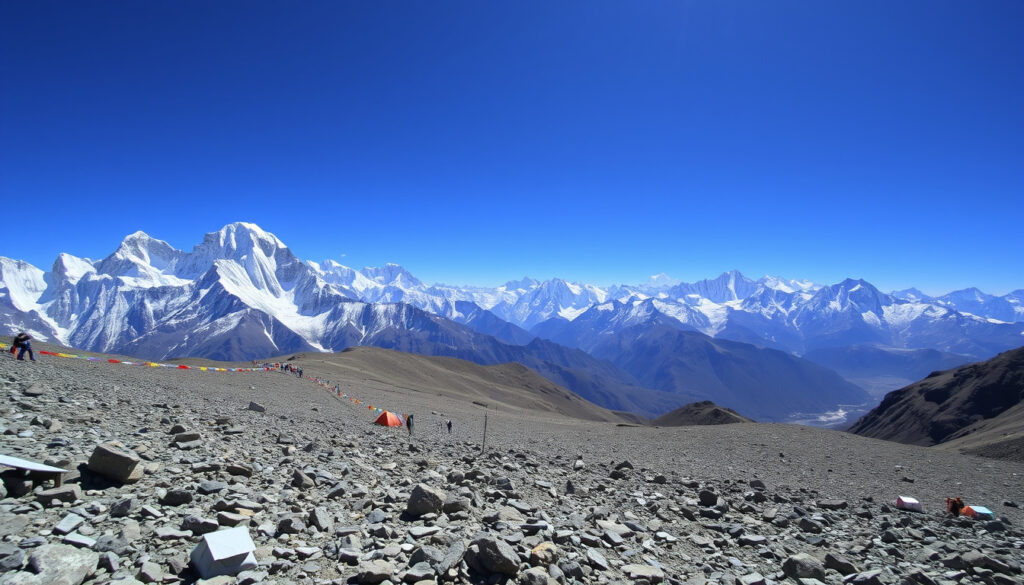
You’ve probably seen the photos: a row of colorful tents perched on a glacier at the foot of the world’s tallest mountain. But behind that iconic image lies a trek that’s as much a mental challenge as a physical one. With altitudes above 5,300 m and daily walking hours that test even fit hikers, planning matters. This guide uses Himalayan Rescue Association data and real operator benchmarks to give you a safety-first, evidence-based answer to the core beginner question: Can I do this safely?
Elevation of Everest Base Camp: 5,364 m (17,598 ft) · Typical trek duration: 16–18 days · Total walking distance (round trip): 130 km (80 miles) · Average daily walking hours: 5–7 hours · Estimated cost (budget to luxury): $1,200–$5,000 per person · Success rate for beginners with proper training: >90%
Quick snapshot
- No technical climbing needed (Spade Himalaya operator)
- Aerobic endurance (walk 5–7 hours uphill) (HSJ trekking guide)
- Beginner-friendly with proper training (Himalayan Glacier operator)
- 16–18 days total itinerary
- Average 5–7 walking hours per day
- Includes 2–3 acclimatization days
- Budget: $1,200–$2,000
- Mid-range: $2,000–$3,500
- Luxury: $3,500–$5,000+
- AMS is primary risk (Himalayan Glacier operator)
- 2pm rule reduces afternoon storm danger (Himalayan Glacier operator)
- Guided treks significantly lower injury risk (Himalayan Glacier operator)
The table below condenses the most critical numbers for planning your trek.
| Parameter | Value |
|---|---|
| Base Camp elevation | 5,364 m (17,598 ft) |
| Total trek distance | 130 km (80 miles) round trip |
| Typical duration | 16–18 days |
| Daily walking hours | 5–7 hours |
| Highest point on trek | Kala Patthar (5,643 m / 18,514 ft) |
| Cost per person (budget) | $1,200–$2,000 |
| Cost per person (guided luxury) | $3,500–$5,000+ |
| Primary risk | Acute Mountain Sickness (AMS) |
Are you fit enough for the Everest Base Camp trek?
The single biggest predictor of success isn’t strength — it’s the ability to walk uphill for six hours, day after day, at altitude. Most beginners who train for it pull it off.
Minimum fitness benchmarks for beginners
- Walk continuously for 5–6 hours with a light pack — this is the baseline recommended by most operators (HSJ trekking guide).
- Handle 600–800 m of elevation gain in a single day and repeat similar effort the next day — a good test of aerobic endurance (HSJ trekking guide).
- No technical climbing skills required; the trek follows established trails. “A fit beginner can do it with training and a good guide,” says Spade Himalaya operator.
Recommended training plan before departure
- A training window of 8–12 weeks is widely advised (Himalayan Glacier operator).
- Weekly hill walks or hikes plus cardio (running, cycling, stair climbing) form the core of most recommended plans (Spade Himalaya operator).
- Focus on building stamina over speed — the daily pace is slow but sustained.
Why this matters: If you can’t comfortably walk 5 km uphill with a 10 kg pack now, you have 8–12 weeks to change that. The people who fail are rarely the unfit who tried anyway — they’re the ones who didn’t train consistently.
How hard is it to climb to Everest Base Camp?
Altitude acclimatization challenges
- Rated moderate to strenuous by trekking operators — altitude is the bigger factor than distance (Himalayan Glacier operator).
- Acute Mountain Sickness affects 50–70% of trekkers above 3,000 m to some degree — HSJ trekking guide estimates about 50% experience mild symptoms. (The range varies by study; the lower figure is commonly cited by operators.)
- Severe forms like HACE and HAPE require immediate descent (Spade Himalaya operator).
Daily step counts and elevation gain
- Typical days involve 5–7 hours of walking, with cumulative elevation gains of 600–1,000 m (HSJ trekking guide).
- The highest point reached during the trek is Kala Patthar (5,643 m), not Everest Base Camp itself — but the altitude is still punishing.
- Good physical preparation drastically reduces perceived difficulty; most beginners with training report the trek as “challenging but doable.”
Altitude doesn’t care about your gym routine. Even elite athletes can get AMS. Fitness helps you enjoy the walking, but it doesn’t guarantee you’ll avoid headaches or nausea above 4,000 m.
The pattern: The trail itself is not technically hard — but the thin air turns a gentle gradient into a lung-burning grind. The people who struggle most are those who underestimate the mental toll of feeling breathless for a week straight.
What is the 2pm rule on Everest?
Origin of the 2pm turnaround rule
The 2pm rule is a well-established safety guideline used by guiding companies on Everest summit attempts. Climbers must commit to reach the summit by 2 pm or turn around — because afternoon weather deteriorates rapidly, and descending in darkness is far more dangerous. The rule is enforced by most licensed operators and is considered non-negotiable.
How the rule applies to base camp trekkers
- For trekking rather than summit climbing, the principle applies to crossing high passes and reaching destination villages. “Start early and plan to be at your tea house by early afternoon,” advises Ian Taylor’s trekking blog. “Clouds roll in, temperatures drop, and trails get slippery.”
- It also reduces risk of afternoon thunderstorms and hypothermia — especially on exposed sections like Cho La or Renjo La passes.
- Most itineraries schedule early starts (5–6 am) so that long walking days finish before 2 pm.
The implication: The 2pm rule is as much about comfort as safety. Pushing beyond it turns an already challenging day into a risky one — especially if you’re carrying jet lag and unfamiliar with mountain weather.
Which is harder, Kilimanjaro or Everest Base Camp?
Four factors, one clear contrast: Kilimanjaro is a sprint, EBC is a marathon.
| Factor | Kilimanjaro (Tanzania) | Everest Base Camp (Nepal) |
|---|---|---|
| Summit altitude | 5,895 m | 5,364 m (Base Camp); Kala Patthar 5,643 m |
| Typical duration | 5–7 days | 16–18 days |
| Daily walking hours | 4–6 hours (summit day: 12–14 hours) | 5–7 hours, every day |
| Technical challenge | Steep scree on summit night; no technical climbing | Long, well‑maintained trail; no technical climbing |
- Kilimanjaro is physically faster but altitude gain is more aggressive — you go from 1,800 m to 5,895 m in 5 days. That’s a steeper ascent profile that hits many trekkers hard.
- Everest Base Camp is longer and involves more total walking hours — 130 km round trip vs about 55 km on the most popular Kilimanjaro route.
- Neither requires technical climbing beyond a steady walk. “Kilimanjaro is a sprint, EBC is a marathon,” Follow Alice blog notes in a comparison blog post.
The trade-off: If you have limited vacation time and want a concentrated altitude test, Kilimanjaro wins. If you have 2–3 weeks and prefer a slower, more scenic build‑up, EBC gives you days to adapt — but demands greater aerobic endurance over many consecutive days.
Is the Everest Base Camp trek safe?
What are the biggest risks at Everest Base Camp?
- Acute Mountain Sickness (AMS): The primary concern. About 50% of trekkers experience mild symptoms — headache, nausea, poor sleep — and 1–2% develop severe altitude illness if they ignore warning signs (Himalayan Glacier operator).
- Falls and trail injuries: Slippery rocks, loose scree, and tired legs cause the second most common category of accidents. “The hardest part was the mental grind, not the physical,” says Ian Taylor’s trekking blog.
- Weather: Afternoon storms, sudden temperature drops, and high winds can catch unprepared trekkers.
How to mitigate altitude sickness, injury, and weather risks
- Acclimatize: Follow the “climb high, sleep low” principle. Most itineraries include 2–3 rest days for acclimatization. The Sagarmatha National Park permit is required (NPR 3,000 for foreigners, per All Nepal Hiking guide).
- Hire a guide: Using an experienced guide — many trained in wilderness first aid — significantly reduces risk. Guided packages from local agencies range $1,250–$1,800.
- Start early, descend if ill: Follow the 2pm rule for passes. If AMS symptoms worsen, the only cure is immediate descent — no altitude medication can replace lost oxygen.
The risk isn’t the trail itself — it’s ignoring your body’s signals. Headache that doesn’t improve with ibuprofen? Descend. Dizziness at rest? Descend. The safest trekkers are the ones who treat “maybe I’ll push through” as a red flag.
The pattern: The Everest Base Camp trail is statistically very safe for guided trekkers who stick to recommended itineraries. The dangers are almost all avoidable — if you respect the altitude and the weather.
How to plan your Everest Base Camp trek: step by step
- Get fit: Start training 3–6 months before. Focus on long walks, stair climbing, and carrying a loaded pack. Aim for 5‑hour stamina by departure.
- Choose a package: Budget $1,200–$2,000 for a basic guided trek; $2,000–$3,500 for mid‑range; $3,500+ for luxury with helicopter options. Local Nepali agencies offer the best value (Nepal Hiking Team).
- Arrange permits: You need the Sagarmatha National Park permit (NPR 3,000) and the Khumbu Pasang Lhamu Rural Municipality permit (NPR 2,000 for first 4 weeks). Some sources mention a TIMS card — its requirement varies by route (Destination Himalaya Treks).
- Fly to Lukla: The flight from Kathmandu is short but weather‑dependent. Budget an extra day for delays.
- Trek with acclimatization days: Plan 16–18 days total, with rest days at Namche Bazaar (3,440 m) and Dingboche (4,360 m).
- Reach Base Camp early: Start at 5 am on arrival day to beat the afternoon cloud build‑up and respect the 2pm rule.
- Descend safely: Return via the same route. The descent takes 3–4 days. Most injuries happen on tired legs — keep your pace steady.
Timeline of a typical Everest Base Camp trek
| Day / Period | Event |
|---|---|
| Pre‑trek (3–6 months before) | Begin aerobic training: long walks, stair climbing, hiking with loaded pack. |
| Day 1–2: Kathmandu | Arrive in Nepal. Obtain permits and gear. Flight to Lukla (weather permitting). |
| Day 3–5: Phakding to Namche Bazaar | Trek through valleys. Namche Bazaar (3,440 m) is first major acclimatization stop. |
| Day 6–7: Acclimatization in Namche | Rest day with short hike to Everest View Hotel (3,962 m). |
| Day 8–12: Tengboche, Dingboche, Lobuche | Gradual ascent. Acclimatization day at Dingboche (4,360 m). |
| Day 13–14: Gorak Shep to Everest Base Camp | Trek to Base Camp (5,364 m). Early start to avoid afternoon storms (2pm rule). |
| Day 15–16: Kala Patthar summit and descent | Early morning climb of Kala Patthar for sunrise view. Begin return trek. |
| Day 17–18: Return to Lukla, fly to Kathmandu | Descend to Lukla. Weather can delay flights; budget extra day. |
What we know vs. what’s still unclear
Confirmed facts
- Everest Base Camp elevation is 5,364 m (17,598 ft).
- The 2pm rule is a widely accepted safety guideline used by guiding companies.
- Kilimanjaro’s summit is higher (5,895 m) but trek duration is shorter (5–7 days).
- AMS affects an estimated 50–70% of trekkers above 3,000 m.
- Cost ranges from $1,200 to $5,000+ depending on service level.
What’s unclear
- Exact cost breakdown by operator fluctuates seasonally.
- Long-term cognitive effects of repeated mild AMS are not fully quantified.
- The >90% success rate for beginners is operator‑reported data, not an independent clinical study.
What trekkers say
“The hardest part was the mental grind, not the physical. You walk for nine days straight and every day feels the same — but then you round a corner and see Everest, and it all makes sense.”
— Ian Taylor, Ian Taylor’s trekking blog
“A fit beginner can do the Everest Base Camp trek with training and a good guide. Prior trekking experience is not required — we see complete novices make it every season.”
— Spade Himalaya, Nepal‑based trekking operator
For the beginner who trains smart, the Everest Base Camp trek is not a summit push — it’s a long, rewarding walk at high altitude. The safety record for guided trekkers is excellent when the basics are followed: acclimatize, start early, and respect the 2pm rule. For anyone based in Ireland booking through a UK or European operator, the choice is clear: invest in 3 months of training, budget $2,000–$3,000, and compare it with other iconic treks like Machu Picchu to see which fits your fitness and time. Either way, the mountains will reward patience — not heroism.
Related reading
- Machu Picchu Facts, Inca Trail Bathrooms, Beginner Hiking Tips — another bucket‑list trek with similar fitness demands.
- Poison Ivy: Identification, Rash, and Treatment — wilderness first‑aid knowledge useful for any outdoor trip.
magicalnepal.com, getawaynepal.com, mountgloryadventures.com, allnepalhiking.com, everestthrills.com, mountfacenepal.com, hctreks.com, destinationhimalayatreks.com
Frequently asked questions
What is the best time of year to trek Everest Base Camp?
Spring (March–May) and autumn (September–November) are the peak seasons. Spring offers moderate temperatures and clear skies; autumn is slightly cooler but equally stable. Winter treks are possible but very cold (-20 °C at night).
Do I need a guide for the Everest Base Camp trek?
Starting April 2023, foreign trekkers are required by Nepali law to be accompanied by a licensed guide on all trekking routes, including Everest Base Camp. Even without the rule, guides significantly reduce risk and improve logistics.
What permits do I need for Everest Base Camp?
Two main permits: the Sagarmatha National Park permit (NPR 3,000 for foreigners) and the Khumbu Pasang Lhamu Rural Municipality permit (NPR 2,000). Some sources also mention a TIMS card, but its requirement is inconsistent. Your agency can handle all paperwork.
Can I charge electronics during the trek?
Yes — most tea houses have solar‑powered charging outlets. They usually charge a small fee ($1–$3 per device). Bring a universal adapter.
What is the weather like at Everest Base Camp in spring vs autumn?
Spring: daytime 10–15 °C, night -5 °C. Autumn: slightly cooler (7–12 °C day, -10 °C night). Both seasons have stable weather windows. Spring has more blooming rhododendrons, autumn has clearer views of Everest.
How much luggage can I carry on the trek?
Most operators limit you to 10–15 kg in a duffel bag for the porter plus a daypack (10 kg) for your personal gear. Porters carry your main bag; you only walk with water, snacks, layers, and camera.
Do I need travel insurance for Everest Base Camp?
Absolutely essential. Your policy must cover trekking above 5,000 m, helicopter evacuation, and AMS/HAPE/HACE treatment. Most standard travel policies exclude high‑altitude trekking — buy a specialist trekking insurance policy.
More related posts
 Susie O’Neill: Olympic Champion to Reality TV Star
 Inter Miami vs Palmeiras: 2-2 Draw, Club World Cup Result
 Left Bank Melbourne: Dress Code, Owner, Menu & Happy Hour
 Bambu Lab P1S Review: P2S Comparison, Worth Buying?
 Shark Stain Striker Review: Worth It? Comparison & FAQ
 Security Screens Near Me: Ireland Prices, Types & Install
 Missy Higgins vs Missy Elliott: Songs, Marriage, Booking
 Terry White Chemist: Locations, Products & Online Guide