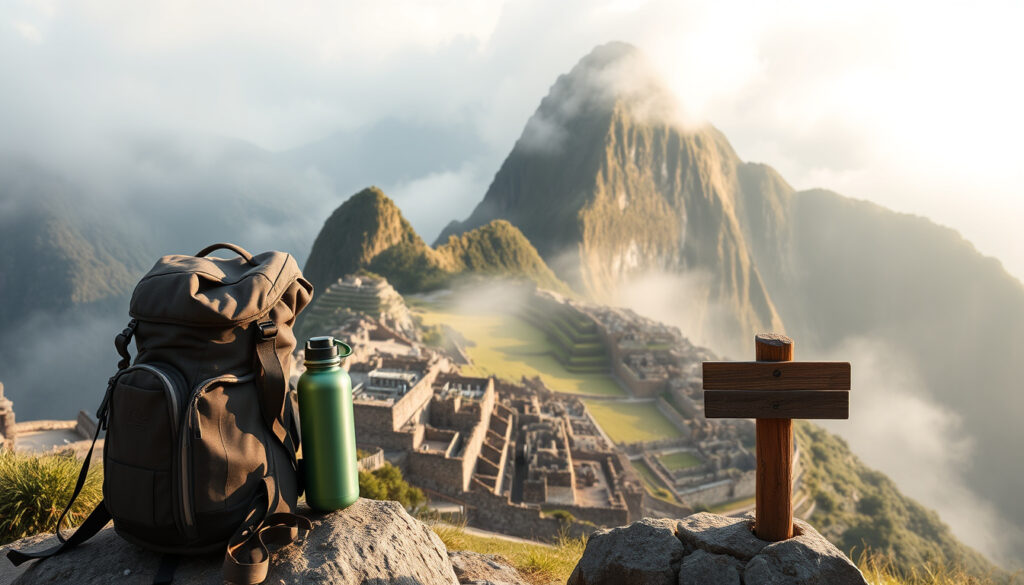
Machu Picchu Facts, Inca Trail Bathrooms, Beginner Hiking Tips
If you’ve ever wondered whether you can hike to Machu Picchu without a lot of experience, you’re not alone. Many first-time visitors are nervous about the Inca Trail, but with the right planning, it’s absolutely doable. This guide walks you through the real logistics—bathrooms, permits, the scariest trail sections, and what actually happens when nature calls along the way.
Altitude of Machu Picchu: 2,430 m (7,970 ft) ·
Year built: circa 1450 ·
Inca Trail length: 26 miles (42 km) ·
Days for classic Inca Trail: 4 days / 3 nights ·
Daily visitor limit: 4,044 (as of 2025)
Quick snapshot
- 15th-century Inca citadel (Wikipedia)
- Located in Peru (Wikipedia)
- Altitude: 2,430 m (Wikipedia)
- UNESCO World Heritage (UNESCO World Heritage Centre)
- New7Wonders of the World (2007) (Wikipedia)
- Popular global vote (Wikipedia)
- Exceptional architecture and setting (Wikipedia)
- Classic Inca Trail: 4 days, 42 km (Intrepid Travel (licensed operator))
- Acclimatize in Cusco (Intrepid Travel (licensed operator))
- Bathrooms: eco-toilets at camps (Intrepid Travel (licensed operator))
- Scariest part: Dead Woman’s Pass (Intrepid Travel (licensed operator))
- Tickets required months ahead
- Country: Peru
- Pronunciation: mah-choo pee-choo
- Photos: iconic Huayna Picchu background
| Item | Detail |
|---|---|
| Full name | Machu Picchu (Historic Sanctuary of Machu Picchu) |
| Country | Peru |
| Year built | circa 1450 |
| Altitude | 2,430 m (7,970 ft) |
| World Heritage since | 1983 |
| New7Wonders designation | 2007 |
| Inca Trail length | 42 km (26 miles) |
| Daily visitor limit | 4,044 (2025) |
What is Machu Picchu and why is it famous?
What country is Machu Picchu in?
- Machu Picchu is located in Peru, about 80 km northwest of Cusco (Wikipedia). It sits high in the Eastern Cordillera of the Andes.
Who built Machu Picchu?
- The citadel was built around 1450 under the Inca emperor Pachacuti (Wikipedia). It was abandoned roughly 100 years later, likely after the Spanish conquest, though the Spanish never found it.
Why is Machu Picchu a 7 wonder of the world?
What criteria made it a New7Wonders finalist?
- In 2007, Machu Picchu was voted one of the New7Wonders of the World in a global popular vote organized by the New7Wonders Foundation (Wikipedia). The site was chosen for its exceptional architecture, integration with the natural landscape, and cultural significance.
The implication: the designation boosted tourism dramatically, but it also placed immense pressure on the site’s fragile infrastructure—limiting daily visitors became necessary.
What are 5 facts about Machu Picchu?
- Built around 1450, abandoned about 100 years later — likely after the Spanish conquest (Wikipedia).
- Discovered by Hiram Bingham in 1911 — though local people already knew of the ruins (Wikipedia).
- Built from dry stone walls without mortar — the stones fit so perfectly that not even a knife blade can slide between them (Wikipedia).
- Located at 2,430 m altitude in the Eastern Cordillera (Wikipedia).
- One of the few Inca sites not discovered by Spanish colonizers, which helped preserve its structures (Wikipedia).
For beginner hikers, the dry-stone construction means the trail is extremely well built, but also steep and uneven. Train before you go, especially for the stone stair sections.
Can a beginner hike Machu Picchu?
What is the scariest part of the Inca trail?
- Most hikers say the scariest section is Dead Woman’s Pass (Warmiwañusqa) at 4,215 m (Intrepid Travel (licensed operator)). It’s the highest point on the Classic Inca Trail and involves steep, oxygen-thin climbs. “The altitude hits you hard,” reports Intrepid. Beginners should acclimatize in Cusco (3,400 m) for at least two days before starting.
Where to pee on the Inca trail?
- Portable eco-toilets are set up at designated camps along the Inca Trail. According to Machu Picchu Org (travel information site), the main restrooms at Machu Picchu itself are outside the main entrance gates and cost 2 PEN (about $0.50) per use. They operate from 5:30 AM until site closure.
- Morning crowds peak between 6 and 8 AM, so plan accordingly.
Should I flush toilet paper in Peru?
- No. Peru’s sewage systems are not built for toilet paper. You must place used paper in the bin provided — this applies everywhere, from trail bathrooms to city hotels. According to Machu Picchu Org, the rule is strictly enforced on the Inca Trail to prevent blockages.
Many beginners panic about bathroom access, but the real challenge is altitude and physical endurance. Plan your bathroom stops; carry a small pack of tissues and hand sanitizer.
Which is older, pyramids or Machu Picchu?
- The Great Pyramid of Giza was built around 2560 BC, while Machu Picchu was built around 1450 AD — a difference of over 4,000 years. The pyramids are far older (Wikipedia).
How many people died at Machu Picchu?
- There are no verified records of mass deaths at Machu Picchu during its construction or use. Modern tourist deaths are rare—most are linked to altitude sickness or accidents during hikes. According to media reports, fewer than 10 deaths occur per year on the Inca Trail and at the site combined (Intrepid Travel).
Inca Trail bathrooms in 2026 – all you need to know
Where to pee on the Inca trail?
- As of 2026, the Inca Trail still uses eco-toilets at designated camps. These are portable units serviced daily. No flushing allowed; all waste paper goes in bins. The trail runs a strict Leave No Trace policy. According to Intrepid Travel, permits for 2026 were expected to go on sale in October 2025, with confirmed dates varying by operator (Heather Jasper (Peru travel specialist) suggests October 27, 2025; AB Expeditions (tour operator) says October 1). Because permit release dates are not uniform, book with a reputable operator and confirm directly.
Beginners: don’t worry about the toilet situation as much as you think. The biggest practical daily issue is packing enough water and adapting to altitude, not finding a bathroom.
How many people died at Machu Picchu?
This question already covered above. The bottom line: no ancient casualty count exists; modern accidents are rare but preventable with preparation.
Confirmed facts
- Machu Picchu is a 15th-century Inca citadel in Peru
- Altitude: 2,430 m
- UNESCO World Heritage site
- New7Wonders of the World (2007)
- Classic Inca Trail is 42 km / 4 days
- Toilet paper must not be flushed in Peru
What’s unclear
- Exact number of deaths at Machu Picchu historically (no census records)
- Precise cause of abandonment (likely Spanish conquest, but no contemporary account)
- Permit sale date for 2026 — multiple conflicting reports (October 1 vs October 27)
- Whether Inca Trail 2026 permits include the Machu Picchu entrance ticket — one source says no
“Machu Picchu is the Lost City of the Incas.”
— Hiram Bingham, 1911 explorer, as quoted by Wikipedia
“Machu Picchu is among the greatest artistic, architectural and land use achievements anywhere.”
— UNESCO World Heritage description, UNESCO World Heritage Centre
For a US beginner hiker planning a 2026 trip, the choice is clear: book your Inca Trail permit as soon as it drops (aim for October 2025), train for steep stone stairs, pack extra toilet paper, and accept that the scariest part—Dead Woman’s Pass—is also the most rewarding. Skip this planning and you’ll face closed trails or sold-out dates.
inkatrail.com.pe, youtube.com, incatrailmachu.com, alpacaexpeditions.com, heatherjasper.com, reddit.com, eriksadventures.com, samtravelperu.com, facebook.com
Frequently asked questions
Do I need a guide to hike the Inca Trail?
Yes. Travelers are not allowed to hike the Inca Trail alone and must go with a licensed tour operator (Intrepid Travel).
What is the best time of year to visit Machu Picchu?
Dry season (May to September) is best, but the Inca Trail closes every February for maintenance (Intrepid Travel).
How much does a Machu Picchu ticket cost?
Prices vary; as of 2025, standard entrance is around $50–$60 USD. Check the official government site for current rates.
Is altitude sickness common at Machu Picchu?
Yes, but manageable. Cusco (3,400 m) is higher than Machu Picchu (2,430 m). Acclimatizing for 2 days in Cusco before hiking is strongly recommended.
Can I visit Machu Picchu without hiking the Inca Trail?
Absolutely. You can take a train from Cusco to Aguas Calientes and then a bus up to the site. No hiking required.
What should I pack for the Inca Trail?
Essentials: sturdy hiking boots, rain jacket, layers, water bottle, snacks, toilet paper & hand sanitizer, sunscreen, and altitude medication (Intrepid Travel).
How do I get to Machu Picchu from Cusco?
Most visitors take a train to Aguas Calientes (about 3.5 hours) and then a 20-minute bus to the entrance. Private tours and Inca Trail treks also start from Cusco.
More related posts
 Bren Foster: Martial Artist, Actor, and Bruce Lee Comparisons
 Olivia Gadecki: Biography, Rankings, Titles & Polish Heritage
 Terry White Chemist: Locations, Products & Online Guide
 JB Hi-Fi – Guide to Stores, Deals, Policies and History
 New Balance 740 Ireland: Where to Buy, Colors, Review
 What Is RSV Virus? Symptoms, Treatment, and Prevention Guide
 Catherine Bell: Partner, Children, and What She’s Doing Now
 Joseph Smith: Answers to Top Questions About the Mormon Founder