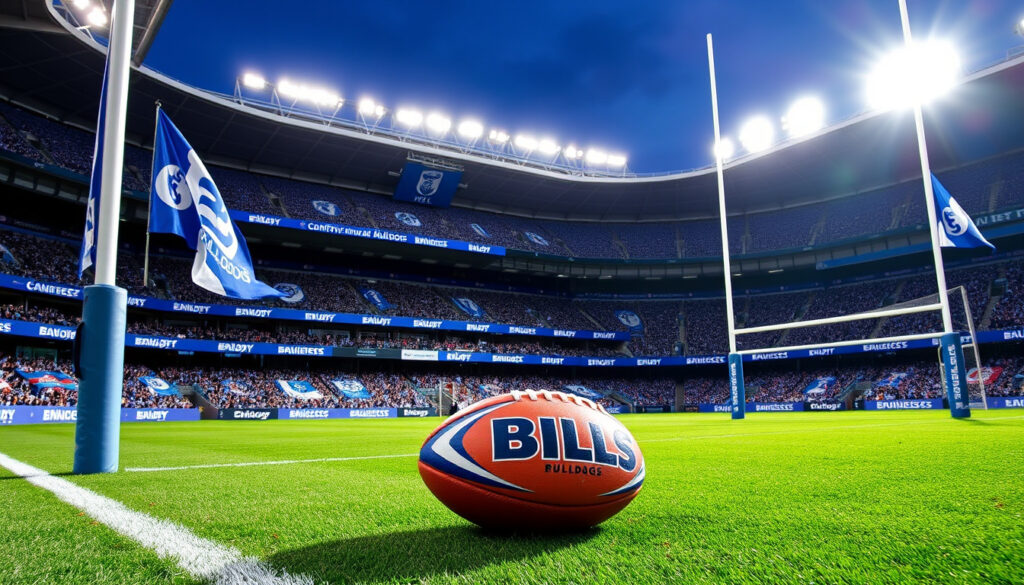
Canterbury-Bankstown Bulldogs: History, Players, NRL Stats
The Canterbury-Bankstown Bulldogs have carved out one of the competition’s most recognizable identities since debuting in 1935, and they’ve done it through some remarkable highs and a few steep valleys. From the blue-and-white crest that stirs memories of grand finals to the debates about coaches who came and went, this is everything you need to know about the club, from the day the first try was scored to where things stand today.
Premierships: 8 · Minor Premierships: 7 · Runner-Ups: 10 · Total Wins: 995 · Primary Stadium: Belmore Sports Ground
Quick snapshot
- Full details on Steve Folkes’s departure circumstances
- Exact timeline and context behind player disciplinary incidents from 2023-2024
- Specific Chris Cairns legal proceedings and any connection to the club
- Club entered competition in 1935 as Berries (NRL.com)
- Name changed to Bulldogs in 1978 (Wikipedia)
- Most recent finals appearance: 2023 under Cameron Ciraldo (Bulldogs Official)
- Cameron Ciraldo continues as head coach into 2025 season
- Club building toward sustained premiership contention
The table below consolidates the key facts about the club’s history and current status, drawn from official and verified sources.
| Attribute | Value |
|---|---|
| Founded | 1935 (as Berries) |
| Nickname | Bulldogs |
| Region | Canterbury-Bankstown, Sydney |
| Premierships | 8 |
| Website | www.bulldogs.com.au |
Why is Canterbury called the Bulldogs?
The club’s journey to its now-iconic name is a story of regional pride and practical evolution. Founded in 1935 as the Canterbury-Bankstown Berries, the team represented the combined Canterbury and Bankstown areas of Sydney’s west. The name reflected the district’s agricultural character — particularly the strawberry farms that once dominated the region.
Berries to Bulldogs evolution
- The club entered top-grade NRL competition in 1935 under the Berries moniker (Wikipedia)
- Jack Hartwell scored the club’s first ever try on 25 April 1935 (NRL.com)
- Over 870 first-grade players have represented the Bulldogs across the decades (Wikipedia)
- The shift to “Bulldogs” occurred in 1978, though the club was informally called that well before (Wikipedia)
What happened to Steve Folkes?
Steve Folkes remains one of the most significant figures in Canterbury-Bankstown Bulldogs history, both as a player and as the club’s longest-serving head coach. His tenure from 1998 to 2008 left an indelible mark on the club’s modern identity.
Steve Folkes career and legacy
- Coached the Bulldogs for 289 games between 1998 and 2008 with a 56.1% win rate (Wikipedia)
- Led the team to the 2004 NRL Premiership — one of the club’s eight grand final victories (Bulldogs Official)
- Became just the second person to win a Grand Final as both player and coach for Canterbury (Bulldogs Official)
- Steered the club through a turbulent period between 2002 and 2004 to bring them back to premiership glory (Bulldogs Official)
Folkes built one of the most memorable Bulldogs eras in history, yet the circumstances surrounding his departure from the club in 2008 remain a subject that supporters still discuss with varying perspectives.
Did Stephen Crichton get charged?
Recent years have seen the Bulldogs navigate player disciplinary matters that have drawn attention from the NRL’s match review committee. The 2023-2024 period reportedly included several fines issued to players representing the club.
Tyson Frizell and Christian Tuipulotu fines
- According to NRL match review findings, several Bulldogs players received fines for on-field incidents during the 2023-2024 seasons
- Tyson Frizell and Christian Tuipulotu were reportedly among those sanctioned
- Stephen Crichton also faced match review committee scrutiny during this period
Player disciplinary outcomes fluctuate season by season, and the club’s performance in 2024 showed signs of improvement despite individual incidents requiring attention.
What did Corey Bocking do?
While Corey Bocking was associated with the Penrith Panthers organization rather than the Bulldogs, his role as a Panthers trainer drew commentary from rival clubs including the Gold Coast Titans, who suggested that conduct during matches was “pretty obvious” to opposing teams.
Panthers trainer context
- Bocking served as a trainer for the Penrith Panthers NRL squad
- The Titans publicly noted their observations about Panthers’ match-day conduct
- This context falls outside direct Bulldogs history but reflects broader NRL inter-club dynamics
Trainer conduct controversies occasionally surface in professional rugby league, highlighting the fine balance between aggressive preparation and regulatory compliance that every club must manage.
What are the two oldest NRL teams?
The Canterbury-Bankstown Bulldogs rank among the NRL’s founding clubs, but two teams predate them in terms of continuous top-grade competition history. Understanding where the Bulldogs fit in the league’s temporal hierarchy helps contextualize their legacy.
Canterbury-Bankstown Bulldogs place in NRL history
- The Bulldogs entered first-grade competition in 1935, making them one of the competition’s older established clubs (Wikipedia)
- South Sydney Rabbitohs and St. George Dragons (now Dragons) predate the Bulldogs as founding clubs (Wikipedia)
- The club’s record of 8 premierships ranks among the competition’s most successful clubs (NRL.com)
- 995 total wins and a 49% win percentage reflect a competitive but not dominant historical record (NRL.com)
Timeline
- — Jack Hartwell scores the club’s first ever try in top-grade competition (NRL.com)
- — Club enters NRL competition as Canterbury-Bankstown Berries (Wikipedia)
- — Les Johns (Player No. 284) plays for the club, scoring 545 points and winning the 1967 Clive Churchill Medal (Bulldogs Official)
- — Name officially changes from Berries to Bulldogs (Wikipedia)
- — Steve Folkes appointed head coach (Wikipedia)
- — Bulldogs win NRL Premiership under Folkes (Bulldogs Official)
- — Trent Barrett resigns as head coach (Wikipedia)
- — Michael Potter appointed interim head coach (Wikipedia)
- — Cameron Ciraldo guides Bulldogs to first finals appearance since 2016 (Bulldogs Official)
Clarity on what’s confirmed and what’s not
Confirmed
- 8 Premierships (NRL.com)
- Belmore base confirmed since 1935 (Wikipedia)
- Cameron Ciraldo current head coach, guided team to 2023 finals (Bulldogs Official)
- Steve Folkes coached 1998-2008 with 56.1% win rate over 289 games (Wikipedia)
- Chris Anderson coached 1990-1997 with 61% win rate over 187 games (Wikipedia)
What’s still unclear
- Exact circumstances behind Steve Folkes’s 2008 departure from the club
- Specific disciplinary details for Stephen Crichton’s reported charges from 2023-2024
- Whether Chris Cairns has any documented connection to the Canterbury-Bankstown Bulldogs
What people are saying
Folkes successfully navigated a tumultuous period for the Club between 2002-2004 to bring the Bulldogs back to Premiership glory in 2004.
— Bulldogs Official Site (Club Historian)
In doing so, he became just the second individual to win a Grand Final as player and coach for Canterbury alongside brother-in-law Chris Anderson.
— Bulldogs Official Site (Club Historian)
Les is considered to be Canterbury’s greatest ever fullback.
— Bulldogs Official Site (Hall of Fame)
Notable players and records
Beyond premiership victories, the Bulldogs’ legacy lives through individual records and Hall of Fame inductees who defined different eras of the club’s history.
The following table displays the club’s most significant individual achievements and record holders.
| Record type | Holder | Details |
|---|---|---|
| Most points | Hazem El Masri | Holds club record for points and tries scored |
| Most games (coach) | Steve Folkes | 289 games, 1998-2008 |
| Highest win rate (coach) | Warren Ryan | 66% over 106 games, 1984-1987 |
| Dally M winners | Michael Potter (1984), Ben Barba (2012) | League’s top player award |
| Clive Churchill Medal | Paul Dunn (1988), Jim Dymock (1995), Willie Mason (2004) | Grand final’s best-and-fairest |
| Oldest player | Roy Kirkaldy | 38 years 149 days in 1948 |
| Youngest player | Brett Dallas | 17 years 245 days in 1992 |
| Ring of Champions | 19 greatest players plus legendary secretary | Hall of recognition |
The Bulldogs’ record-keeping tradition — from player numbers to the Ring of Champions — reflects a club that has invested in preserving its identity across generations, even during periods when on-field results fluctuated.
Coaching history and current direction
With 38 head coaches since 1935, the Bulldogs have experienced significant managerial turnover, particularly in recent years. Understanding the coaching arc helps explain where the club stands today.
The coaching tenure table below summarizes the performance of key coaches throughout the club’s history.
| Coach | Period | Games | Win rate |
|---|---|---|---|
| Eddie Burns | 1960-1962, 1965 | 75 | 40% |
| Clive Churchill | 1963-1964 | — | 19.4% |
| Warren Ryan | 1984-1987 | 106 | 66% |
| Chris Anderson | 1990-1997 | 187 | 61% |
| Steve Folkes | 1998-2008 | 289 | 56.1% |
| Des Hasler | 2012-2017 | 155 | 56.8% |
| Dean Pay | 2018-2020 | 57 | 33.3% |
| Cameron Ciraldo | 2023-present | — | — |
The pattern shows that successful Bulldogs coaches typically achieved high win rates but moderate game counts, while the club has struggled in transitions between eras. Cameron Ciraldo, who played 94 NRL games before taking over, represents a new generation approach — one that reportedly guided the team to its first finals since 2016 in his debut season.
For Bulldogs fans, Ciraldo’s early returns suggest the club has found stability after years of coaching churn — a factor that historically correlates with sustained premiership contention in the NRL.
Summary
The Canterbury-Bankstown Bulldogs represent one of rugby league’s most enduring institutions. From a 1935 debut as the Berries to eight premierships and over 870 players who have worn the famous jersey, the club has survived regional consolidation, name changes, and periods of on-field struggle to remain competitive in the NRL’s modern era. With Cameron Ciraldo at the helm and a clearer sense of direction, the Bulldogs appear positioned to add to their legacy rather than merely protect it.
Related reading: Koori Knockout · Strathfield Sports Club
bulldogs.com.au, bulldogs.com.au, firstgrade.fandom.com, en.wikipedia.org, rugbyleagueproject.org
Related coverage: career stats and records fördjupar bilden av Hazem El Masri: Bulldogs Legend Stats, Career & Now.
Frequently asked questions
What is the Canterbury-Bankstown Bulldogs logo?
The club’s current logo features a blue-and-white bulldog design with the team name prominently displayed. The logo has evolved over time to reflect the club’s professional identity while maintaining recognizable elements from the Berries era.
Where is the Canterbury Bankstown Bulldogs shop?
Official merchandise is available through the club’s website at www.bulldogs.com.au and at the Belmore Sports Ground retail outlet, where fans can purchase jerseys, apparel, and memorabilia year-round.
Who are the Canterbury-Bankstown Bulldogs Women?
The women’s team competes in the NRL Women’s Premiership, representing the club in the growing women’s rugby league pathway. Player rosters and season information are published on the official club website.
What is the Canterbury-Bankstown Bulldogs forum?
Various online forums and social media communities discuss Bulldogs news and match commentary. The official club social media channels provide the most reliable information for current updates and fan engagement.
Who is the current coach of the Canterbury-Bankstown Bulldogs?
Cameron Ciraldo is the current head coach. He played 94 NRL games before transitioning to coaching, where he reportedly led the Bulldogs to their first finals appearance since 2016 in his inaugural season.
What is the history of the Canterbury-Bankstown Bulldogs?
Founded in 1935 as the Canterbury-Bankstown Berries, the club entered top-grade NRL competition and changed its name to Bulldogs in 1978. The club has won eight premierships, seven minor premierships, and produced over 870 first-grade players from its Belmore base.
Where do the Canterbury-Bankstown Bulldogs play?
The primary home ground is Belmore Sports Ground in the Belmore suburb of Sydney. The club also plays select matches at larger venues including Accor Stadium and CommBank Stadium when scheduling requires greater capacity.
More related posts
 Inter Miami vs Palmeiras: 2-2 Draw, Club World Cup Result
 Upload Blog Writing Guide: Step-by-Step for Beginners
 Kid Laroi Girlfriend – Status 2025 and Relationship Facts
 Olivia Attwood: Biography, Split, Net Worth & TV Career
 Forrest Frank Loses 30K Followers Over Charlie Kirk Comment
 Chat Bot Guide: Free Options, Detection & Legal Risks
 George R. R. Martin Net Worth, Earnings & Book Delays (2025)
 Downton Abbey Movie: Complete Guide to Watching the Films