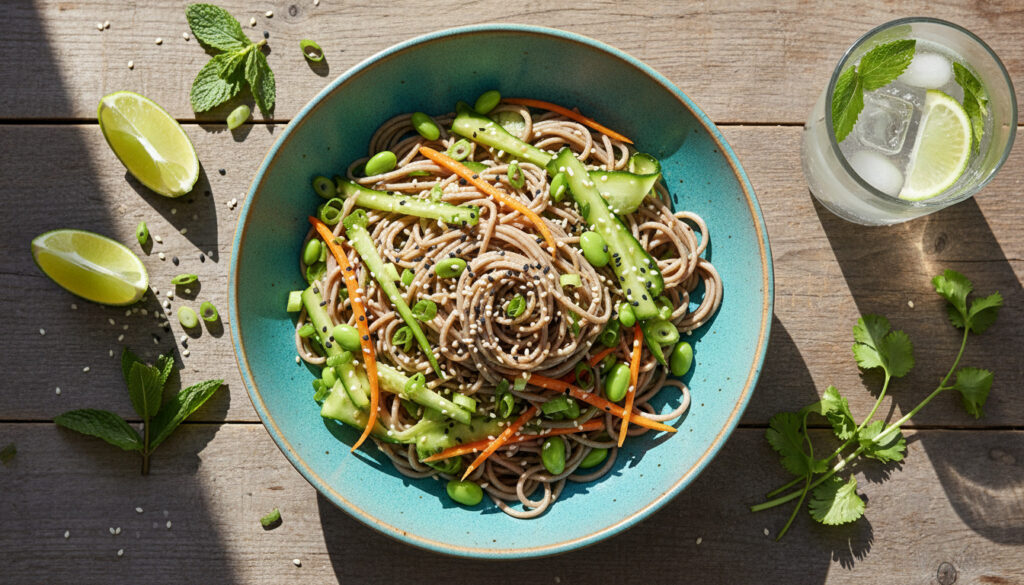
Soba Noodle Salad – Refreshing 20-Minute Vegan Recipe
Cold soba noodle salad delivers a refreshing, nutrient-dense meal that comes together in under thirty minutes. This dish combines earthy buckwheat noodles with crisp vegetables and a creamy peanut dressing, offering a vegan and gluten-free adaptable option for busy weeknights.
Unlike heated pasta dishes, this salad relies on chilled soba noodles to provide a firm, chewy texture that holds up well to bold dressings. The preparation method emphasizes efficiency: boil, rinse, toss, and serve.
Originally rooted in Japanese culinary tradition but adapted through Western fusion, modern soba salads have gained traction for their make-ahead convenience and balanced nutritional profile.
How to Make Soba Noodle Salad
Authentic preparation requires specific attention to noodle cooking time and rapid cooling to achieve optimal texture.
- Buckwheat base provides complete protein and distinct nutty flavor
- Requires only 3-4 minutes of boiling time
- Best served chilled for optimal texture and flavor absorption
- Highly customizable with seasonal vegetables and protein additions
- Gluten-free when using 100% buckwheat soba noodles
- Make-ahead friendly for up to 4-5 days refrigerated
| Nutrient | Amount per Serving |
|---|---|
| Calories | 350-450 |
| Protein | 12g |
| Carbohydrates | 60g |
| Fiber | 4g |
| Total Fat | 14-18g |
| Sodium | 600-800mg |
| Iron | 8-10% DV |
| Calcium | 4-6% DV |
According to Choosing Chia, the total preparation time averages twenty minutes, with the noodle cooking process taking three to four minutes specifically.
What Ingredients and Dressing Go in Soba Noodle Salad?
The Soba Foundation
Standard recipes call for six to ten ounces of soba noodles, preferably manufactured from 100% buckwheat flour for authentic flavor and gluten-free compliance. The cooking process requires three to four minutes in boiling water until the noodles reach an al dente texture.
Verify packaging labels for “100% buckwheat” to ensure gluten-free status. Some commercial brands blend wheat flour with buckwheat, which significantly alters both nutritional content and final texture.
Vegetable Components
The vegetable profile typically includes cucumber cut into spiralized strips or julienne, shredded carrots, finely sliced purple cabbage, chopped scallions, and bell peppers. These ingredients provide dietary fiber, vitamins, and essential textural contrast against the soft noodles.
Peanut Dressing Preparation
The dressing base combines one-quarter to one-half cup of peanut butter with one to two tablespoons of tamari or soy sauce, one to four tablespoons of rice vinegar or lime juice, and one tablespoon of maple syrup or agave. Optional additions include sesame oil, minced garlic, grated ginger, and sriracha for heat. From My Bowl notes that oil-free variations work effectively by simply omitting the sesame oil.
Is Soba Noodle Salad Healthy?
Nutritional Density
The dish delivers approximately 400-500 calories per serving, primarily derived from complex carbohydrates in buckwheat and healthy fats in the peanut dressing. The high vegetable content ensures significant dietary fiber intake and essential micronutrients.
Complete Protein Profile
Buckwheat contains all nine essential amino acids, classifying it as a complete protein source rare in plant-based ingredients. This characteristic makes the salad particularly valuable for vegan and vegetarian dietary patterns.
While buckwheat is naturally gluten-free, manufacturing cross-contamination and intentional wheat blending are common industry practices. Always verify packaging certification when preparing for gluten-sensitive individuals.
Connoisseurus Veg confirms the dish qualifies as nutrient-dense due to its whole food composition and minimal processed ingredients.
Tips, Variations, and Make-Ahead for Soba Noodle Salad
Advance Preparation Strategies
Prepare a double batch of dressing and store separately from vegetables to maintain crispness. Assembled salads remain fresh for four to five days in airtight containers, though the noodles may soften over time. Crunch Time Kitchen recommends adding fresh vegetables post-storage to restore texture.
Allergen Modifications
Replace peanut butter with sunflower seed butter or tahini for nut-free versions. Crispy tofu, edamame, or sautéed mushrooms integrate seamlessly for additional protein. Extra sriracha, ginger, or lime zest accommodate various heat preferences.
Standard preparation contains peanuts, soy, and sesame. Verify soba ingredients for wheat content when serving gluten-sensitive individuals, and substitute sunflower seed butter for peanut allergies.
How Does Soba Noodle Salad Come Together?
- Boil soba noodles for 3-4 minutes until al dente
- Rinse immediately under cold water to stop cooking and remove excess starch
- Chop vegetables while noodles cool completely
- Whisk dressing ingredients until smooth, thinning with water if necessary
- Combine cooled noodles and vegetables in a large bowl
- Toss thoroughly and chill for 15+ minutes to allow flavor melding
Vegetarian Times recommends using a blender for the dressing when incorporating fibrous ingredients like fresh ginger.
What Is Certain About Soba Noodle Salad?
| Established Information | Information That Remains Variable |
|---|---|
| Boil-rinse-toss method is standard across all verified recipes | Exact calorie counts vary significantly by portion size and specific ingredient brands |
| 100% buckwheat soba is definitively gluten-free | Specific vegetable ratios depend on seasonal availability and regional preferences |
| Chilling improves dressing absorption and texture | Authentic Japanese preparation uses tsuyu dipping sauce rather than tossed peanut dressing |
Where Does Soba Noodle Salad Come From?
Soba noodles originated in Japan during the 16th century, traditionally manufactured from buckwheat flour for a distinctive earthy taste. The classic cold preparation, zaru soba, involves serving chilled noodles on a bamboo mat with a separate dipping sauce called tsuyu, rather than tossing them with vegetables and thick dressing.
Modern soba noodle salad represents a Westernized fusion that emerged from Asian-American culinary traditions. This adaptation substitutes peanut-based dressings for traditional dipping sauces and incorporates abundant raw vegetables uncommon in authentic Japanese presentations. The dish has gained particular popularity post-2020 for its no-cook appeal and meal-prep compatibility.
Contemporary wellness trends increasingly link dietary choices with skincare routines, as explored in the La Roche-Posay Cicaplast – Skin Barrier Repair Guide, reflecting holistic approaches to health that include nutrient-dense meals like soba salad.
What Do Recipe Sources Indicate?
Multiple culinary authorities confirm specific technical details regarding preparation. Alexandra’s Kitchen emphasizes that adding boiling water initially helps thin thick peanut butter for dressing preparation.
Rinse noodles thoroughly under cold water to cool, stop cooking, and remove excess starch.
— Choosing Chia
The nutty flavor of buckwheat shines when served cold with minimal manipulation.
— From My Bowl
Why Include Soba Noodle Salad in Your Meal Rotation?
Soba noodle salad offers a rare combination of rapid preparation, nutritional density, and adaptability to diverse dietary restrictions. Whether prepared in the style of Same Same Brisbane – Closed Corinda Café vs sAme sAme Bar fusion cuisine or adapted for specific allergen needs, the format accommodates varied preferences while maintaining the characteristic nutty buckwheat base that distinguishes it from wheat-based pasta alternatives.
Common Questions About Soba Noodle Salad
What is soba noodle salad?
A cold dish featuring buckwheat soba noodles tossed with raw vegetables and peanut-based dressing, adapted from Japanese zaru soba but Westernized with fusion flavors and abundant fresh produce.
Is soba noodle salad gluten-free?
Only when prepared with 100% buckwheat soba noodles without wheat additives. Some brands blend wheat and buckwheat flour, so verify packaging labels carefully.
Can I make soba noodle salad without peanuts?
Yes, substitute sunflower seed butter or tahini for the dressing base to accommodate nut allergies while maintaining creamy texture.
How long does soba noodle salad last in the refrigerator?
Properly stored in an airtight container, it remains fresh for 4-5 days, though storing dressing separately preserves vegetable crispness.
What makes this different from authentic Japanese zaru soba?
Authentic zaru soba uses a soy-based dipping sauce (tsuyu) and minimal toppings, while the salad version uses thick peanut dressing and abundant raw vegetables.
Can I add protein to soba noodle salad?
Crispy tofu, edamame, or sautéed mushrooms integrate well without compromising the dish’s vegan profile or requiring additional cooking.
Is the dressing typically spicy?
Heat levels are customizable through sriracha, ginger, or garlic additions according to preference; the base dressing is mild and nutty.
More related posts
 Fran Lebowitz Biography: Personal Life, Sobriety & Net Worth
 Robert Walls Cause of Death, Illness, and Final Words
 Kelly Paniagua: Age, Net Worth, and Julian McMahon’s Wife
 Toyota C-HR Ireland Review: Problems vs RAV4 Guide
 Ledge Point Caravan Park: Map, Prices, Reviews & Pets
 Ryan Seacrest: Relationship, Weight Loss, Wheel of Fortune & More
 Tommi Ortega: Job, Age, Race, Sister, and Biography
 Qantas Business Login – Step-by-Step Access Guide