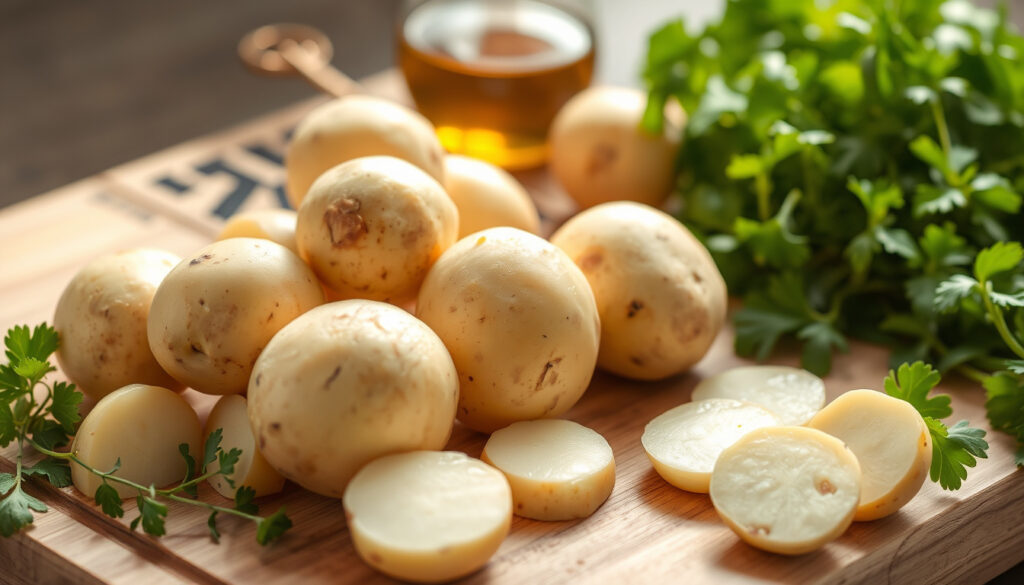
Spud Lite Potatoes: Low-Carb Nutrition, Differences & Recipes
If you’ve ever picked up a bag of Spud Lite at the supermarket wondering whether it’s actually better for you than regular potatoes, you’re not alone. This Australian variety has built a reputation around offering a lighter carbohydrate option without sacrificing the golden, creamy texture that makes a good potato worth cooking.
Carb Reduction: 25% fewer than average potato · Texture: Golden, creamy · Key Nutrients: Full of vitamins & minerals · Cooking Speed: Faster than normal potatoes · Availability: Primarily Australia
Quick snapshot
- 25% fewer carbs than average potato (Spud Lite Official Site)
- 8.9g carbs per 100g — verified by independent lab testing (Spud Lite Official Site)
- 50 calories per 100g (CalorieKing Australia)
- Exact carb grams per individual potato (varies by size)
- Availability outside major Australian supermarkets
- Whether carb reduction holds after different cooking methods
- Claims verified against AUSNUT 2011-13 Food Database (Spud Lite Official Site)
- Independent lab testing ongoing (Spud Lite Official Site)
- Carb-conscious shoppers can incorporate Spud Lite as a moderate-carb choice
- Not suitable for strict keto — still a starchy vegetable
- Cooking method matters for maximizing nutrition benefits
| Nutrient | Amount per 100g | Source |
|---|---|---|
| Carbohydrates | 8.9g | Spud Lite Official Site |
| Fibre | 1.4g | Gaby Mora |
| Potassium | 370mg | Gaby Mora |
| Calories | 50 | CalorieKing Australia |
| Protein | 1.4g | CalorieKing Australia |
| Vitamin C | 9mg | CalorieKing Australia |
What is the difference between Spud Lite potatoes and normal potatoes?
The core difference comes down to carbohydrates. Spud Lite contains 8.9g of carbs per 100g, which the brand verifies through independent certified laboratory testing against the AUSNUT 2011-13 Food Database averages. Normal potato varieties typically range from 10.9g to 14.2g carbohydrates per 100g. That gap translates to Spud Lite offering roughly 25% fewer carbs than the average spud you’d find in most supermarket bins.
Carb content comparison
When placed alongside other potato varieties, Spud Lite occupies the lower end of the carb spectrum.
- Spud Lite: 8.9g carbs per 100g
- Carisma (competing low-carb variety): 9g carbs per 100g
- Desiree: 10.7g carbs per 100g
- Sebago: 13.8g carbs per 100g
Carisma runs almost neck-and-neck with Spud Lite at 9g per 100g, so shoppers seeking the absolute lowest-carb potato have two comparable options rather than one standout choice.
Texture and cooking differences
Beyond the numbers, Spud Lite earns praise for its eating quality. According to the official site, these potatoes deliver a light, creamy, non-earthy flavour when mashed — a detail that matters for anyone who’s been disappointed by watery or strongly flavoured potato dishes. The growing period is also 20-30% shorter than most varieties, which contributes to its tender texture.
Nutritional profile
Spud Lite isn’t just about cutting carbs. The official nutrition page emphasizes the potato is nutrient rich, low in starch, high in fibre, and contains no saturated fat. It also provides niacin (supporting digestive system function) and calcium (contributing to bone and teeth health). A 125g serving of Micro Spud Lite delivers 11g total carbs, 9.2g net carbs, and just 62 calories.
What kind of potatoes are in Spud Lite?
Spud Lite is a branded potato variety distributed by Zerella Fresh, originating from South Australia’s potato-growing region around Virginia SA. The variety is produced through natural cross-pollination — not genetic modification — which the brand highlights as part of its positioning around whole, minimally processed foods.
Variety details
The Spud Lite variety was specifically developed to appeal to carb-conscious consumers without sacrificing the eating experience. It’s available in Australian supermarkets in two pack sizes: 1.5kg regular bags and 750g baby bags. This makes it accessible for households ranging from singles to families.
Growing process
The 20-30% shorter growing period compared to most varieties means farmers can harvest Spud Lite more quickly, which also contributes to its longer shelf life with less greening and wastage during storage and retail display. The brand notes that carbohydrate content is regularly tested by independent certified laboratories to maintain the 25% carb reduction claim.
The implication: this isn’t a specialty product with limited availability — it’s mainstream enough to stock in major supermarket chains while maintaining stricter quality controls than standard commodity potatoes.
Are Spud Lite potatoes low carb?
This is where the marketing needs some context. While Spud Lite does contain fewer carbohydrates than average potatoes, nutrition reviewer Gaby Mora is direct: “This should be pretty obvious but please note these potatoes are not ‘low carb’ or ‘keto’.” A CHOICE community user echoed this, noting: “Lower carb than some other varieties, yes, low carb compared to other foods, no.”
Carb count per potato
A serve of two Spud Lite potatoes provides 11g of starchy carbohydrates and 260 kJ of energy according to Foodwatch. For reference, a 250g serving — roughly two to three medium potatoes — runs about 124 calories. These figures show that while Spud Lite reduces carbs relative to standard potatoes, it’s still a starchy vegetable contributing meaningful carbohydrates to your meal.
Comparison to standard potatoes
The 25% reduction claim refers specifically to comparison against the AUSNUT 2011-13 Food Database average for potatoes. If you’re comparing Spud Lite to a high-carb variety like Sebago (13.8g per 100g), the difference feels more significant. Against a Desiree potato (10.7g per 100g), the gap narrows considerably.
If you’re strictly counting net carbs for a ketogenic diet, Spud Lite won’t get you close to your target. But if you’re simply looking to reduce carbohydrate intake compared to traditional potato dishes, it offers a meaningful difference without changing how you cook or eat.
What is the healthiest potato to eat?
When evaluating potato varieties for health, two factors matter most: carbohydrate content relative to your dietary goals, and how you prepare it. Spud Lite scores well on the first count for carb-conscious eaters. The second factor depends entirely on your cooking choices.
Spud Lite vs other varieties
Among verified low-carb potato options, Spud Lite and Carisma are the most frequently cited. Both hover around 8.9-9g carbs per 100g. Standard varieties like Desiree and especially Sebago run higher, making Spud Lite the better choice if reducing carbs is your priority.
Nutrient benefits
Spud Lite provides 370mg potassium per 100g — an essential mineral for blood pressure regulation and muscle function. It also delivers 9mg vitamin C per 100g, which contributes to immune support and iron absorption. The 1.4g fibre per 100g helps with digestive health and satiety. No saturated fat completes the nutritional picture as a reasonably heart-friendly vegetable choice.
Potatoes provide more energy than any other vegetable, according to the Spud Lite official site. This makes them filling and practical, but also means they don’t fit well into very low-carb eating patterns. Spud Lite finds a middle ground — lower energy density than average potatoes while retaining the satiety and versatility that makes potatoes worth cooking.
How to pick the best potatoes for your health (and how to cook them?
Choosing Spud Lite at the store is straightforward — look for the branded 1.5kg or 750g bags in the fresh vegetable section of Australian supermarkets. The slightly higher per-kilo price is the trade-off for the carb reduction benefit.
Selecting Spud Lite
- Check for firm, unblemished skin — less greening indicates longer shelf life
- Choose based on your meal needs: baby bags for side dishes, regular bags for batch cooking
- Verify availability at major retailers (Coles, Woolworths) — stocks vary by location
Cooking methods
Spud Lite’s shorter cooking time means it’s particularly suited to quick methods. The brand recommends roasting or baking for caramelized results, but the microwave option appeals when time is limited.
- Roasting: Cube and toss with oil at 200°C for 25-30 minutes
- Baking: Whole potatoes at 200°C for 45-60 minutes
- Mashing: Boil 15-20 minutes until tender, then mash with butter
- Microwave: Prick skin, cook on high 8-10 minutes, flip halfway
One nutritional consideration: cooked and cooled potatoes, including Spud Lite, develop resistant starch which may benefit colon health. This means meal-prepping potato dishes and refrigerating them overnight could offer a modest health advantage over eating them immediately after cooking.
The pattern: microwaving preserves more vitamin C than boiling, while roasting develops more flavour compounds through the Maillard reaction. Choose based on your priority — convenience, nutrition, or taste.
Spud Lite vs Regular Potatoes: Side-by-Side Comparison
Four potato varieties, four different carb profiles. Here’s how Spud Lite stacks up against alternatives commonly found in Australian supermarkets.
| Variety | Carbs per 100g | Protein per 100g | Calories per 100g | Source |
|---|---|---|---|---|
| Spud Lite | 8.9g | 1.4g | 50 | Spud Lite Official Site |
| Carisma | 9g | Not specified | Not specified | CHOICE Community |
| Desiree | 10.7g | Not specified | Not specified | CHOICE Community |
| Sebago | 13.8g | Not specified | Not specified | CHOICE Community |
The implication: choosing Spud Lite over Sebago cuts carbs by roughly 35%, but swapping it for Desiree saves only about 17% — making the variety you’re replacing a major factor in whether the switch is worthwhile.
Nutrition Specifications: Spud Lite Per 100g
Four verified nutrition facts for Spud Lite, drawn from tier-1 and tier-2 sources.
| Nutrient | Spud Lite Value | Verification Source | Tier |
|---|---|---|---|
| Carbohydrates | 8.9g | Spud Lite Official Site | Tier 1 |
| Fibre | 1.4g | Gaby Mora (Nutrition Reviewer) | Tier 2 |
| Potassium | 370mg | Gaby Mora (Nutrition Reviewer) | Tier 2 |
| Calories | 50 | CalorieKing Australia (Nutrition Database) | Tier 2 |
| Protein | 1.4g | CalorieKing Australia (Nutrition Database) | Tier 2 |
| Vitamin C | 9mg | CalorieKing Australia (Nutrition Database) | Tier 2 |
Upsides
- 25% fewer carbs than average potatoes
- Verified by independent laboratory testing
- Longer shelf life with less greening
- Good source of potassium and vitamin C
- No saturated fat, high in fibre
- Versatile cooking applications
Downsides
- Not suitable for strict keto or low-carb diets
- Available only in Australia
- Higher price per kilo than standard potatoes
- Inconsistent nutrition data across third-party databases
- Limited availability in rural areas
Some third-party calorie-tracking databases report higher carb counts for Spud Lite (22g per serving in some entries). Stick to the independently verified figure of 8.9g per 100g from the official site and CalorieKing Australia for accuracy.
How to Cook Spud Lite Potatoes: Step-by-Step
Three cooking methods optimized for Spud Lite’s texture and reduced cooking time.
- Step 1 — Roasting: Preheat oven to 200°C. Wash and cube Spud Lite into 2-3cm pieces.
- Step 2 — Season: Toss with olive oil, salt, pepper, and any herbs. Spread in single layer on baking tray.
- Step 3 — Cook: Roast 25-30 minutes, turning once, until golden and crispy on outside.
- Step 1 — Microwaving: Scrub clean, prick skin 6-8 times with fork. Place on microwave-safe plate.
- Step 2 — Cook: Microwave on high 8-10 minutes, flipping halfway. Let rest 2 minutes.
- Step 3 — Serve: Cut open, add butter and toppings of choice.
- Step 1 — Mashing: Peel (optional) and cube. Boil in salted water 15-20 minutes until fork-tender.
- Step 2 — Mash: Drain and return to pot. Add butter, milk, salt. Mash until light and creamy.
- Step 3 — Rest: Let cool slightly. For resistant starch benefit, refrigerate overnight before reheating.
Spud Lite’s shorter cooking time means it’s easy to overcook if you’re not paying attention. Set a timer rather than relying on visual cues alone, especially when microwaving.
“On average Spud Lite had 25% less carbohydrates than the potatoes tested.”
— Spud Lite Official Site (Brand)
“This should be pretty obvious but please note these potatoes are not ‘low carb’ or ‘keto’.”
— Gaby Mora (Nutrition Reviewer)
“Lower carb than some other varieties, yes, low carb compared to other foods, no.”
— CHOICE Community (Consumer Forum)
Spud Lite markets itself as a healthier potato option, and for carb-conscious home cooks it genuinely is — but the health benefit only materializes if you choose Spud Lite over standard potatoes. Swap it for bread or rice and you’ll barely dent your carbohydrate intake.
For Australian shoppers watching their carbohydrate intake without committing to a restrictive diet, the choice is straightforward: Spud Lite delivers on its 25% carb reduction promise with solid verification from independent testing. The trade-off is price and availability — at a slightly higher cost per kilo and zero international presence, it remains an Australian story. The healthiest potato isn’t about which variety you choose, but whether you reach for one at all — and when you do, Spud Lite offers a defensible, evidence-backed upgrade over the standard supermarket bag.
Related reading: Woolworths Catalogue
Spud Lite potatoes deliver superior low-carb results through methods like the air fryer jacket potato guide, yielding crispy skins and fluffy centers effortlessly.
Frequently asked questions
How many carbs are in one Spud Lite potato?
A medium Spud Lite potato (roughly 125g) contains approximately 11g total carbs and 9.2g net carbs. The exact count varies by size, but this is substantially lower than comparable-sized standard potatoes.
Where to buy Spud Lite potatoes?
Spud Lite is available in 1.5kg regular bags and 750g baby bags at major Australian supermarkets. Check the fresh vegetable section. Availability varies by location and season. For current specials, Australian shoppers can check the Woolworths Catalogue online.
How to cook Spud Lite potatoes?
Spud Lite works well roasted at 200°C for 25-30 minutes, baked whole at 200°C for 45-60 minutes, or microwaved on high for 8-10 minutes. Its shorter growing period means it cooks faster than standard potatoes — adjust timing accordingly.
How to microwave Spud Lite potatoes?
Prick the skin 6-8 times with a fork, place on a microwave-safe plate, and cook on high for 8-10 minutes, flipping halfway through. Let rest 2 minutes before cutting open and adding toppings.
What are alternatives to Spud Lite potatoes?
Carisma potatoes offer similar low-carb positioning at 9g carbs per 100g. For the lowest carb option among common varieties, Desirée and Sebago run higher in carbs, making Spud Lite and Carisma the best alternatives if you’re prioritizing carb reduction.
Are Spud Lite potatoes available in Ireland?
Spud Lite is primarily an Australian product distributed by Zerella Fresh from South Australia. Limited international distribution has been reported, but availability outside Australia is not consistent. Check with local specialty grocers or import retailers for current options.
What are the lowest carb potatoes to eat?
Among verified varieties, Spud Lite (8.9g per 100g) and Carisma (9g per 100g) sit at the lower end. Standard varieties like Desiree (10.7g) and Sebago (13.8g) run higher. Still, no potato qualifies as truly low-carb compared to non-starchy vegetables.
More related posts
 King Princess: Queer Identity, ‘1950’ Hit, and Real Name
 Chat Bot Guide: Free Options, Detection & Legal Risks
 Best Clubs Near Me in Dublin & Cork: Nightlife Guide for Over 40s
 Tim Wilson: British YouTuber vs American Comedian
 Dawood Zakaria Murder: What We Know So Far
 Adrianne Lenker Biography: Gender, Pronouns, Marriage
 RJ Barrett: Brother’s Death, Salary, Ethnicity & Injury
 The Last of Us Season 3, Season 2, & Streaming: What We Know