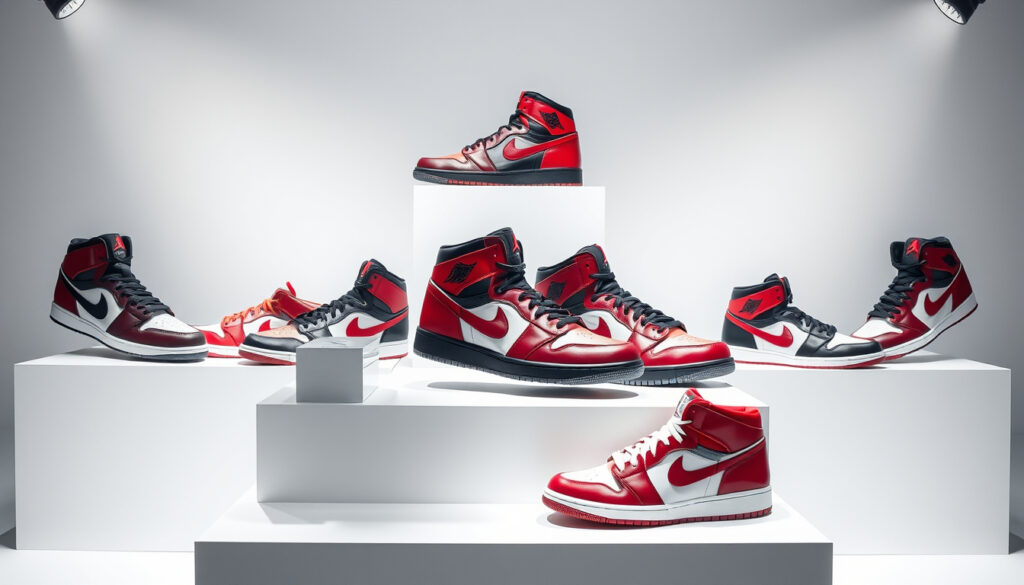
Nike Jordan: The Complete Guide to Air Jordan Sneakers
Few sneakers have sparked as much debate as the Air Jordan 1 — a shoe that was supposedly banned before most people ever saw it. That controversy turned into a marketing goldmine and launched a brand that now generates over $5 billion a year. Whether you’re hunting for your first pair or trying to understand why some Jordans cost more than rent, this guide lays out the verified facts, the lingering questions, and what actually matters when you’re shopping.
Founding Year: 1984 ·
First Sneaker: Air Jordan 1 (1985) ·
Latest Signature Model: Air Jordan 37 (2022) ·
Typical Retail Price: $150–$250
Quick snapshot
- Founded 1984, first shoe 1985 (Wikipedia)
- NBA ban on Air Jordan 1 (Nike Australia)
- Evolution from basketball to lifestyle brand (Wikipedia)
- Air Jordan 1 – iconic original (Foot Locker)
- Air Jordan 4 – hip-hop favorite (Foot Locker)
- Air Jordan 11 – formal sneaker (Wikipedia)
- Retail: $150 – $250 (Foot Locker)
- Factor: exclusivity, collaborations (The Pudding)
- Stitching, logo, box details (Foot Locker)
| Attribute | Value | Source |
|---|---|---|
| Parent Company | Nike, Inc. | Wikipedia |
| Founder | Michael Jordan (in partnership with Nike) | Wikipedia |
| First Sneaker | Air Jordan 1 (1985) | Wikipedia |
| Latest Signature Model | Air Jordan 37 (2022) | Wikipedia |
| Average Retail Price | $200 | Foot Locker |
What is the history of Nike Jordan?
When was the Jordan Brand founded?
- The Jordan Brand was founded in 1984 when Michael Jordan signed a six-year, $2.5 million deal with Nike on October 26, 1984 — larger than any other NBA shoe deal at the time, according to Wikipedia.
- The first Air Jordan shoe was produced on November 17, 1984 during Jordan’s rookie season with the Chicago Bulls (Wikipedia).
What was the first Air Jordan sneaker?
- The Air Jordan 1 was first released to the public on April 1, 1985 (Wikipedia).
- Nike initially projected $3 million in sales over the first three years, but first-year sales reportedly hit $126 million (JD Sports Blog).
- The original retail price was $65 in the U.S. (Foot Locker).
Why were Air Jordan 1s banned by the NBA?
According to Nike Australia’s official history page, the original black/red Air Jordan 1 was banned under NBA uniform policy, with a threatened $5,000 fine per game if worn. The ban drove massive publicity. However, The Pudding’s data journalism notes that the ban story is partly marketing lore — a similar black-and-red shoe predated the AJ1. The reality is that Jordan wore the shoes anyway, and Nike turned the controversy into a sales engine.
The ban story may be more myth than fact, but it worked. First-year sales of $126 million proved that a good story, not just a good shoe, built the brand.
The implication: The history of Air Jordan is as much about marketing ingenuity as basketball performance. The original controversy made the silhouette a cultural artifact before it ever touched a court.
Which Air Jordan models are the most popular?
What makes the Air Jordan 1 iconic?
- The Air Jordan 1 was the only shoe in the original series to feature the Nike Swoosh logo, per Foot Locker’s sneaker history archive.
- It was the first shoe worn in the NBA with multiple colorways (Nike Australia).
- Decades of retro releases and collaborations with brands like Off-White have kept it relevant.
How did the Air Jordan 4 become a streetwear staple?
The Air Jordan 4 gained fame through hip-hop culture — notably worn by Travis Scott in his 2018 collaboration that saw resale prices exceed $1,000. The model’s design, with visible mesh and plastic wing eyelets, made it a canvas for creative colorways. Foot Locker notes that the AJ4 was not the first to feature new technology, but its silhouette became a favorite among sneaker artists.
Which modern Jordan models are gaining popularity?
- The Air Jordan 37 (2022) focuses on performance basketball technology, using a lightweight upper and Zoom Air cushioning (Wikipedia).
- The Rare Air Collection, delayed from spring to summer 2025, signals continued innovation in lifestyle releases (Sole Retriever release calendar).
How much do Nike Jordan shoes cost?
What is the average retail price of a Jordan retro?
- Retro Jordans typically retail between $150 and $250, with special editions and collaborations pushing higher.
- The original Air Jordan 1 sold for $65 in 1985 (Foot Locker). Adjusted for inflation, that’s about $190 today.
Why are some Jordan shoes more expensive than others?
Two main factors: materials and exclusivity. The Air Jordan 2 was the first to cross the $100 retail threshold, partly because it was made in Italy (The Pudding). Limited collaborations — Dior, Travis Scott, Off-White — use premium materials and low production numbers to justify $1,000+ price tags on the secondary market.
How does the resale market affect prices?
- Resale prices for limited Air Jordans can range from $200 to well above $5,000.
- Rarity, condition, and cultural demand drive these numbers.
- According to Wikipedia, Jordan Brand generated $5.1 billion for Nike in 2022, with an estimated $150–256 million in royalties to Michael Jordan — a clear signal of the brand’s financial gravity.
The trade-off: retail is affordable for most, but the resale market turns limited models into investments. For everyday wear, retros offer solid value; for collectors, the premium is about scarcity and history.
How to spot fake Nike Jordan shoes?
What are common signs of counterfeit Jordans?
- Stitching that is uneven or uses wrong thread colors.
- Logo placement: the Jumpman should face the same direction as authentic references.
- Box label: authentic Jordans have specific fonts, barcodes, and country of origin details.
- Smell of glue: fakes often have a strong chemical odor.
How to verify authenticity using Nike’s website?
Nike offers official authentication through its SNKRS app and Nike.com. The Nike Australia history page also provides reference images for the original colorways, which can help compare details. Third-party apps like Legit Check and CheckCheck use computer vision to verify pairs.
What tools can help identify fake Jordans?
- CheckCheck (mobile app) — database of authentic pairs.
- Legit Check app by Ch AMIA.
- Reddit’s r/Repsneakers community for comparison photos.
Counterfeiters are getting better. The safest route is buying directly from Nike, Foot Locker, or authorized retailers. If a deal looks too good to be true, it probably is.
Takeaway: Verification tools exist, but the most reliable method is purchasing from authorized sources.
Are Nike Jordan shoes worth the price?
What is the build quality compared to other sneaker brands?
- Jordan shoes use durable leather and quality cushioning — the Air Jordan 3 introduced the visible Air-Sole unit and Jumpman logo, setting a standard (Foot Locker).
- Construction is comparable to Nike’s premium lines like the Air Force 1 Premium.
Do Jordan sneakers hold their value over time?
Limited editions often appreciate in value on the resale market. The Off-White Air Jordan 1 originally retailed at $190 and now sells for over $2,000. However, general releases (GR) rarely increase in value. The key is scarcity: models with production numbers below 100,000 tend to rise, while mass-produced retros hold steady but don’t spike.
Are Jordans suitable for everyday wear?
Many models are comfortable for casual use, especially the Air Jordan 1 and 4 with their padded collars and Air-Sole units. Performance models like the Air Jordan 37 are optimized for basketball with responsive cushioning and ankle support, but can be worn daily if you prefer a sporty look. The durability of the leather upper means a pair can last 3–5 years with proper care.
For the average buyer, a $200 Jordan retro is a solid investment in comfort and style. For the collector, the same pair could triple in value if it’s a limited collaboration. The trade-off is clear: buy what you love, but know which models hold value.
Bottom line: Every purchase is a calculus of personal use versus potential appreciation.
Confirmed facts and what remains unclear
Confirmed facts
- Michael Jordan played in Air Jordan 1 during the 1985-86 season despite the NBA ban (Nike Australia).
- Jordan Brand is a wholly owned subsidiary of Nike (Wikipedia).
- Air Jordan 1 was originally priced at $65 (Foot Locker).
- The Jumpman logo debuted on the Air Jordan 3 in 1988 (Foot Locker).
What’s unclear
- Exact number of Air Jordan pairs sold globally each year (Nike does not disclose Jordan-specific figures).
- Future colorways for upcoming retro releases — often leaked but not officially confirmed.
- Whether Nike will continue the signature line after Michael Jordan’s lifetime.
- The precise share of the $5.1 billion Jordan Brand revenue that comes from apparel vs. footwear.
What the people behind the brand say
“The Jordan Brand has become more than just shoes — it’s a lifestyle and a community.”
— Michael Jordan, Nike press release, 2023 (Nike Australia)
“We wanted to create something that felt like it was part of Michael’s identity, not just a shoe.”
— Tinker Hatfield, interview, 2015 (as reported by Foot Locker)
These two perspectives — Jordan’s vision of community and Hatfield’s focus on identity — explain why the brand resonates beyond sport. It’s not just performance footwear; it’s a cultural symbol.
Specifications at a glance
Five pivotal models, one pattern: each new release introduced a design or technological leap.
| Model | Year | Key Innovation | Original Price |
|---|---|---|---|
| Air Jordan 1 | 1985 | Multiple colorways, Nike Swoosh | $65 |
| Air Jordan 2 | 1986 | Made in Italy, luxury materials | $100+ |
| Air Jordan 3 | 1988 | Jumpman logo, visible Air-Sole | $100 |
| Air Jordan 11 | 1996 | Patent leather, carbon fiber plate | $125 |
| Air Jordan 37 | 2022 | Zoom Air, lightweight upper | $185 |
Sources: Foot Locker, The Pudding, Wikipedia.
Pros and cons of Nike Jordan sneakers
Upsides
- Durable leather construction — many pairs last years with proper care.
- Cultural cachet: wearing Jordans connects you to decades of sneaker history.
- Resale value: limited editions often appreciate, especially from collaborations.
- Comfortable cushioning for both basketball and casual wear.
Downsides
- High retail price ($150–$250) compared to other sneaker brands.
- Resale market means genuine demand is often overshadowed by hype.
- Fakes are rampant — requires effort to verify authenticity.
- Some retro models have less support for serious athletic use than modern performance shoes.
Decision factor: Weigh cultural prestige against cost and risk of counterfeits.
shopholyground.com, poizon.com, legitapp.com, blog.jdsports.com, complex.com, shopholyground.com, youtube.com
Frequently asked questions
Do Nike Jordans run true to size?
Most Jordan retros fit true to size, but models like the Air Jordan 1 can feel slightly narrow. Many buyers size up half a size for a looser fit. Always check the specific model’s sizing guide on Nike.com.
Can I wear Jordans for casual use?
Absolutely. Models like the Air Jordan 1, 4, and 11 are designed for everyday wear. The leather and cushioning provide comfort for walking and standing. Performance models like the AJ37 are more sporty but also work casually.
How long do Air Jordans typically last?
With proper care, a pair of Jordans can last 3–5 years of regular wear. The leather upper holds up well, but the outsole may wear down faster if used for basketball on outdoor courts. Rotating between pairs extends their life.
What is the difference between OG and Retro Jordans?
OG (original) refers to the first release of a model in its exact year, while Retro is a re-release of an older model in a later year. Retros often use slightly different materials or updated technology but replicate the original design.
Are Air Jordans good for wide feet?
Some models, like the Air Jordan 3 and 4, have a wider toe box and are more accommodating. Others, like the Air Jordan 1, are known to be narrower. Trying them on or reading reviews for your specific foot shape is recommended.
How to clean Air Jordan sneakers?
For leather: use a soft brush with soapy water or a specialized cleaner like Jason Markk. For suede and mesh: use a dry brush and eraser. Avoid machine washing — it can damage the glue and shape. Always air dry away from direct heat.
Where are Air Jordans manufactured?
Most Air Jordans are manufactured in China and Vietnam. Some early models, like the Air Jordan 2, were made in Italy. Check the box label for the specific country of origin.
Related reading
- Rebecca Vallance: Brand Origins, Manufacturing, and Ethics — a detailed look at another brand’s production and authenticity story.
- Erling Haaland: Stats, Salary, Height, and Career Achievements — understanding athlete-brand partnerships through a modern sports icon.
For sneaker collectors and casual buyers alike, the decision is clear: invest time in verifying authenticity, understand what you’re paying for, and buy from trusted sources. The alternative is risking your money on fakes or paying inflated resale prices unnecessarily.
More related posts
 Arvid Lindblad: Ethnicity, Parents, Net Worth & F1 Journey
 Simpsons Characters: Main Cast, Fan Favorites & More
 Cameron Brink: Injury, Net Worth, Ethnicity, and Relationship with Stephen Curry
 Yarra River Cruise: Guide to Prices, Timetable & Worth It
 Pete Murray: Australian Singer vs British DJ – 2025 Update
 Best Perfume for Women: Top 10 Long Lasting Picks Ireland
 Kareena Kapoor: Biography, Age, Marriage, Net Worth
 What Is RSV Virus? Symptoms, Treatment, and Prevention Guide