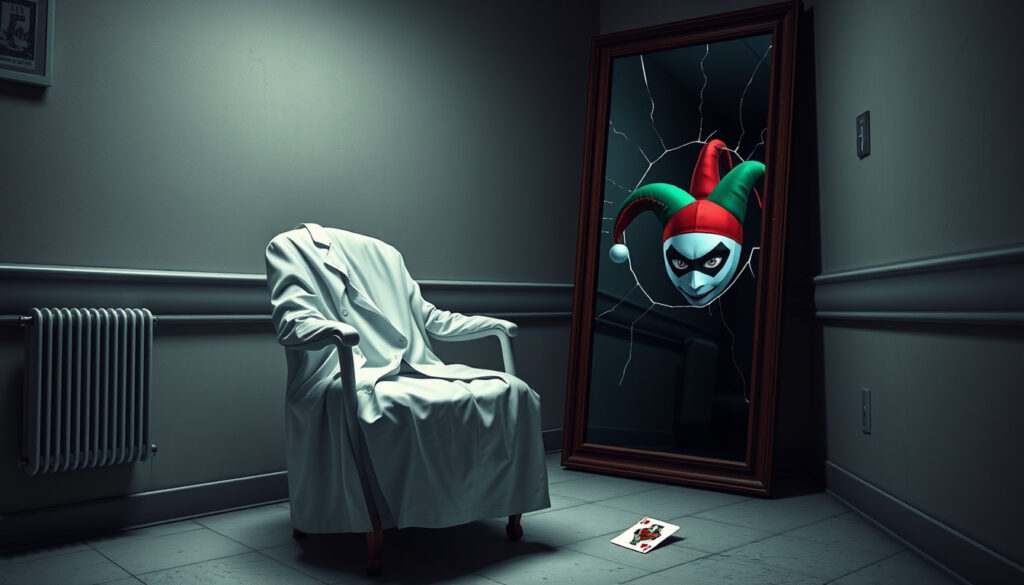
Harley Quinn: Her Origin, Mental Health, and Joker Tie
There’s a reason Harley Quinn has become one of DC’s most recognizable figures since her debut in 1992: she started as a one-off animated character and grew into a pop culture icon with a psychology degree and a mallet. Dr. Harleen Frances Quinzel, created by Paul Dini and Bruce Timm, began as the Joker’s psychiatrist before becoming his partner in crime—and later, her own anti-hero. This guide traces her origins, powers, relationship with the Joker, and the question of whether she’s a villain or something more.
First appearance: Batman: The Animated Series (1992) ·
Creators: Paul Dini, Bruce Timm ·
Real name: Dr. Harleen Frances Quinzel
Quick snapshot
- First appeared on September 11, 1992, in Batman: The Animated Series (Book Riot (book and comics news))
- Real name is Dr. Harleen Quinzel (DC Comics’ official character database)
- Created by Paul Dini and Bruce Timm (DC Comics official site)
- Whether the Joker ever genuinely loved Harley (ScreenRant (entertainment analysis))
- If she has a canonical child in main DC continuity (CompleteSet (comics history site))
- Exact clinical diagnosis of her fictional mental illness (DC Database (fan wiki))
- Debut: September 11, 1992, Batman: The Animated Series (Book Riot)
- First comic origin: Batman Adventures: Mad Love (1994) (CompleteSet)
- Live-action debut: Suicide Squad (2016) (Polygon (pop culture news))
- Harley Quinn animated series continues on Max (DC Comics official site)
- Further appearances in DC films and comics as a solo anti-hero (Polygon)
Five key details, one pattern: Harley Quinn’s facts are spread across animation, comics, and film, with each medium adding or retconning pieces—but her core remains a psychiatrist turned unpredictable fighter.
| Fact | Detail | Source |
|---|---|---|
| First appearance | Batman: The Animated Series (1992), episode “Joker’s Favor” | DC Official |
| Creators | Paul Dini and Bruce Timm | DC Official |
| Real name | Dr. Harleen Frances Quinzel | DC Official |
| Affiliations | Gotham City Sirens, Suicide Squad, Birds of Prey | DC Official |
| Notable actors | Arleen Sorkin (voice), Margot Robbie (live-action), Kaley Cuoco (voice, animated series) | Polygon |
The table shows a character whose official facts are stable across sources, yet whose narrative role shifts dramatically depending on the medium.
Harley Quinn’s debut in animation before comics made her a rare major DC character introduced on television first—a fact that shaped her visual style and her psychology-driven origin.
Source: DC Comics official character page
What is Harley Quinn’s character?
Dr. Harleen Quinzel’s origin and transformation
- Harley Quinn began as Dr. Harleen Quinzel, a psychiatrist at Arkham Asylum who became romantically entangled with the Joker (DC Comics official site).
- Her origin story was first fully told in the 1994 graphic novel Batman Adventures: Mad Love (CompleteSet (comics history site)).
- In Mad Love, Quinzel’s breakdown is triggered by the Joker’s manipulation and Batman’s interference (CompleteSet).
Harley Quinn is classified as a supervillain, though modern storylines often recast her as an anti-hero (DC Comics official site). She aligns with groups like the Gotham City Sirens and the Suicide Squad (Polygon).
Key personality traits: chaotic, independent, violent
- DC describes her as having “complete unpredictability” and “emotional manipulation” as core traits (DC Comics official site).
- ScreenRant frames her “true superpowers” as emotional volatility, intense rage, and resilience rather than conventional superhuman abilities (ScreenRant (entertainment analysis)).
- Since breaking from the Joker, she has increasingly acted independently—sometimes heroically, sometimes not (Polygon).
The pattern: a character defined by contradiction—trained psychologist turned chaotic fighter, sidekick turned solo anti-hero. Her unpredictability is both a weapon and a flaw.
Who was Harley Quinn to the Joker?
Former psychiatrist and romantic partner
- At Arkham Asylum, Dr. Harleen Quinzel was assigned to treat the Joker (DC Comics official site).
- She fell in love with him during their sessions and became his girlfriend and partner in crime (Book Riot (book and comics news)).
- Her transformation from doctor to villain is a direct result of that relationship (CompleteSet).
Evolution from sidekick to independent figure
- For years, Harley was portrayed as the Joker’s sidekick and often his victim of abuse (DC Comics official site).
- Starting with the Gotham City Sirens (2009) and later Suicide Squad, she broke away and forged her own identity (Polygon).
- In many modern stories, she operates as an anti-hero independent of the Joker (DC Comics official site).
What this means: Harley Quinn’s relationship with the Joker is the catalyst for her transformation, but her later separation from him is what allows her to become a fully realized character—tragically, the abuse defined her early years, and the escape defined her growth.
The Joker generally shows little genuine love toward Harley Quinn; he uses her for his own purposes, making their relationship one of the most famous abusive dynamics in comics (ScreenRant).
Why is she called Harley Quinn?
Pun on “harlequin”
- The name “Harley Quinn” is a play on the word “harlequin,” the jester character from commedia dell’arte (DC Comics official site).
- Bruce Timm has stated that the name was chosen to reflect her jester costume and chaotic nature (CompleteSet).
Adopted name after becoming a criminal
- Harleen Quinzel chose the alias Harley Quinn after abandoning her identity as a psychiatrist (DC Comics official site).
- The visual identity—harlequin pattern, jester cap, and later variations—reinforces the alias (DC Comics official site).
The implication: the name is a clever linguistic trick that also telegraphs her role as a chaotic, almost theatrical villain—a jester who hides a sharp mind behind a silly mask.
What is Harley Quinn’s mental illness?
Depiction in DC comics vs. real-world diagnosis
- Harley Quinn exhibits traits of antisocial personality disorder and histrionic personality disorder in various storylines (DC Database (fan wiki)).
- Her portrayal is not a clinical diagnosis but a fictional character trait (CompleteSet).
- Her mental state is often explicitly linked to her traumatic relationship with the Joker (Book Riot).
Histrionic personality traits and codependency
- Early stories emphasized her codependency on the Joker, a pattern that later writers have tried to subvert (Polygon).
- In the animated series and comics, her exaggerated emotional swings and need for validation fit histrionic patterns (DC Database).
The trade-off: fans have debated whether Harley’s mental illness is portrayed sensitively or as a stereotype. The character’s popularity has prompted DC to give her more agency, but the diagnosis remains fictional—and contested.
Is Harley Quinn a villain or a hero?
Primary role as super-villain
- Harley Quinn was originally a supervillain, created as a henchwoman for the Joker (DC Comics official site).
- She has committed murders and acts of terrorism across storylines (Polygon).
Recent anti-heroic turns and team affiliations
- After breaking from the Joker, Harley has fought alongside the Suicide Squad and Birds of Prey as a reluctant hero (DC Comics official site).
- In the Harley Quinn animated series (2019–present), she is portrayed as an anti-hero trying to be a villain but often doing good (DC Comics official site).
- DC officially lists her as a “supervillain” but notes modern stories cast her as an anti-hero (DC Comics official site).
The pattern: Harley Quinn occupies a sliding scale—she can be a gleeful villain, a tragic victim, or a chaotic force for good. The label depends entirely on which story you’re reading.
Harley Quinn’s greatest power is not her mallet or toxin immunity but her ability to walk away from the Joker—and, in doing so, become more interesting than she ever was as a sidekick.
Clarity check
Confirmed facts
- First appeared on September 11, 1992, in Batman: The Animated Series (Book Riot)
- Real name is Dr. Harleen Quinzel (DC Official)
What’s unclear
- Whether the Joker ever genuinely loved Harley Quinn in canon
- If Harley Quinn has a canonical child in main DC continuity
- Exact clinical diagnosis of her fictional mental illness
“Harley Quinn does not have superpowers in the traditional sense. She relies on her athleticism, combat skill, and psychological training.”
— Polygon (pop culture news site)
“Harley Quinn is a DC supervillain known for her complete unpredictability, superhuman agility, and immunity to toxins.”
— DC Comics’ official character database
For the DC fan looking to understand Harley beyond the surface, the choice is clear: stop searching for a simple label and start paying attention to the storytelling. Whether villain, victim, or anti-hero, she is a barometer for how comics handle trauma and redemption.
Related reading: Doctor Strange: Powers, Movies, and Actor Facts · Solid Snake Guide: Real Name, IQ, Enemies & Death
youtube.com, batman.fandom.com, reddit.com, characterprofile.fandom.com, facebook.com, community.cbr.com
Frequently asked questions
What powers does Harley Quinn have?
Harley Quinn possesses complete unpredictability, superhuman agility, skilled fighting ability, intelligence, emotional manipulation, and immunity to most toxins (including Joker Venom). She has no innate superhuman powers—her skills come from gymnastics, combat training, and a psychological manipulation antitoxin given by Poison Ivy. (DC Comics official site)
How did Harley Quinn meet the Joker?
Dr. Harleen Quinzel was assigned as the Joker’s psychiatrist at Arkham Asylum. During sessions, she fell in love with him and eventually helped him escape, becoming his partner in crime. (Book Riot)
Why does Harley Quinn wear a jester costume?
The costume is inspired by the harlequin character from commedia dell’arte, reflecting her alias and her chaotic, theatrical personality. (DC Comics official site)
Where does Harley Quinn appear first?
Harley Quinn first appeared in the Batman: The Animated Series episode “Joker’s Favor,” which aired on September 11, 1992. (Book Riot)
Who voices Harley Quinn in the animated series?
Arleen Sorkin originated the voice in Batman: The Animated Series. Kaley Cuoco voices the character in the Harley Quinn animated series (2019–present). (Polygon)
Is Harley Quinn in the current DC universe?
Yes, Harley Quinn is an active character in DC Comics’ main continuity, appearing in ongoing series and crossover events. (DC Comics official site)
What is Harley Quinn’s real name?
Her real name is Dr. Harleen Frances Quinzel. (DC Comics official site)
More related posts
 Mad Max Fury Road – Plot Cast Cars and Sequel Guide
 My Cigs Australia Review: Is It Legit? Cheap Smokes Online
 Greek Mythology: Gods, Myths, and Answers to Your Top Questions
 Peggy Gou Biography: Age, Net Worth, and Career Facts
 Security Screens Near Me: Ireland Prices, Types & Install
 Under Bed Storage: IKEA, Wheels & Ireland Options
 Kevin Hart: Biography, Car Accident, Net Worth, and Health