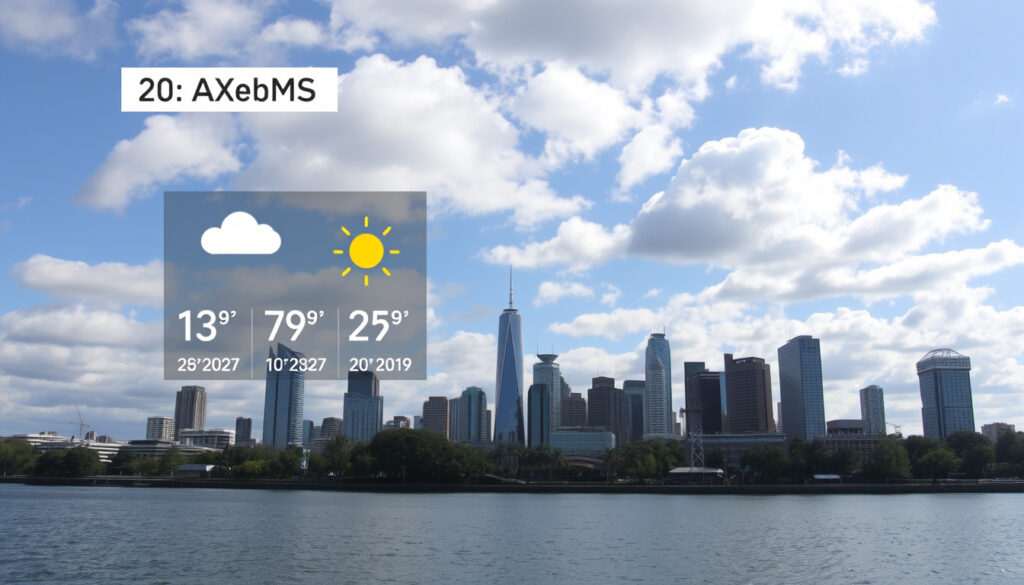
Melbourne Weather Hourly: BOM Forecast & 7-Day Outlook
Anyone who has checked the forecast in Melbourne only to find the weather changed by lunch knows the city’s reputation for four seasons in one day. This guide combines official Bureau of Meteorology data and commercial forecasts to give you a clear hour-by-hour view of what’s coming.
Current temperature (Melbourne): 58°F (RealFeel 56°F) · Today’s forecast (BOM): High 13°C, Low 11°C · Tomorrow’s forecast (BOM): High 11°C, Low 9°C · Chance of precipitation now: 1% · Current sky condition: Mostly cloudy
Quick snapshot
- Melbourne’s weather is highly variable due to its geography (Wikipedia – Climate of Melbourne)
- Current cold spell is linked to a Southern Ocean cold front (Bureau of Meteorology – Accessible forecast)
- Record high temperature is 46.4°C (7 Feb 2009) (Wikipedia – Climate of Melbourne)
- Exact duration of current cold snap beyond 48 hours
- Whether Melbourne’s unpredictability will increase with climate change
- Cold front passes today; temperatures stay below 13°C through Friday (Bureau of Meteorology – Accessible forecast)
- Thursday may bring a slight rise to 14°C, but still cool (Yr – Melbourne forecast)
- Check hourly updates on BOM and AccuWeather for short-term changes
- Pack layers and a waterproof jacket – the 7-day trend shows no sustained warmth
| Label | Value |
|---|---|
| Current temperature (Melbourne) | 58°F / 14°C |
| RealFeel temperature | 56°F / 13°C |
| Sky condition | Mostly cloudy |
| Chance of precipitation | 1% |
| Today’s high (BOM) | 13°C |
| Today’s low (BOM) | 11°C |
| Tomorrow’s high (BOM) | 11°C |
| Tomorrow’s low (BOM) | 9°C |
What’s the temperature in Melbourne for the next 2 days?
Current hour-by-hour conditions
According to AccuWeather’s hourly forecast for Melbourne (Victoria), the temperature at this hour sits at 58°F with a RealFeel of 56°F and a 1% chance of precipitation. The sky is mostly cloudy, and wind is light from the north-northwest at 7 mph. The Bureau of Meteorology’s official Melbourne page confirms similar conditions with a current temperature near 14°C.
Tomorrow’s forecast details
The BOM accessible forecast for Melbourne shows tomorrow’s high dropping to 11°C and low to 9°C, with a shower or two possible. AccuWeather’s hourly outlook for Melbourne (AccuWeather – Melbourne hourly) indicates similar conditions: a morning low near 9°C and an afternoon high struggling to reach 12°C under cloudy skies.
How to read Melbourne’s hourly weather tables
Both BOM and AccuWeather present hourly data in table format with columns for time, temperature, RealFeel, precipitation chance, wind speed, and humidity. For a quick scan, look at the precipitation probability column – values above 30% suggest a moderate chance of rain. The Time and Date hourly forecast for Melbourne offers a similar 48-hour table with dew point and UV index.
The implication: these tables are your best tool for spotting the rapid weather shifts Melbourne is known for, so use them to adapt your plans in real time.
Why is Melbourne suddenly so cold?
Current cold front explanation
The Bureau of Meteorology (BOM accessible forecast) indicates a cold front from the Southern Ocean is sweeping across Victoria, bringing below-average temperatures to Melbourne. This front is responsible for the sharp drop from last week’s highs near 18°C to today’s 13°C.
Comparison to average temperatures
May’s average high in Melbourne is around 16°C, according to Wikipedia’s climate data for Melbourne. Current readings at 13°C are several degrees below that norm. The overnight lows near 9–11°C are also about 3°C cooler than the May average minimum of 9°C.
How long the cold spell is expected to last
Forecasts from BOM and AccuWeather suggest the cold conditions will persist through Friday (23 May), with highs barely reaching 14°C on Thursday before dropping again. A gradual warming may begin over the weekend, but no sustained return to above-average temperatures is forecast in the 7-day outlook.
Southern Ocean cold fronts are Melbourne’s most common cold-weather driver. This one is stronger than average, bringing temperatures 3–4°C below the May norm for at least 4 days.
Why is Melbourne’s weather so unpredictable?
Geographic factors: ocean and mountain influences
Melbourne sits between the Southern Ocean and the Great Dividing Range. According to Wikipedia’s analysis of Melbourne’s climate, this corridor funnels competing air masses – cool maritime air from the south and hot, dry air from the north – creating rapid weather changes. A sunny morning can give way to an afternoon thunderstorm within hours.
Role of cold fronts and heat troughs
The characteristic “southerly buster” – a sudden cool change that sweeps in from the ocean – is driven by the collision of a cold front with a heat trough over the interior. The BOM’s Melbourne forecast frequently notes these shifts in its synoptic discussions.
Seasonal patterns of variability
Spring and autumn are the most erratic seasons in Melbourne. Research from Wikipedia (citing peer-reviewed sources) highlights the city’s location in a “battleground” between air masses, leading to larger day-to-day temperature swings than in Sydney or Brisbane.
For anyone relying on the 7-day forecast to plan outdoor activities, the takeaway is clear: treat any prediction more than 48 hours out as a trend, not a certainty.
What is the hottest it’s ever been in Melbourne?
Record high temperature and date
The highest temperature ever recorded in Melbourne is 46.4°C (115.5°F) on 7 February 2009, according to Wikipedia’s climate page for Melbourne. That record was set during the catastrophic Black Saturday bushfire heatwave.
Comparison with coldest recorded day
The coldest day in Melbourne’s history occurred on 21 July 1869, when the minimum temperature dropped to -2.8°C (27.0°F), as documented by Wikipedia. The contrast between the record high and record low is nearly 50°C, illustrating the city’s extreme variability.
How extreme temperatures fit into Melbourne’s climate
July is generally the coldest month, with average lows near 6°C, per Wikipedia. Extreme highs like 46.4°C are rare, occurring only during strong northerly wind events. Climate data from BOM’s climate records show that such extremes have become slightly more frequent since the 1990s.
What clothes should I pack for Melbourne?
Packing for variable temperatures
Melbourne’s weather can change from hot to cool within hours, so layers are essential, advises travel blog Melbourne.com.au travel tips. A base layer, a mid-layer (fleece or light sweater), and a windproof outer shell cover most situations.
Layering strategy for daily shifts
A typical May day starts around 11°C, barely reaches 13°C, and drops to 9°C by evening. The AccuWeather hourly forecast shows these swings clearly. For now, a light jacket over a long-sleeve shirt works; if heading out after dark, add a scarf and gloves.
Essential items for different seasons
In summer (December–February), pack light clothing but always bring a jacket for sudden cool changes. In winter (June–August), according to Time and Date’s climate guide, temperatures range from 6°C to 14°C, so a warm coat, scarf, and waterproof shoes are recommended.
Timeline signal: next few days
- – High 13°C, Low 11°C, possible showers (BOM)
- – High 11°C, Low 9°C, shower or two (AccuWeather)
- – Partly cloudy, high 14°C, low 8°C (Yr)
- – Similar conditions, high near 11°C (BOM)
Clarity check
Confirmed facts
- Melbourne’s weather is highly variable due to its geography
- Current cold spell is linked to a Southern Ocean cold front
- Record high temperature is 46.4°C (7 Feb 2009)
What’s unclear
- Exact duration of current cold snap beyond 48 hours
- Whether Melbourne’s unpredictability will increase with climate change
The data from BOM, AccuWeather, and historical records paint a clear picture: Melbourne’s hourly weather is as much about geography as it is about the calendar. For anyone planning outdoor activities this week, the choice is simple: stay flexible, layer up, and check the hourly forecast before stepping out, or risk being caught off guard by a city that can flip from cloudy to cold in an hour.
Related reading: AccuWeather Melbourne hourly weather forecast · BoM Melbourne hourly accessible forecast
accuweather.com, accuweather.com, accuweather.com, weather.gov, weatherzone.com.au
For those planning further ahead, the Melbourne 14 day forecast provides a helpful extended outlook beyond the hourly updates.
Frequently asked questions
Where can I find the most accurate hourly forecast for Melbourne?
The Bureau of Meteorology (BOM accessible forecast) is the official source. AccuWeather (AccuWeather Melbourne hourly) provides RealFeel and precipitation probability. Both update hourly.
How often is the BOM hourly forecast updated?
BOM’s accessible forecast for Melbourne is typically updated every hour, though major revisions happen with each synoptic analysis (usually every 6 hours).
What does the RealFeel temperature indicate?
RealFeel is AccuWeather’s proprietary index that factors in temperature, wind, humidity, and solar radiation to estimate how the air actually feels on skin.
Why does Melbourne’s temperature drop so quickly in the evening?
The city’s inland location away from ocean moderation allows rapid radiative cooling after sunset, especially under clear skies. The Wikipedia climate article notes that autumn evenings often see 5–7°C drops within 2 hours.
Is Melbourne’s weather more unpredictable than other Australian cities?
Yes, because of its position in the “battleground” between hot northerly winds and cool southerly changes, as explained by Wikipedia. Sydney and Brisbane have more stable marine influences.
What is the best season to visit Melbourne for stable weather?
Late summer (February–March) typically offers the most consistent warm and dry conditions. Winter (June–August) is cool but less changeable than spring, which is the most erratic season.
More related posts
 Terry White Chemist: Locations, Products & Online Guide
 Kelly Paniagua: Age, Net Worth, and Julian McMahon’s Wife
 Barbra Streisand Health 2025: New Diagnosis & Updates
 Forrest Frank Loses 30K Followers Over Charlie Kirk Comment
 Craig Bellamy: Playing Career, Coaching, Net Worth & Personal Life
 Ousmane Dembélé: Career, Stats, Injury, Wife, and Transfer News
 Katherine LaNasa: Biography, Age, Cancer Diagnosis, The Pitt Role
 New Balance AU – Complete Guide to Shoes, Sales and Top Models