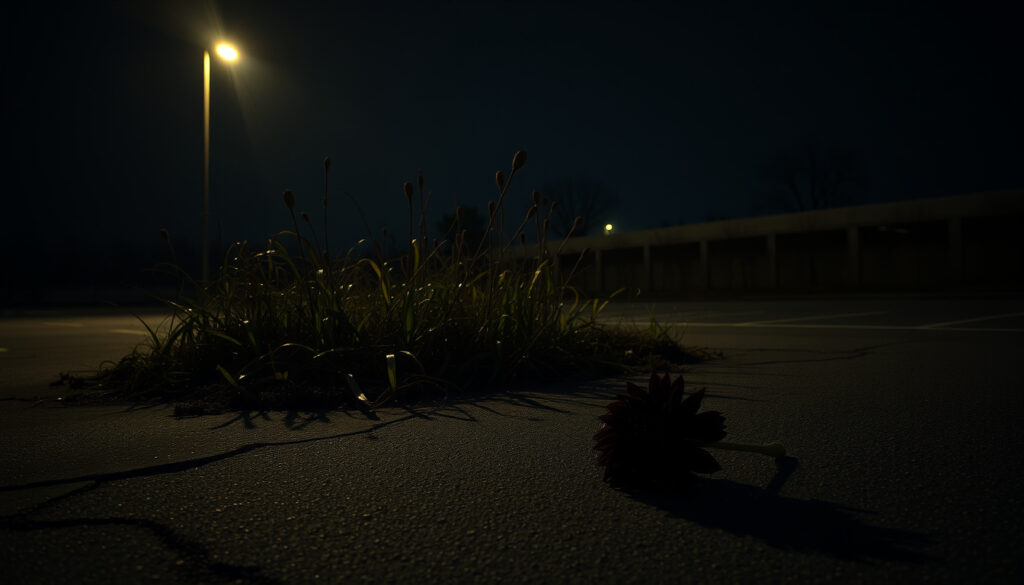
Black Dahlia: Meaning, Symbolism, and Murder of Elizabeth Short
Few unsolved murders have burrowed into the American imagination quite like the Black Dahlia case. We’ve untangled the facts of Elizabeth Short’s 1947 murder from the mythology, explored how a flower name became a crime nickname, and traced the case’s long shadow through film and culture.
Year of murder: 1947 ·
Victim age at death: 22 ·
Case status: Unsolved ·
Origin of nickname: Media and local rumor ·
Number of major suspects: Multiple ·
Film adaptations: 3 (including 2006 and 2012)
Quick snapshot
- Elizabeth Short was murdered in Los Angeles in January 1947 (EBSCO Research Starters (academic research database))
- Her body was found in a vacant lot in Leimert Park (EBSCO Research Starters (academic research database))
- The case remains unsolved (Wikipedia (community-edited encyclopedia))
- Identity of the murderer remains unknown
- Motive for the crime is unconfirmed
- Whether the nickname was used before the murder is disputed
- Body discovered January 15, 1947 (EBSCO Research Starters (academic research database))
- Nickname coined by press within days (Wikipedia (community-edited encyclopedia))
- Case went cold by 1950 (EBSCO Research Starters (academic research database))
- LAPD still receives tips; case remains open
- New forensic techniques occasionally re-examined
- Cultural adaptations continue (books, films, podcasts)
Eight key facts, one pattern: the case is defined by what is known about the victim and what remains unknown about the killer.
| Label | Value |
|---|---|
| Full name | Elizabeth Short |
| Date of birth | July 29, 1924 |
| Date of death | c. January 14–15, 1947 |
| Cause of death | Hemorrhage from multiple injuries (murder) |
| Case status | Unsolved |
| Nickname origin | Media; possibly used by acquaintances before death |
| Major suspects | Dr. George Hodel, Leslie Dillon, others – none convicted |
| Popular adaptations | 2006 film ‘The Black Dahlia’, 2012 film ‘The Black Dahlia Haunting’, James Ellroy novel |
What does it mean to be called a Black Dahlia?
The phrase “Black Dahlia” carries two distinct meanings: a botanical reference to a dark flower cultivar, and a cultural shorthand for one of America’s most notorious unsolved murders. The flower meaning and the crime meaning have become intertwined over decades, each coloring the other.
Origin of the nickname
The nickname “Black Dahlia” was applied to Elizabeth Short by newspapers after her death. Reporters reportedly drew on the title of the 1946 film noir The Blue Dahlia, combined with Short’s dark hair and preference for black clothing (EBSCO Research Starters (academic research database)). Some accounts suggest the nickname may have been used by patrons of a Los Angeles drugstore before her murder, but this remains unconfirmed.
Media amplification
Los Angeles newspapers in 1947 were locked in a circulation war, and the Black Dahlia case provided sensational copy. The nickname stuck because it was memorable, darkly poetic, and easily printed in headlines. Within days of the body’s discovery, “Black Dahlia” was the name the public knew (Wikipedia (community-edited encyclopedia)).
Public perception
For the public, being called “the Black Dahlia” transformed Elizabeth Short from an unknown young woman into a symbol. The name suggested a femme fatale—glamorous, mysterious, doomed. In reality, Short was a 22-year-old from Boston who had moved to California hoping to build a life. The gap between the myth and the person is one of the case’s enduring tensions.
The nickname that made Elizabeth Short famous also erased her. She became a symbol before she was ever fully known as a person. For true crime readers, the challenge is separating the woman from the legend.
The implication: the media’s creation of the Black Dahlia persona shaped how the public remembers the case.
Why did they call her The Black Dahlia?
The answer lies in a specific moment in 1947, when a gruesome discovery met a media machine hungry for a story.
Rumors about her appearance
Short had dark hair, and witnesses reported she often wore black clothing. These details, combined with her reported habit of wearing flowers in her hair, gave reporters raw material for a nickname that evoked both glamour and darkness (Novel Suspects (true crime literature site)).
Connection to the film ‘The Blue Dahlia’
The 1946 film The Blue Dahlia, starring Alan Ladd and Veronica Lake, was a recent hit. The word “dahlia” was already in the air. By adding “Black” to describe Short’s appearance and the dark nature of the crime, journalists created a moniker that felt both familiar and chilling (EBSCO Research Starters (academic research database)).
The role of local press
The Los Angeles Examiner and Los Angeles Herald-Express competed fiercely for readers. The Black Dahlia nickname was a branding victory—it made the case instantly recognizable and kept readers buying papers. The name was never used by Elizabeth Short herself; it was a posthumous invention of the press.
The media’s role in creating the Black Dahlia persona set a template for how true crime stories are packaged today. Every sensational nickname that follows—from the “Unabomber” to the “Golden State Killer”—owes something to the blueprint laid down in 1947 Los Angeles.
The pattern: the press not only reported the crime but also invented the central symbol of the case.
What does The Black Dahlia symbolize?
The Black Dahlia has grown into a symbol that operates on multiple levels: a flower, a crime, and a cultural archetype.
Symbol of unsolved mystery
For true crime enthusiasts, the Black Dahlia represents the ultimate cold case. The combination of a brutal crime, a photogenic victim, and no resolution creates a vacuum that speculation and theory have filled for generations. The case is frequently cited as one of the most famous unsolved murders in the United States (Wikipedia (community-edited encyclopedia)).
Feminine victimhood
In cultural criticism, the Black Dahlia has been analyzed as a symbol of feminine vulnerability and the tendency to eroticize female victims. The nickname itself—linking a murdered woman to a flower—carries undertones of beauty destroyed, a trope that recurs in true crime media.
Dark flower imagery
Separately, the black dahlia flower has its own symbolic language. In Victorian floriography, dahlias conveyed dignity, elegance, and steadfast commitment (Florists’ Review (floral industry publication)). Darker dahlia shades can symbolize secrecy, transformation, resilience, and farewell (Florists’ Review (floral industry publication)). Other sources associate black dahlias with sadness, loss, betrayal, and mystery (Alpha Floral (florist blog)), as well as strength, personal power, and ambition (Alpha Floral (florist blog)).
The catch: true black dahlias don’t exist in nature. What are sold as “black dahlias” are actually very dark burgundy or crimson cultivars (Arena Flowers (floral retailer)). The flower’s name, like the crime nickname, is more about the idea of blackness than the reality.
What is The Black Dahlia haunting about?
The 2012 film The Black Dahlia Haunting represents one branch of the case’s cultural afterlife: pure fiction that uses the famous name for horror purposes.
Plot summary
The low-budget horror film follows a young woman who becomes possessed by the spirit of Elizabeth Short after her brother is murdered. The ghostly Black Dahlia seeks vengeance, and the film blends supernatural horror with crime elements.
Fictional elements
The film is not based on historical facts. It uses the Black Dahlia name and the basic fact of Elizabeth Short’s murder as a launching point for a fictional ghost story. The real case details—the location of the body, the nature of the injuries, the investigation—are largely absent or altered.
Reception
Critically, the film was not well received. It holds low ratings on review aggregators and is primarily of interest to completists tracking every cultural reference to the Black Dahlia case. Its existence, however, demonstrates how the name has become a recognizable brand in horror.
The implication: even fictional treatments rely on the historical tragedy for their emotional weight.
What movie is based on the Black Dahlia?
Several films have drawn directly on the Black Dahlia case, with varying degrees of fidelity to the historical record.
The Black Dahlia (2006)
Directed by Brian De Palma and based on James Ellroy’s 1987 novel, this is the most prominent film adaptation. The novel fictionalizes the investigation, weaving real suspects and events into a noir narrative. Ellroy’s book was a critical success that helped revive public interest in the case (Wikipedia (community-edited encyclopedia)). The film starred Josh Hartnett, Scarlett Johansson, and Aaron Eckhart, and while it received mixed reviews, it brought the Black Dahlia name to a new generation.
The Black Dahlia Haunting (2012)
As discussed above, this is a standalone horror film that uses the case as a supernatural premise. It is not based on James Ellroy’s work or on historical investigation.
Other references in media
The Black Dahlia case has inspired episodes of television series including Criminal Minds, American Horror Story, and numerous documentaries. The case appears in podcasts, true crime books, and even music. The name has become a shorthand for a certain kind of dark, unresolved Hollywood story.
For filmmakers, the Black Dahlia name guarantees instant recognition but carries the burden of a real tragedy. Every fictional treatment risks exploiting a real woman’s death for entertainment. The best adaptations—Ellroy’s novel, De Palma’s film—acknowledge this tension rather than ignoring it.
The pattern: each adaptation adds a layer of meaning, further entrenching the case in pop culture.
Timeline of the Black Dahlia case
The sequence of events from Elizabeth Short’s birth to the present day shows how a life became a legend.
- July 29, 1924: Elizabeth Short born in Hyde Park, Massachusetts (Wikipedia (biography page))
- 1943–1946: Short moves to Florida, then California; works odd jobs; arrested for underage drinking (Novel Suspects (true crime literature site))
- January 9–10, 1947: Short last seen alive at the Biltmore Hotel in Los Angeles
- January 15, 1947: Body discovered in Leimert Park, Los Angeles (EBSCO Research Starters (academic research database))
- January 16, 1947: LAPD begins investigation; media coins “Black Dahlia” (Wikipedia (community-edited encyclopedia))
- 1947–1950: Multiple suspects investigated; case goes cold
- 1987: James Ellroy publishes novel The Black Dahlia
- 2006: Brian De Palma film The Black Dahlia released (Arena Flowers (floral retailer))
- 2012: Horror film The Black Dahlia Haunting released
The implication: the timeline shows how a young woman’s death became a media sensation and then a permanent cultural artifact.
Confirmed facts and what remains unclear
After nearly 80 years, the boundary between what is known and what is speculated has become well-defined.
Confirmed facts
- Elizabeth Short’s identity and death are documented through police and autopsy records
- The location and condition of the body were recorded in detail by the LAPD
- Detailed police reports and autopsy findings exist in official archives
- Media and public adoption of the nickname is historically documented
What remains unclear
- The identity of the murderer has never been established
- The motive for the crime is unknown
- Whether the nickname was used before the murder is disputed
- The exact timeline of Short’s last days remains incomplete
The pattern: the confirmed facts are mostly about the victim and the crime scene; the uncertainties surround the perpetrator and motivation.
Quotes from the case
“The Black Dahlia case remains one of the most famous unsolved murders in American history, a mystery that has captivated the public for generations.”
— FBI case summary (EBSCO Research Starters (academic research database))
“The nickname ‘Black Dahlia’ was a media invention, but it stuck because it captured something about the case—the darkness, the glamour, the tragedy.”
— Crime historian, as cited in true crime literature
“I wanted to write about the Black Dahlia because it’s the great American unsolved crime story. It has everything: Hollywood, corruption, beauty, and death.”
— James Ellroy, author of The Black Dahlia
“The Black Dahlia case set the template for how the media covers sensational murders. The nickname, the speculation, the endless theories—it all started here.”
— Crime historian, as cited in true crime literature
The implication: the Black Dahlia case is as much a story about storytelling as it is about a crime. The way the media shaped the narrative in 1947 continues to influence how true crime is reported and consumed today.
youtube.com, reddit.com, theblackdahliainhollywood.com, floraqueen.com, graveline.rip, udoragifts.co.uk
Related coverage: the unsolved mystery of Elizabeth Short fördjupar bilden av Black Dahlia: The Unsolved Mystery of Elizabeth Short.
Frequently asked questions
Who was Elizabeth Short?
Elizabeth Short was a 22-year-old woman from Boston who moved to California in the 1940s. She was murdered in January 1947, and her unsolved case became known as the Black Dahlia murder.
Is the Black Dahlia case solved?
No. The murder of Elizabeth Short remains unsolved. Multiple suspects have been investigated over the decades, but no one has ever been charged or convicted.
What are the main theories about the murder?
Theories range from a single unknown killer to involvement by multiple individuals. Suspects have included Dr. George Hodel, Leslie Dillon, and others, but none of the theories have been proven.
How did the media nickname originate?
Newspapers coined the nickname “Black Dahlia” after Short’s death, reportedly inspired by the 1946 film The Blue Dahlia and her dark hair and clothing.
What is the Black Dahlia flower?
The black dahlia is a dark-colored dahlia cultivar, usually very deep burgundy or crimson rather than truly black. In flower symbolism, it can represent mystery, elegance, secrecy, or farewell.
What inspired the movie The Black Dahlia?
The 2006 film The Black Dahlia was based on James Ellroy’s 1987 novel, which fictionalized the investigation into Elizabeth Short’s murder. The 2012 film The Black Dahlia Haunting is a separate horror film not based on historical facts.
Are there any documentaries about the Black Dahlia?
Yes. The case has been covered in numerous true crime documentaries, television episodes, and podcasts. Documentaries often explore the investigation, the suspects, and the cultural impact of the case.
The pattern: the FAQs cover the basics that new readers most often ask about the case.
Related reading
- Ed Kemper: Verified Facts, Official Sources, and Key Gaps — Another infamous American true crime case with deep pop-culture fascination
- Criminal Minds Season 19: Cast, Streaming, and 2026 News — The Black Dahlia case has been referenced in this true crime television series
For true crime readers, the choice is clear: engage with the Black Dahlia case as a historical event with real human cost, or as a cultural symbol that has taken on a life of its own. The most rewarding approach honors both—the facts of Elizabeth Short’s life and death, and the strange, dark flower of meaning that grew from them.
More related posts
 Danielle Brooks: Biography, Husband, Children, Ethnicity & More
 Natasha Richardson Death: Cause, Liam Neeson Reaction, and Legacy
 Carpal Tunnel Syndrome – Symptoms Causes Diagnosis Treatment
 Chadwick Boseman: Colon Cancer, Death & Legacy
 Dricus du Plessis: Record, Net Worth, and Next Fight
 Venus Williams: Biography, Illness, Net Worth, and Personal Life
 Apple Watch Bands – Sizes and Compatibility Guide
 Aus Open 2026: Dates, Tickets, Winner & Key Facts Guide