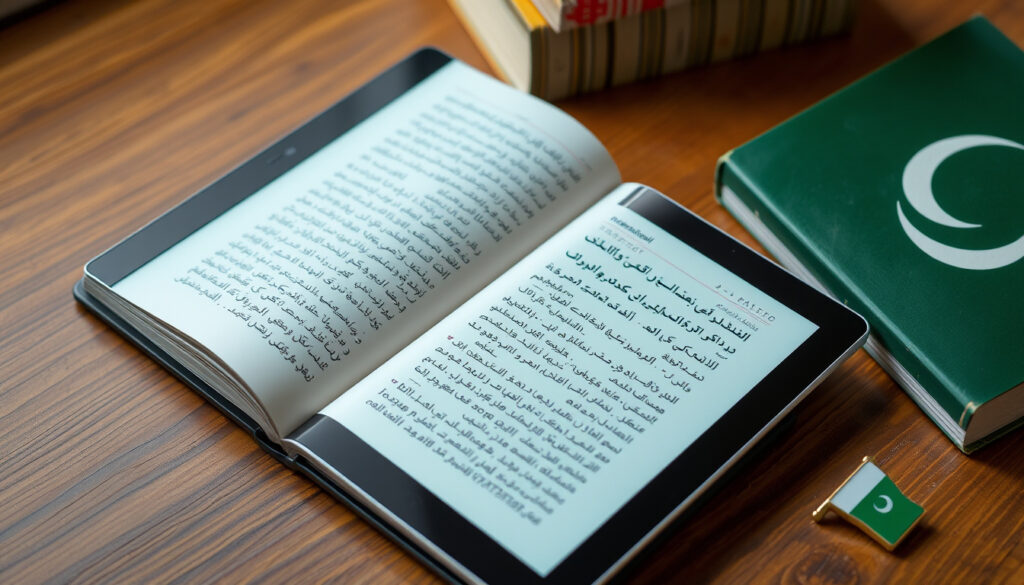
Urdu to English: Phrases, Symbols, and Translation Tools
Anyone who has tried to translate a heartfelt Urdu message or a restaurant menu knows it’s not always straightforward. Urdu carries layers of culture, poetry, and religious nuance that machine translation can miss. This guide walks through the most searched phrases, essential symbols, and the tools that actually help—so you can translate Urdu to English with confidence, not guesswork.
Native speakers of Urdu: 70 million ·
Official language in: Pakistan and 6 Indian states ·
Writing script: Perso-Arabic (Nastaliq) ·
Top translation tool: Google Translate (free) ·
Most searched Urdu phrase: How to say ‘I love you’ in Urdu
Quick snapshot
- Main tumse pyar karta/karti hoon (Preply language learning platform)
- Mujhe tumse mohabbat hai (Preply language learning platform)
- Cultural context matters – reserved for serious relationships (Preply language learning platform)
- ﷽ (Basmala) – ‘In the name of God’ (Wikipedia encyclopedia reference)
- ۞ (Rub el Hizb) – marks end of a section in Quran (Wikipedia encyclopedia reference)
- Assalam-o-Alaikum (formal) – ‘Peace be upon you’
- Hello / Hi (informal borrowings)
- Handshake common; use right hand
- Maaf karna / Maafi chahta hoon (Scribd Urdu English translation guide)
- Sorry (informal) – widely used in Pakistan (Scribd Urdu English translation guide)
Six core facts about Urdu, from its roots to its readership, frame everything that follows.
| Attribute | Value |
|---|---|
| Language family | Indo-European > Indo-Aryan > Hindustani |
| Official status | Pakistan (national); India (6 states) – Wikipedia encyclopedia reference |
| Writing system | Perso-Arabic (Nastaliq) |
| Regulated by | National Language Promotion Department (Pakistan) |
| Estimated total speakers | 170 million (native + second language) – Talkao language learning resource |
The pattern: Urdu is not a niche language—it’s a major world language with official status in two countries and deep digital presence. Any translation guide must account for its script, cultural weight, and the fact that many speakers use it alongside English.
How do Pakistanis say “I love you”?
Romantic phrases in Urdu
The most direct translation of “I love you” depends on the speaker’s gender:
- A male speaker to a female: Main tumse pyar karta hoon
- A female speaker to a male: Main tumse pyar karti hoon
- A more poetic alternative: Mujhe tumse mohabbat hai (literally “I have love for you”) – Preply language learning platform
Cultural context of love expressions
Unlike English, where “I love you” is used casually, Urdu love phrases are reserved for deep, serious relationships. Public declarations of love are rare. Urdu speakers often convey romantic feelings through poetry (shayari) or indirect compliments rather than direct statements. The cultural norm: save these words for someone you truly intend to marry or are already committed to.
Urdu has one of the world’s richest traditions of love poetry, yet saying “I love you” directly can feel too forward. The language invites you to show love through metaphor, not blunt translation.
Gender-specific variations
Urdu verbs agree with the subject’s gender. Karta (masculine) vs karti (feminine) is the key difference. If a woman says Main tumse pyar karta hoon, it’s grammatically incorrect—and would confuse a native speaker. Always match the verb ending to the speaker’s gender.
Why this matters: Getting the gender wrong is the most common mistake English speakers make. Translation tools that don’t ask for speaker gender will default to masculine, creating awkward or incorrect sentences.
What does ﷽ mean?
Meaning and usage of ﷽ (Basmala)
﷽ is a single Unicode ligature that represents the phrase Bismillah-ir-Rahman-ir-Rahim – “In the name of God, the Most Gracious, the Most Merciful.” It is the most repeated phrase in the Islamic world, appearing at the start of every chapter of the Quran except Surah 9. – Wikipedia encyclopedia reference (Basmala)
When is the Basmala used?
Muslims recite the Basmala before any significant action: eating, traveling, starting work, or writing a document. In digital contexts, you’ll see ﷽ in Islamic apps, social media bios, and official letters from Pakistani institutions. Understanding this symbol is essential for anyone translating Urdu religious content or formal correspondence.
Machine translators often leave ﷽ untranslated or render it as “Bismillah” without explanation. For a reader who doesn’t know Arabic, you need to provide the full English gloss or risk losing the reverence the symbol carries.
What this means: ﷽ is not just a symbol—it’s a cultural key. Any Urdu-to-English translation that encounters it should preserve the sacred tone, not reduce it to a footnote.
What do you mean by Urdu?
Urdu language overview
Urdu is an Indo-Aryan language of the Hindustani family, spoken by more than 230 million people worldwide. It is the national language of Pakistan and an official language in six Indian states. – Talkao language learning resource Its script is the Perso-Arabic Nastaliq style, written right-to-left. Urdu shares its spoken grammar with Hindi, but uses a Persian-Arabic-derived vocabulary for formal and literary registers.
Urdu to English translation tools
Several free tools handle Urdu-to-English translation with varying accuracy:
- Google Translate – supports Urdu script and voice input; free
- QuillBot AI Translator – supports Urdu to English up to 5,000 characters for free, covering 52 languages – QuillBot AI writing assistant
- Urdu-English Translator (Aloha Std) – Android app rated 4.7 from 12.6K reviews, over 1M downloads – Google Play Store app distribution platform
- Wondershare PDFelement – uses AI (Lumi) to translate Urdu PDFs while preserving layout – Wondershare PDFelement document translation tool
- Translatiz – quick translation engine for short texts – Wondershare PDFelement review
- Talkao Camera Translator – translates Urdu script from images instantly – Talkao language learning resource
How to use online translation tools (step by step)
- Copy the Urdu text (including diacritics if present) from the source.
- Paste into the translation tool’s input box. For QuillBot, select Urdu as source and English as target.
- Review the output for gender agreement and cultural context. If translating “I love you”, check the speaker’s gender is correct.
- If the result seems too literal, try breaking the sentence into shorter phrases.
- For documents, use PDFelement or a similar tool that preserves formatting; for handwritten text, use Talkao’s camera function.
What is Gali called in English?
Literal translation of ‘gali’ (alley)
The primary meaning of gali (گلی) is a narrow street or lane, common in South Asian urban areas. It’s the word you’d use for the small passageways in old Delhi or Lahore.
Slang meaning: abusive language
Colloquially, gali also means a swear word or verbal abuse. The phrase gali dena (to give a gali) means to curse someone out. Context determines which meaning applies: if someone says “woh gali mein khara hai” (he is standing in the lane) it’s literal; if they say “usne mujhe gali di” (he gave me a gali) it’s an insult. – Scribd Urdu English translation guide
The implication: Translators who only know the dictionary definition can completely misread a sentence. Always check the surrounding words for context.
How do I say “hi” in Pakistan?
Common Urdu greetings
- Formal: Assalam-o-Alaikum (السلام علیکم) – “Peace be upon you” – the standard greeting across Pakistan. The reply is Wa Alaikum Assalam.
- Informal: Hello or Hi – both borrowed from English and widely understood, especially among younger people and in urban areas.
- Time-specific: Subah bakhair (good morning), Sham bakhair (good evening).
Cultural etiquette for greetings
When greeting in person, always use the right hand for a handshake. The left hand is considered unclean. Men typically do not shake hands with women unless the woman extends her hand first. Among close friends, a hug or a nod may replace the handshake. The response to Assalam-o-Alaikum is not optional—failing to reply is seen as rude.
Why this matters: Using the wrong greeting (e.g., “Hi” with an elder) can damage rapport. Translation tools that only offer the formal phrase might come across as stiff in casual chat apps.
How do Pakistanis say “sorry”?
Apology phrases in Urdu
- Main phrase: Maaf karna (معاف کرنا) – “forgive me” – the most common apology.
- More formal: Maafi chahta hoon (معافی چاہتا ہوں) – “I seek forgiveness” – used when the mistake is significant.
- Polite request: Mujhe maaf kar dein (مجھے معاف کر دیں) – “Please forgive me” – respectful.
- Informal: Sorry – borrowed from English and used in everyday casual situations. – Scribd Urdu English translation guide
When to use each phrase
Maaf karna is appropriate for minor mistakes: bumping into someone, interrupting. Maafi chahta hoon is for deeper apologies: breaking trust, causing harm. In business contexts, use the longer form to show sincerity. Using Sorry with elders can seem disrespectful; stick to Urdu phrases.
The pattern: Urdu apology phrases are graded by formality. Over-apologizing (Maafi chahta hoon for a small bump) can seem dramatic; under-apologizing (Sorry for a serious mistake) can offend. Match the phrase to the gravity of the situation.
Confirmed facts
- Urdu is the national language of Pakistan – Wikipedia encyclopedia reference
- ﷽ is the Basmala symbol meaning ‘In the name of God’ – Wikipedia encyclopedia reference
- ‘Gali’ means alley or abusive language depending on context – Scribd
- Google Translate supports Urdu to English translation – multiple sources
- QuillBot AI Translator supports Urdu to English up to 5,000 characters free – QuillBot AI writing assistant
What’s unclear
- Exact number of native speakers varies by source (70 million is most cited; some sources say 230 million total including second-language speakers)
- The precise origin of the word ‘Urdu’ is debated – from Turkic ‘ordu’ meaning army camp – Wikipedia encyclopedia reference
Urdu is an Indo-Aryan language of the Hindustani family, developed under Persian, Arabic, and Turkic influence.
– Wikipedia encyclopedia reference
The Basmala (﷽) is used by Muslims before beginning any activity, from eating to writing a letter.
– Wikipedia encyclopedia reference (Basmala)
Urdu-English Translator (Aloha Std) has a 4.7 rating from 12.6K reviews and over 1M downloads on Google Play.
QuillBot translates in 52 different languages and dialects including Urdu.
For English speakers trying to translate Urdu, the decision isn’t between free and paid tools—it’s between literal and culturally aware. A machine can render Main tumse pyar karti hoon correctly, but it won’t tell you that using it on a first date might scare someone off. For the casual learner, Google Translate plus a phrasebook is enough. For the business traveler or translator, the only reliable path is combining AI speed with human context. Ignore the culture, and the translation will always ring hollow.
Frequently asked questions
What is the best free Urdu to English translator?
For everyday phrases, Google Translate is the most accessible. For longer text or more accurate results, QuillBot (up to 5,000 characters free) and the Urdu-English Translator app by Aloha Std (4.7 stars) are strong alternatives. – QuillBot AI writing assistant, Google Play Store app distribution platform
How to say ‘thank you’ in Urdu?
The most common phrase is Shukriya (شکریہ). For a more formal “thank you very much”, say Bohat shukriya. – Scribd Urdu English translation guide
What does ‘shukriya’ mean?
Shukriya is the Urdu word for “thank you”. It derives from Arabic and is used in everyday conversation across Pakistan and Urdu-speaking communities. – Scribd Urdu English translation guide
Is Google Translate accurate for Urdu to English?
Google Translate handles simple, factual Urdu sentences reasonably well, but struggles with poetry, religious terms, and gender-specific verbs. For critical communication, always double-check with a native speaker or a second tool. – multiple user reports.
How to say ‘good morning’ in Urdu?
Subah bakhair (صبح بخیر) – literally “morning good”. It is used in formal settings; in casual conversation, many Pakistanis just say “good morning” in English.
What is the meaning of ‘khuda hafiz’?
Khuda hafiz (خدا حافظ) means “May God protect you” – the standard Urdu farewell. It is used at the end of conversations, emails, and letters. A more religious alternative is Allah hafiz.
Can I use voice translation for Urdu?
Yes. Google Translate supports Urdu voice input on mobile. The Urdu-English Translator app also offers voice translation. Accuracy depends on dialect and clarity of speech. – Google Play Store app distribution platform
What does ‘yaar’ mean in English?
Yaar (یار) is an informal Urdu word meaning “friend”, “buddy”, or “pal”. It’s used among close friends and acquaintances. It can also express exasperation: “Yaar, listen!”
More related posts
 Judy Warren: Real Life of Ed and Lorraine’s Daughter
 Woolworths Toilet Paper: Septic Safe, Cost & Best Options
 Magnolia Teddy Bear: Size, Growth, Care, Pros/Cons vs Little Gem
 Spud Lite Potatoes: Low-Carb Nutrition, Differences & Recipes
 Star Entertainment Group: News, Stock, CEO & Survival
 Ed Kemper: Verified Facts, Official Sources, and Key Gaps
 Time in Malaysia: Current Time, Zone, and Ireland & UK Difference
 Warren Buffett: Net Worth, 90/10 Rule, and Coca-Cola Stake Explained