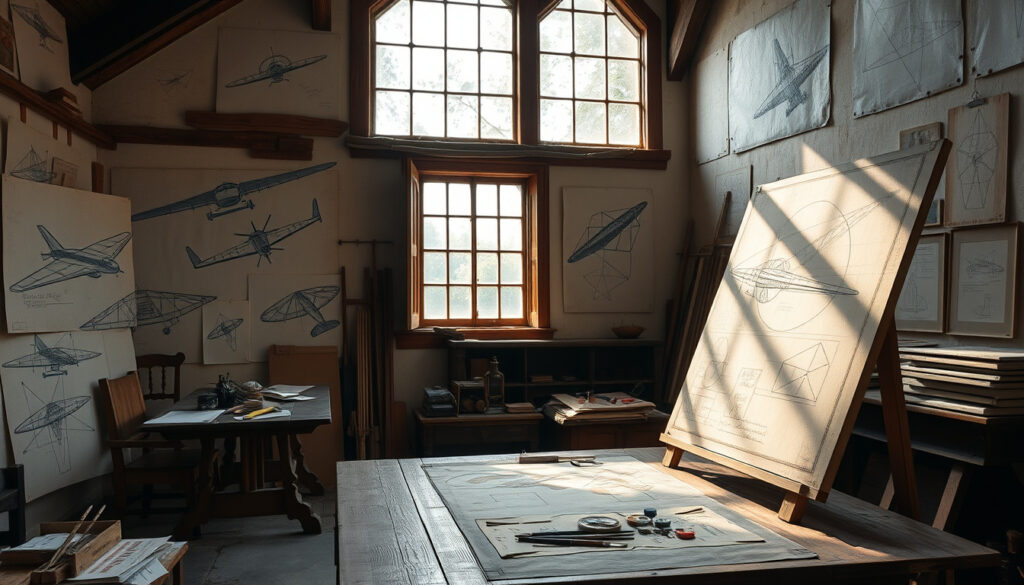
Leonardo da Vinci: Biography, Paintings, Inventions
You’ve seen the Mona Lisa smile on posters, mugs, and memes — but the man behind the brush was far more than a painter. Born in 1452 in the Tuscan hills, Leonardo filled thousands of notebook pages with sketches of flying machines, human organs, and swirling water.
Born: April 15, 1452, Anchiano, Italy ·
Died: May 2, 1519, Amboise, France ·
Known for: Painting, engineering, anatomy, invention ·
Famous works: Mona Lisa, The Last Supper ·
Surviving paintings: Fewer than 20
Quick snapshot
- Born in 1452, died in 1519 (Encyclopaedia Britannica)
- Painted the Mona Lisa and The Last Supper (Encyclopaedia Britannica)
- Filled thousands of pages with scientific notes (Wikipedia)
- Whether he had any biological children (Encyclopaedia Britannica)
- His exact sexual orientation (BBC History)
- The precise cause of his death (Encyclopaedia Britannica)
- 1452: Born in Anchiano, Italy (Encyclopaedia Britannica)
- 1519: Died in Amboise, France (National Gallery, London)
- DNA studies on claimed descendants continue (HISTORY)
- Exhibitions and digital reconstructions of his inventions (Museum of Science)
Five key facts about Leonardo da Vinci, one pattern: his life was a mix of documented certainties and stubborn gaps.
| Field | Value |
|---|---|
| Full name | Leonardo di ser Piero da Vinci |
| Birthplace | Anchiano, Republic of Florence (Italy) |
| Occupation | Painter, engineer, scientist, theorist |
| Notable patron | Ludovico Sforza, Duke of Milan |
| Surviving notebooks | Over 6,000 pages |
What is Leonardo da Vinci famous for?
Mona Lisa and The Last Supper
- The Mona Lisa, painted between about 1503 and 1519, is housed at the Louvre Museum (Paris institution) and is arguably the most recognized portrait in the world.
- The Last Supper, completed around 1495–1498, adorns the dining hall of the monastery of Santa Maria delle Grazie in Milan, as documented by Encyclopaedia Britannica (reference work).
Less than two dozen paintings survive, yet Leonardo’s visual legacy overshadows the thousands of pages of scientific notes he left behind — a reminder that his fame as an artist partly eclipses his ambition as a scientist.
The implication: Leonardo’s fame as an artist overshadows his scientific work, but both are equally important.
Scientific and engineering notebooks
- His notebooks contain designs for an aerial screw, armored car, and hydraulic pumps, according to HISTORY (editorial outlet).
- He studied anatomy by dissecting cadavers, as noted by The Metropolitan Museum of Art (museum authority).
The implication: Leonardo’s empirical method unified his art and science, but the speculative nature of his invention sketches means many were never built.
What are 5 facts about da Vinci?
He was born out of wedlock
Leonardo was born illegitimately to Ser Piero, a Florentine notary, and a peasant woman named Caterina, as recorded by Museum of Science (educational institution). This status prevented him from inheriting his father’s profession.
He was a vegetarian
Contemporary accounts suggest Leonardo avoided meat, a practice that was unusual for the time. The claim is supported by Biography.com (biographical outlet).
He wrote backwards
Leonardo used mirror writing in his notebooks — a left-handed scribe’s habit that kept his notes private, per Wikipedia (community encyclopedia).
He dissected cadavers
He performed anatomical dissections at hospitals in Florence and Milan, according to Encyclopaedia Britannica (reference work).
He left many works unfinished
Fewer than two dozen paintings are generally attributed to him, reports Biography.com (biographical outlet).
The catch: His perfectionism and wide-ranging curiosity meant he often abandoned projects when his interest shifted to another field.
What caused da Vinci’s death?
Historical accounts of his final illness
- Leonardo died on May 2, 1519, at Clos Lucé in France, according to Encyclopaedia Britannica (reference work).
- Contemporary accounts mention paralysis in his right hand in later life, leading some historians to propose a stroke as the cause, though the exact cause is not reliably documented, as Encyclopaedia Britannica (reference work) notes.
The uncertainty around his death mirrors the broader pattern of his life: solid records of dates and places, but gaps in the medical details.
The pattern: The gaps in medical details are consistent with the overall uncertainty in his biography.
Did da Vinci have a child?
No known legitimate or documented children
No historical record confirms any biological children of Leonardo. He took on apprentices, including Salaì, who was rumored to be a close companion, according to Encyclopaedia Britannica (reference work).
The trade-off: Without a direct heir, his legacy passed through his notebooks and paintings, not a bloodline.
Was da Vinci LGBTQ?
Historical evidence of his relationships
- In 1476, Leonardo was anonymously accused of sodomy with a male model named Jacopo Saltarelli. The charges were dismissed, as recorded by BBC History (editorial source).
- Modern historians debate his sexuality, but the incident remains a key piece of evidence.
Why this matters: The accusation, though unproven, shaped the privacy of his later life and influenced how he managed his social reputation.
What did da Vinci do that was bad?
Controversial aspects of his career
- He designed military machines for Ludovico Sforza, the Duke of Milan, including a giant crossbow and a prototype tank, as HISTORY (editorial outlet) reports.
- He participated in the dissection of human bodies without consent, a practice that was technically illegal but common among Renaissance anatomists, according to Encyclopaedia Britannica (reference work).
The pattern: His ethical flexibility — working for warlords and breaking post-mortem taboos — reflects the opportunism of a man who needed patrons to fund his curiosity.
Is the da Vinci bloodline still alive?
Genealogical research on descendants
No direct male descendants have been confirmed through DNA testing. Some living individuals claim distant relation through Leonardo’s siblings, but the evidence remains inconclusive, as HISTORY (editorial outlet) notes.
The upshot: The bloodline question is a modern fascination, but the historical record offers no clear answer.
Timeline of Leonardo da Vinci
- – Born in Anchiano, Italy (Encyclopaedia Britannica)
- – Apprenticed to Andrea del Verrocchio (The Metropolitan Museum of Art)
- – Worked for Ludovico Sforza in Milan (BBC History)
- – Painted The Last Supper (Encyclopaedia Britannica)
- – Worked on the Mona Lisa (Encyclopaedia Britannica)
- – Died in Amboise, France (National Gallery, London)
The timeline shows the key events in his life, though many details remain unknown.
Confirmed facts
- Born in 1452 and died in 1519 (Encyclopaedia Britannica)
- Painted the Mona Lisa and The Last Supper (Encyclopaedia Britannica)
- Filled thousands of pages with scientific notes (Wikipedia)
- Trained in Florence under Verrocchio (The Metropolitan Museum of Art)
What’s unclear
- Whether he had any biological children (Encyclopaedia Britannica)
- His exact sexual orientation (BBC History)
- The precise cause of his death (Encyclopaedia Britannica)
- Whether his inventions were ever built or tested (HISTORY)
“Leonardo indeed was so powerful in eloquence and in reasoning, that he could turn the minds of others to his own opinion.”
— Giorgio Vasari, biographer, Lives of the Artists (historical source)
“The sun does not move. The earth is not the center of the universe.”
— Leonardo da Vinci, personal notebook, Wikipedia (community encyclopedia)
For the modern reader, the real takeaway from Leonardo’s life is not a list of talents but a method: ask, observe, draw, and never stop questioning. The Mona Lisa still hangs in the Louvre, but his restless notebooks are the true legacy — they show one man’s refusal to specialize. Similar genius can be found in our article on Albert Einstein: Biography, IQ, Beliefs, and Legacy, and his works often drew on classical mythology, a topic covered in Greek Mythology: Gods, Myths, and Answers to Your Top Questions.
museoleonardodavincifirenze.com, britannica.com, leonardoda-vinci.org, fr.wikipedia.org
Frequently asked questions
What is Leonardo da Vinci’s most famous painting?
The Mona Lisa, housed at the Louvre Museum in Paris, is widely considered his most famous work.
How many paintings did Leonardo da Vinci finish?
Fewer than two dozen paintings are generally attributed to him, with several left unfinished.
Where is the Mona Lisa displayed?
It is displayed at the Louvre Museum in Paris, France.
Did Leonardo da Vinci fly?
He designed an aerial screw and a flying machine, but there is no evidence he ever built or tested them.
What materials did Leonardo da Vinci use for his paintings?
He used oil paint on wood panels for most of his works, often experimenting with layers and pigments.
How did Leonardo da Vinci learn anatomy?
He dissected human cadavers at hospitals in Florence and Milan, documenting his observations in detailed drawings.
Was Leonardo da Vinci a vegetarian?
Contemporary accounts suggest he avoided meat, making him an early proponent of vegetarianism.
What is Leonardo da Vinci’s legacy in engineering?
His notebooks contain designs for mechanical devices that foreshadowed later inventions, from helicopters to tanks.
More related posts
 Big W Elizabeth: Store Hours, Phone, Stock Check and FAQs
 Koori Knockout 2025 – Dates, Teams, Location, Live Stream
 2026 Chinese New Year: Fire Horse – Dates & Zodiac Guide
 Urzila Carlson: Biography, Tour, and Comedy Career
 Cyber Security Courses – Best Online Options for Beginners
 Melbourne Weather Hourly: BOM Forecast & 7-Day Outlook
 Under Bed Storage: IKEA, Wheels & Ireland Options
 Poison Ivy: Identification, Rash, and Treatment