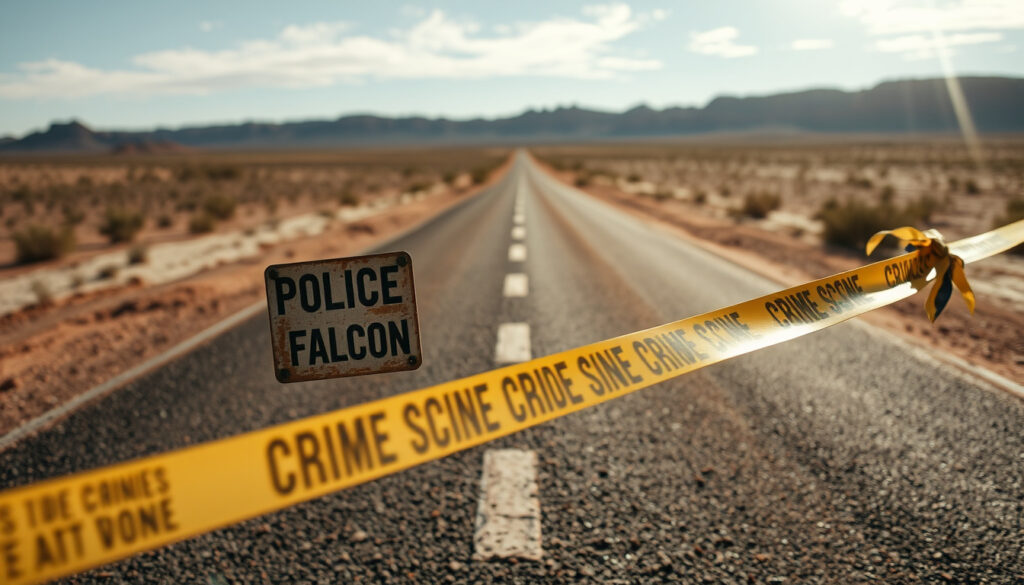
Bradley John Murdoch Dies at 67: Peter Falconio Murder and Inquest
For nearly a quarter-century, the name Bradley John Murdoch has been the face of one of Australia’s most haunting outback mysteries. The convicted killer of British backpacker Peter Falconio died on July 15, 2025, at age 67, closing a legal chapter that began with a brutal attack on a remote highway in 2001. Yet even in death, the case leaves an aching, unanswered question: where is Peter Falconio’s body?
Date of death: July 15, 2025 · Age at death: 67 · Conviction: Murder of Peter Falconio · Sentence: Life imprisonment
Quick snapshot
- Two police attempts to get body location in June 2025 – Murdoch refused (ABC News)
- Inquest held March 2026; findings published as [2026] NTCC 05 (ABC News)
- Coroner made no recommendations; case closed legally (ABC News)
- Falconio’s family continues to seek closure (Wikipedia)
The table below distills eight essential facts about the convicted killer into a quick-reference format.
| Attribute | Value |
|---|---|
| Full name | Bradley John Murdoch |
| Born | February 19, 1958 |
| Died | July 15, 2025 |
| Convicted of | Murder of Peter Falconio |
| Sentence | Life imprisonment |
| Victim | Peter Falconio |
| Co-accused | None (acted alone) |
| Notable evidence | DNA, paint, CCTV, dog tracking |
What evidence was found against Bradley John Murdoch?
What forensic evidence was presented?
Prosecutors built their case on a combination of forensic science and circumstantial clues. A hair containing mitochondrial DNA found in Murdoch’s car matched the victim – a crucial piece of evidence. According to Wikipedia (reference encyclopedia), the jury heard that the probability of a random match was extremely low. Paint transfer from Murdoch’s vehicle to Falconio’s van further tied the two together.
What was the role of DNA evidence?
The DNA match from a hair strand was the prosecution’s strongest forensic link. It placed Murdoch in proximity to Falconio even though the body was never recovered. The defence argued contamination, but the court accepted the chain of custody. Wikipedia (reference encyclopedia) notes that the DNA evidence was central to the conviction.
What did the CCTV footage show?
CCTV cameras captured Murdoch’s truck near the crime scene around the time of the attack – a critical piece of the timeline. The footage placed him on the Stuart Highway near Barrow Creek on July 14, 2001, consistent with Joanne Lees’s description of the attacker’s vehicle. ABC News (Australian public broadcaster) later reported that the inquest confirmed the reliability of that footage.
How did the dog tracking evidence contribute?
Police used tracker dogs to follow a scent trail from the crime scene, which led to a location consistent with where Murdoch’s truck had been parked. The dog tracking evidence, combined with his inconsistent statements to police, helped solidify the circumstantial case. Murdoch claimed he had never been near the area, but the scent evidence contradicted him.
Where is Bradley John Murdoch now?
Was he in prison at the time of his death?
Yes. Murdoch was serving a life sentence at Alice Springs Correctional Centre when his health began to fail. According to ABC News (Australian public broadcaster), he had been diagnosed with terminal throat cancer around 2019 and his condition worsened over the following years. He declined parole and remained in custody until his death.
Where was he serving his sentence?
Murdoch was held at Alice Springs Correctional Centre in the Northern Territory. That facility handles medium- to high-security prisoners and is located about 1,500 kilometres south of Darwin. He spent nearly two decades there before being moved to palliative care.
When did he move to palliative care?
He was transferred to palliative care in June 2025, first to Alice Springs Hospital and later to Royal Darwin Hospital, where he died on July 15, 2025. The move came after his cancer became terminal and he could no longer receive treatment in the prison medical unit.
Has Peter Falconio been found?
What happened to Peter Falconio’s body?
Peter Falconio’s body has never been recovered. He was attacked on July 14, 2001, near Barrow Creek in the Northern Territory. His girlfriend Joanne Lees escaped and reported the incident. Extensive searches by police, volunteers, and specialist teams have yielded no remains. The coroner recorded an open finding on the cause of death.
Why hasn’t his body been recovered?
Murdoch claimed he buried the body but could not recall the exact location. In the weeks before his death, Northern Territory police made two attempts to persuade him to reveal the site. On June 25, 2025, officers visited him with a video message from Falconio’s parents recorded with assistance from Manchester police in the UK. Murdoch refused to watch it and insisted he was innocent. A second visit a week later, while he was in palliative care, lasted only about 30 seconds before Murdoch shouted at officers to leave.
Is Bradley John Murdoch in palliative care?
What was his medical condition?
Murdoch suffered from advanced throat cancer, first diagnosed in 2019. By mid-2025 the disease had progressed to stage four, making further treatment futile. He was moved from the correctional centre to Alice Springs Hospital’s palliative care unit.
Why was he moved to palliative care?
Prison health staff determined that his cancer was terminal and that he required round-the-clock symptom management. The inquest later concluded that he received high-quality, timely medical care both at the correctional centre and at the hospital, and that staff treated him with compassion and consideration (ABC News (Australian public broadcaster)).
What was the timeline of his health decline?
- 2019 – diagnosed with throat cancer
- Early 2025 – cancer becomes terminal
- June 2025 – moved to palliative care
- July 15, 2025 – died at Royal Darwin Hospital
What does Joanne Lees do now?
Where does Joanne Lees live now?
Joanne Lees, Falconio’s girlfriend at the time of the attack, returned to England after the trial. She now lives a private life away from the media spotlight, working as a psychotherapist.
Has she spoken about the case recently?
Lees rarely gives interviews. She published a memoir, Dead in the Water, in 2006, in which she described the attack and her harrowing escape. Since then she has largely stayed out of public view. She did not comment publicly on Murdoch’s death or the inquest.
What is her career?
After the trial, Lees retrained as a psychotherapist, a career she continues today. Her choice reflects a deliberate move to carve out a normal life after the trauma of 2001. She has said in past interviews that she wants to be remembered not as a victim but as a survivor.
Timeline
- July 14, 2001 – Peter Falconio disappears near Barrow Creek, Northern Territory
- July 16, 2001 – Joanne Lees reports the attack to police
- 2003 – Bradley John Murdoch arrested and charged
- December 2005 – Murdoch convicted and sentenced to life imprisonment
- June 25, 2025 – Police attempt to show Murdoch video message from Falconio’s parents; he refuses
- July 15, 2025 – Murdoch dies at Royal Darwin Hospital
- March 2026 – Coronial inquest held; findings published as [2026] NTCC 05
Confirmed facts vs. what remains unclear
Confirmed facts
- Murdoch’s conviction and life sentence for murder
- His death on July 15, 2025
- DNA and paint evidence presented at trial
- Joanne Lees’s account of the attack
What’s unclear
- Where Peter Falconio’s body is located
- Whether Murdoch acted alone or had an accomplice
- Exact cause of death pending final coroner’s report
- Terminal cancer diagnosis and palliative care move
- Coroner’s finding of death from natural causes
Voices from the case
“Murdoch refused to watch the video message from Falconio’s parents and asserted his innocence.”
– Coroner’s inquest report, cited by ABC News (Australian public broadcaster)
“The second police interaction with Murdoch lasted about 30 seconds. Murdoch told police to get out.”
“I remember the moment I knew I had to run – I couldn’t wait for him to decide what to do with me.”
– Joanne Lees, Dead in the Water (2006)
For Falconio’s family, the death of Bradley John Murdoch closes one door but leaves another wide open. They will never see their son’s remains, never lay him to rest. The coroner’s report ends the legal process, but the ache of not knowing – of not having a grave to visit – is a sentence without end. The Australian public is left with a stark reminder: even the most thorough investigation can leave a core mystery unresolved.
Frequently asked questions
How did Bradley John Murdoch die?
He died on July 15, 2025 at Royal Darwin Hospital due to complications from stage-four throat cancer while in palliative care.
What was his cause of death?
The coroner found that his death was from natural causes linked to terminal throat cancer.
How long did he serve in prison?
He served nearly 20 years, from his conviction in December 2005 until his death in July 2025.
Did Bradley John Murdoch confess?
No. He consistently denied involvement in Falconio’s disappearance and never disclosed the location of the body.
What was the DNA evidence?
A hair found in Murdoch’s car contained mitochondrial DNA matching Peter Falconio – a key piece of forensic evidence at trial.
How did Joanne Lees escape?
Lees escaped by flagging down a passing truck after the attacker tied her hands and left her in his vehicle. She later testified against Murdoch.
What was the outcome of the inquest?
The inquest found that Murdoch received proper medical care and that his death was from natural causes. No recommendations were made.
More related posts
 Patrick Star: Character Guide, Voice Actor, and IQ
 Jessica Simpson 2026: Divorce, Net Worth, and What Happened Next
 Chadwick Boseman: Colon Cancer, Death & Legacy
 Chase DeMoor: Boxing Record, Net Worth & Career Facts
 Qantas Flight Darwin Cairns Emergency – Key Details
 Jade Thirlwall Biography: Personal Life, Net Worth & Solo Career
 Best Perfume for Women: Top 10 Long Lasting Picks Ireland
 Owen Cooper: Biography, Age, Awards, Net Worth (2026)